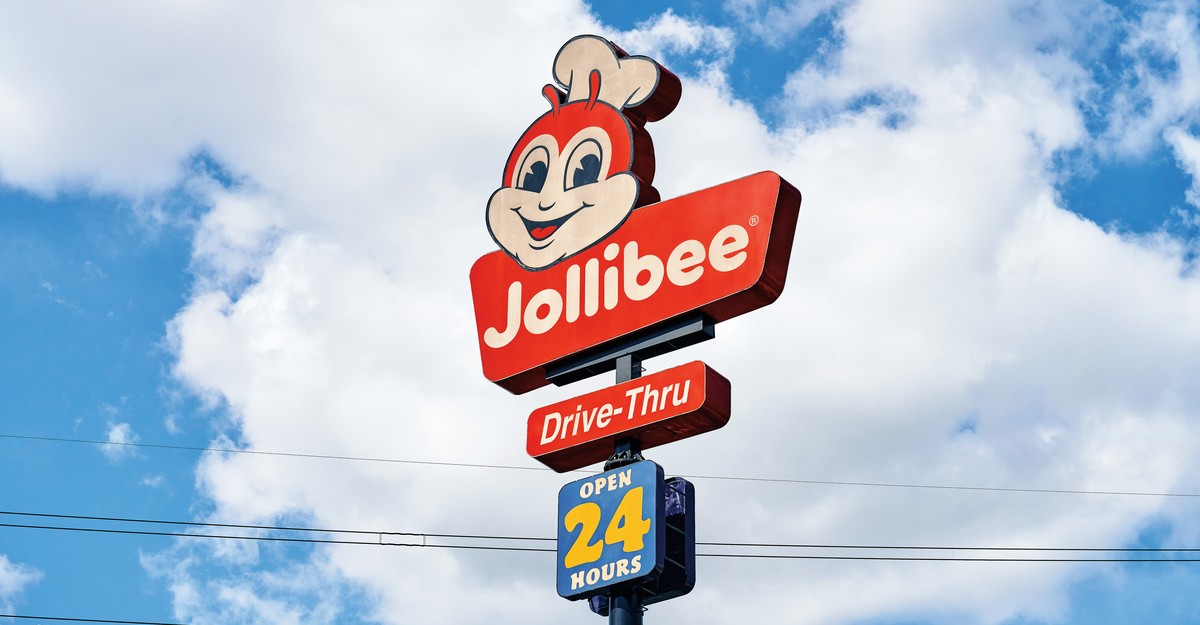
"Its food seems familiar until you taste it. Chickenjoy, the chain's signature fried chicken, has a golden, rippled exterior, just as you might expect. But tooth meets flesh with a burst of garlic, citrus, and something salty and fermented, a little like soy. What lingers on the tongue is a blast of umami that's so deeply chicken-y, it's hard to square with the mild-flavored meat that Americans have come to know."
"The Aloha Burger is savory-sweet, sporting a halo of grilled pineapple beneath layers of bacon and cheese. Jolly Spaghetti is slathered in a sugary meat sauce and garnished with grated cheese and hot-dog slices. Crisp hand pies ooze purple ube and golden mango. Jollibee does not serve American food, not exactly. The chain is based in the Philippines, which developed a taste for burgers and fried chicken during its years as a U.S. colony, and has since made the foods its own."
Jollibee blends Filipino flavors with fast-food classics, creating familiar yet distinct dishes. Staff greet customers with bright phrases and the decor features a bee mascot and playful murals. Chickenjoy delivers a golden, rippled crust and an intense umami punch of garlic, citrus and fermented saltiness. Menu items include the savory-sweet Aloha Burger with grilled pineapple, sugary Jolly Spaghetti topped with hot-dog slices and grated cheese, and hand pies filled with purple ube or golden mango. The chain originated in the Philippines after U.S. colonial influence shaped local tastes and has expanded across the United States, earning top fast-food fried chicken rankings.
Read at The Atlantic
Unable to calculate read time
Collection
[
|
...
]