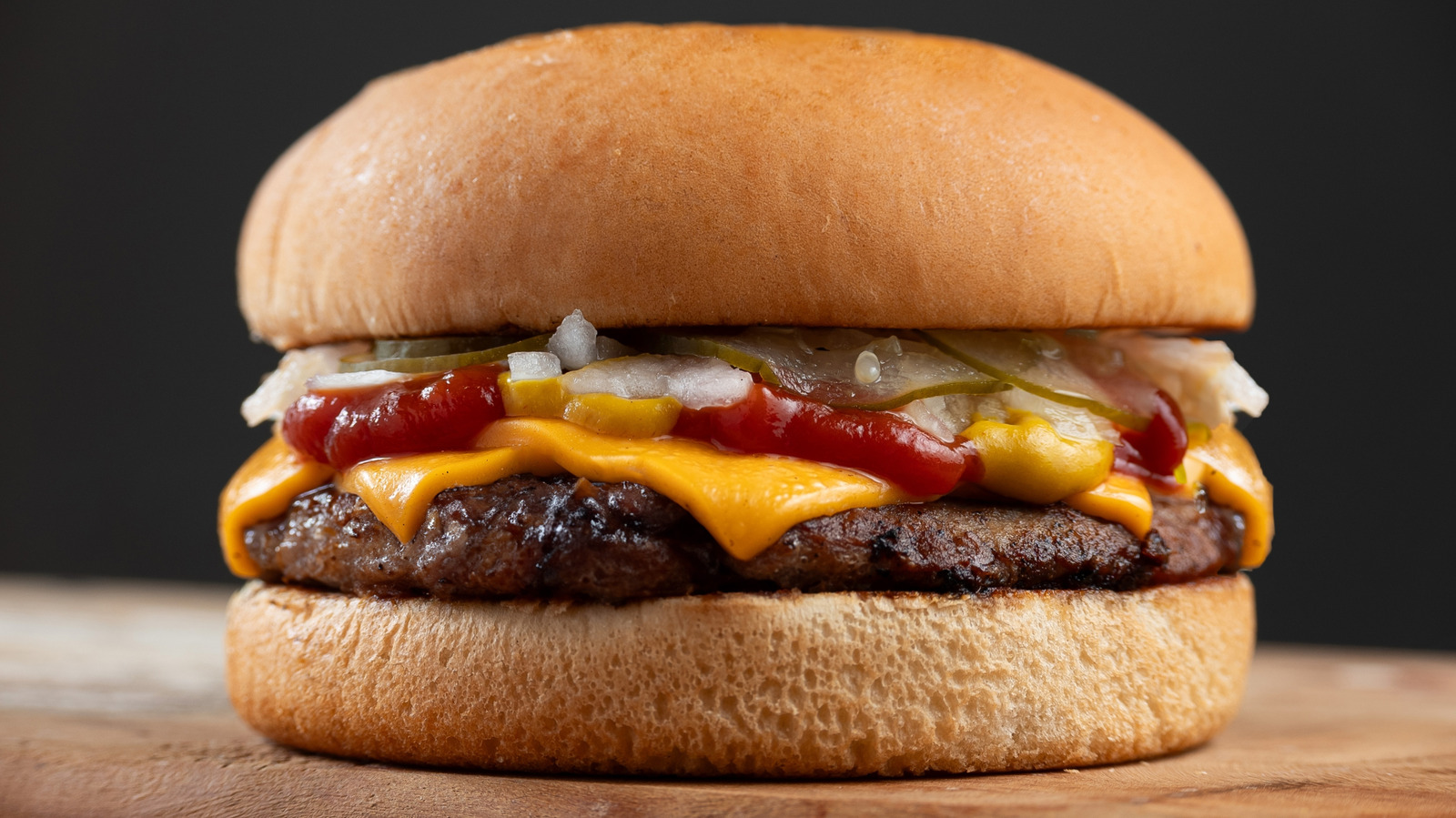
"In the 1970s, McDonald's introduced its Quarter Pounder, a burger featuring a 4-ounce patty. Aside from the Big Mac, it may be the best known burger out there. It doesn't feature a special sauce or the two-layer styling of the Big Mac, but the Quarter Pounder is made from never-frozen beef and its patty is more than twice as large as the standard McDonald's burger - those weigh in at just 1.6 ounces each, or a tenth of a pound."
"The advertising for the Quarter Pounder in the 1970s emphasized that there was no place else to get one, but a competing fast food chain clearly took that personally and sought to one-up McDonald's by offering an even larger third-pound burger at the same price. Unfortunately for A&W, would-be customers just couldn't wrap their heads around those fractions. Despite the fact that A&W's Third-of-a-Pound Burger, as it was called, featured a patty of about 5.33 ounces, while the McDonald's offering was just 4 ounces, the McDonald's burger continued to dominate."
"In order to understand the root of the problem, A&W held focus groups. The company had run an advertising campaign to make clear that their burger was larger and less expensive by weight than the McDonald's alternative, and the tests even found that customers preferred the taste of the Third-of-a-Pound Burger as well. The problem was painfully simple: More than half of the individuals surveyed believed that ⅓ was smaller than ¼."
McDonald's introduced the Quarter Pounder in the 1970s with a 4-ounce patty made from never-frozen beef, more than twice the size of the standard McDonald's burger at 1.6 ounces. A competing chain offered a Third-of-a-Pound Burger with a roughly 5.33-ounce patty at the same price. A&W's focus groups and advertising showed the Third-of-a-Pound tasted better and was cheaper by weight, but many consumers misinterpreted fractions. More than half of those surveyed believed one-third was smaller than one-quarter, and confusion about fractional and cooking measurements harmed the larger product's market success.
Read at Tasting Table
Unable to calculate read time
Collection
[
|
...
]