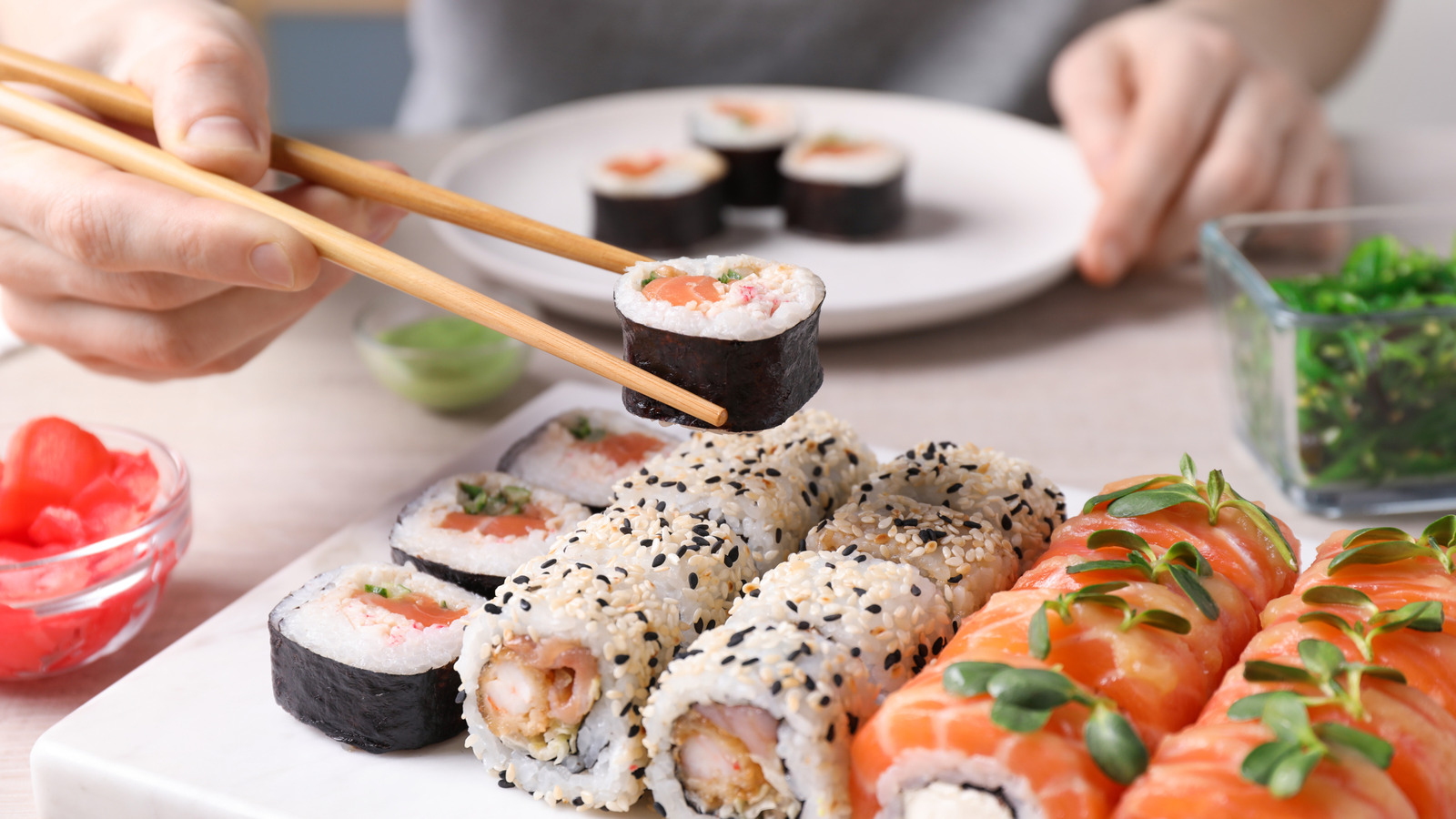
"A seaweed-and-rice roll by any name would taste as all the same... or, would it? Despite their visually similar appearances, Korean kimbap and Japanese sushi have more differences than they share similarities. Both kimbap and sushi wrap sticky short-grain white rice and fillings inside of a nori seaweed sheet, using the same assemblage technique of cylindrical rolling in a bamboo mat. But, from there, these flavorful, tightly-packed rolls diverge - offering different fillings, different rice, and different accouterment."
"Word to the wise: Kimbap can be a perfect fit for foodies who like the idea of sushi, but aren't as keen on the taste of raw fish and wasabi. While Japanese sushi stars raw fish as its star ingredient, raw fish (or any other type of fish or seafood) does not belong in Korean kimbap. Instead, kimbap typically features fully-cooked meats and pickled vegetables."
Kimbap and sushi both wrap sticky short-grain white rice and fillings in nori and are rolled with a bamboo mat. Kimbap commonly contains fully cooked meats and pickled vegetables, while sushi often highlights raw fish. Kimbap rice is seasoned with salt and sesame oil, whereas sushi rice is seasoned with sugar, salt, vinegar, and sometimes kombu. Kimbap is customarily paired with kimchi or danmuji pickled radish. Sushi is served with wasabi, soy sauce, and pickled ginger slices (shoga). Different kimbap types include traditional, nude or French, and samgak, with many style variations such as mayak and chamchi.
Read at Tasting Table
Unable to calculate read time
Collection
[
|
...
]