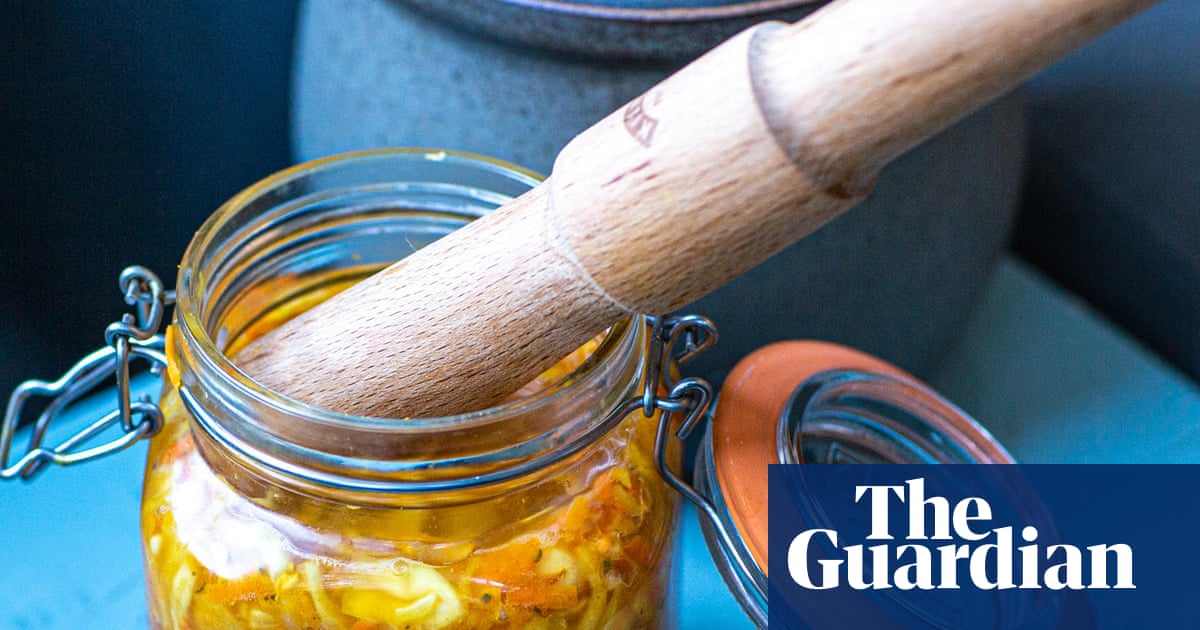
"The dry-salting fermentation method used to make sauerkraut works brilliantly on almost any firm vegetable, so you can happily explore beyond the traditional cabbage. I had a couple of carrots and a piece of squash that needed saving, so I turned them into a golden kraut with ginger, turmeric and a little orange zest for brightness. Use whatever you have to hand and let the ingredients lead your creativity."
"Fermenting is an enjoyable way to make the most of a seasonal ingredient or to use up surplus produce. At our restaurant, whenever we had a glut that needed using up, we used to rely on fermentation, because not only did it saves us money in the long term, it also helped us to create imaginative, delicious new products to cook with. Classic cabbage kraut is, of course, glorious, but there are all manner of alternatives, and some magic combinations."
"As with classic sauerkraut, the general rule of thumb is that you need about 3% salt to the total weight of vegetables. Now, just a few notes on fermentation in general. Keep the jar out of direct sunlight and check on it every day. Give it some love, and a stir, perhaps, and make sure the ingredients are always submerged in the liquid (a fermentation weight will help here, as would any other clean weight)."
Dry-salting fermentation converts firm vegetables into sauerkraut-style ferments using about 3% sea salt by weight. Grate or finely slice mixed hard vegetables such as carrot, squash, beetroot, kohlrabi, turnip, radish, celeriac or broccoli stems. Add optional flavorings like ginger, turmeric and organic unwaxed citrus zest. Keep the jar out of direct sunlight, check daily, stir and ensure ingredients remain submerged using a fermentation weight. Consider making two jars, one refrigerated and one room-temperature, to observe flavor development. Use clean sterilized jars and lids to preserve surplus produce and create versatile condiments.
Read at www.theguardian.com
Unable to calculate read time
Collection
[
|
...
]