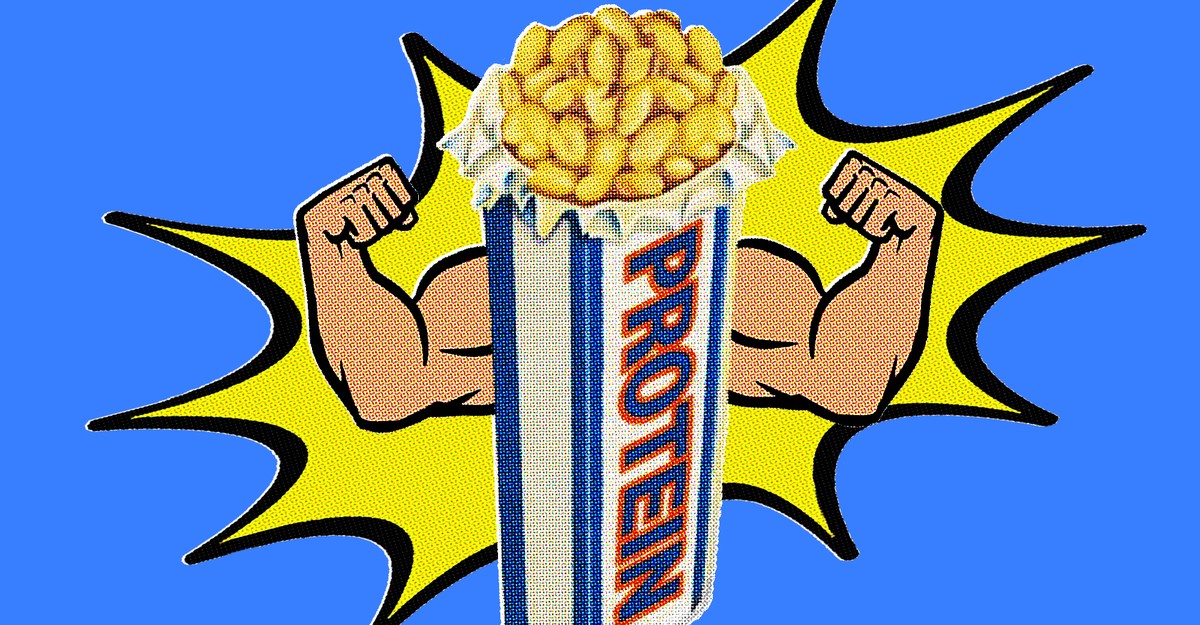
A single Salted Peanut Butter David Protein Bar sparked a shift in priorities toward protein. David bars deliver 28 grams of protein for 150 calories, equating to roughly eight egg whites cooked without oil. The bar's marketing promises near-perfection compared with other products like Quest bars. The emphasis on protein created ambivalence toward meals like brown rice and spicy chickpeas; a cup of Eden Foods organic chickpeas (240 calories) yields only 12 grams of protein. The narrator began adding frozen peas to dinners and noticed a growing proliferation of protein-focused products and offerings across the market.
"On a recent Tuesday morning, I was blessed with a miracle in a mini-mart. I had set out to find the protein bar I kept hearing about, only to find a row of empty boxes. But then I spotted the shimmer. Pushed to the back of one carton, gleaming in its gold wrapper, was a single Salted Peanut Butter David Protein Bar. It was mine."
"If a food with more protein is better, then it follows that a food with less is worse. After eating my David bar, I couldn't help but feel a little bit bad about my dinner of brown rice and spicy chickpeas. A cup of Eden Foods organic chickpeas (240 calories) gets you a measly 12 grams. Now that I was living in the world of David, I was newly ambivalent about eating anything that wasn't chunks of unadulterated protein."
Read at The Atlantic
Unable to calculate read time
Collection
[
|
...
]