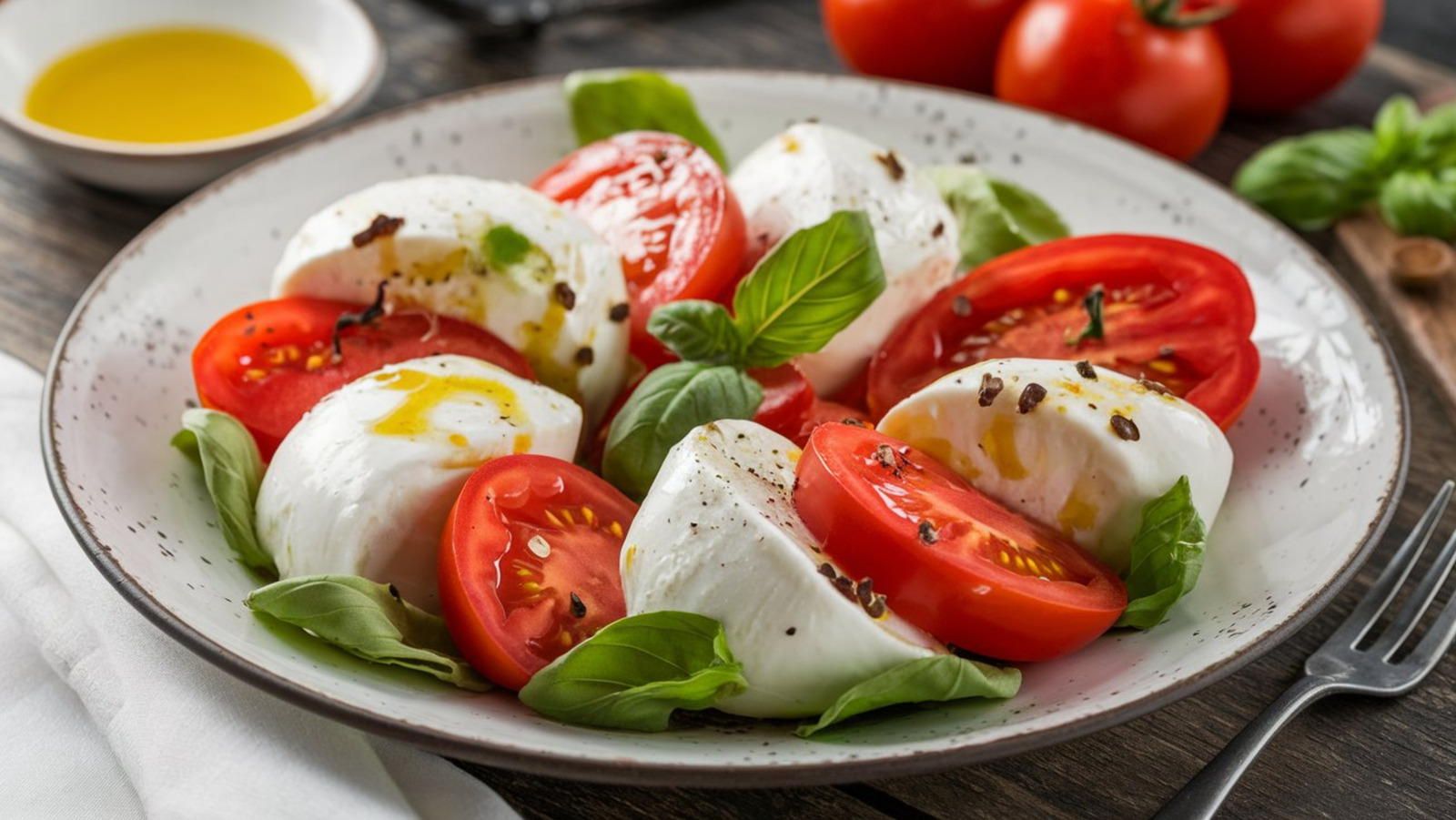
"Whether you're someone who loves digging into a frozen pizza at home or the type who enjoys a fresh caprese salad at an upscale wine bar, this fresh Italian cheese is one of the great equalizers in the culinary world, and it has been a staple in Italian cuisine for centuries. While monks in the Southern part of the country were doling out a cheese they called mozza to visiting worshippers during the Middle Ages,"
"Mozzarella has earned a special place in the hearts of many cheese lovers because of its unique stretchiness and mild flavor. It is also highly versatile. Sure, a good mozzarella stick or caprese salad is tough to beat, but don't miss out on all the other great ways to use fresh mozzarella, including in sandwiches and bubbly, cheesy mostaccioli. If all that doesn't have you running to the fridge or the cheese shop already,"
"Mozzarella also has a deeper meaning; but unlike those two examples, its name is pretty informative about how it's made. According to Kristine Jannuzzi, the name comes from the word mozzare, which means "to cut off." While most cheeses are made by putting the curd into molds and letting them age, mozzarella is only left to ferment for a few hours and then stretched by hand like bread dough."
Mozzarella originated in Italy with early forms served by Southern monks during the Middle Ages and the water-buffalo–milk variety emerging in the 1500s. The cheese is prized for a mild flavor and distinctive stretchiness. Production involves only a few hours of fermentation followed by hand-stretching of the curd, rather than long aging in molds. The name derives from the Italian mozzare, meaning "to cut off." Fresh mozzarella is highly versatile in cooking, performing well melted on pizzas and mostaccioli or fresh in preparations such as caprese salads, sandwiches, and fried snacks.
Read at Tasting Table
Unable to calculate read time
Collection
[
|
...
]