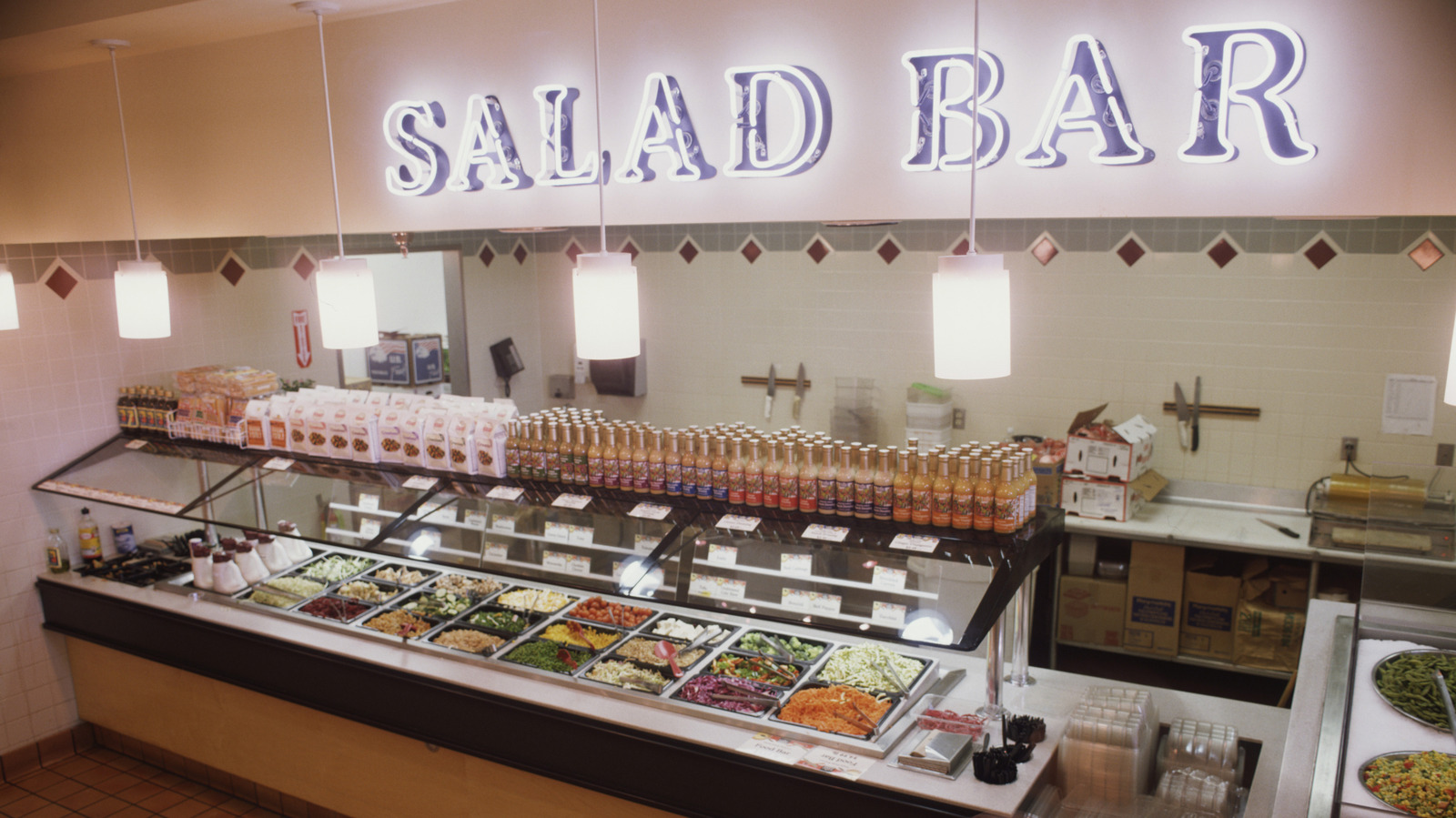
"The salad bar can be many things. It can be your most nostalgic memory from a '90s Pizza Hut. It can be a vegetarian's oasis at the Brazilian steakhouse. It can be a hotel perk or the battleground for your lunchtime rush-hour Whole Foods experience. They range from tacky to elegant, and can contain almost any ingredient. COVID almost stamped out the family-style serving practice for good, but still, the salad bar has lived on. It is nothing short of an institution of the culinary"
"Whether you go to a restaurant salad bar or one at the grocery store, the process is simple enough; pick out what you would like from the ingredients displayed, add a dressing, pay up, eat, and that's the end. While the salad bar is a place of endless opportunity and choice, there are still some faux pas you may want to avoid. Those wrong answers can result in a disappointing"
Salad bars appear in diverse dining contexts and offer wide ingredient choice. Patrons typically select ingredients, add dressing, and pay by the serving or weight. Common mistakes at salad bars can lead to poor flavor combinations, overpaying, or foodborne illness. Produce can harbor harmful bacteria similarly to meat, eggs, and dairy, and has prompted major recalls for items like salad greens and organic carrots. Ambient temperatures and cross-contamination increase risk. Vegetables that develop in warm conditions, such as Brussels sprouts, can harbor Salmonella or E. coli. Whole tomatoes tolerate room temperature, but once cut they require cool storage to slow bacterial growth.
Read at Tasting Table
Unable to calculate read time
Collection
[
|
...
]