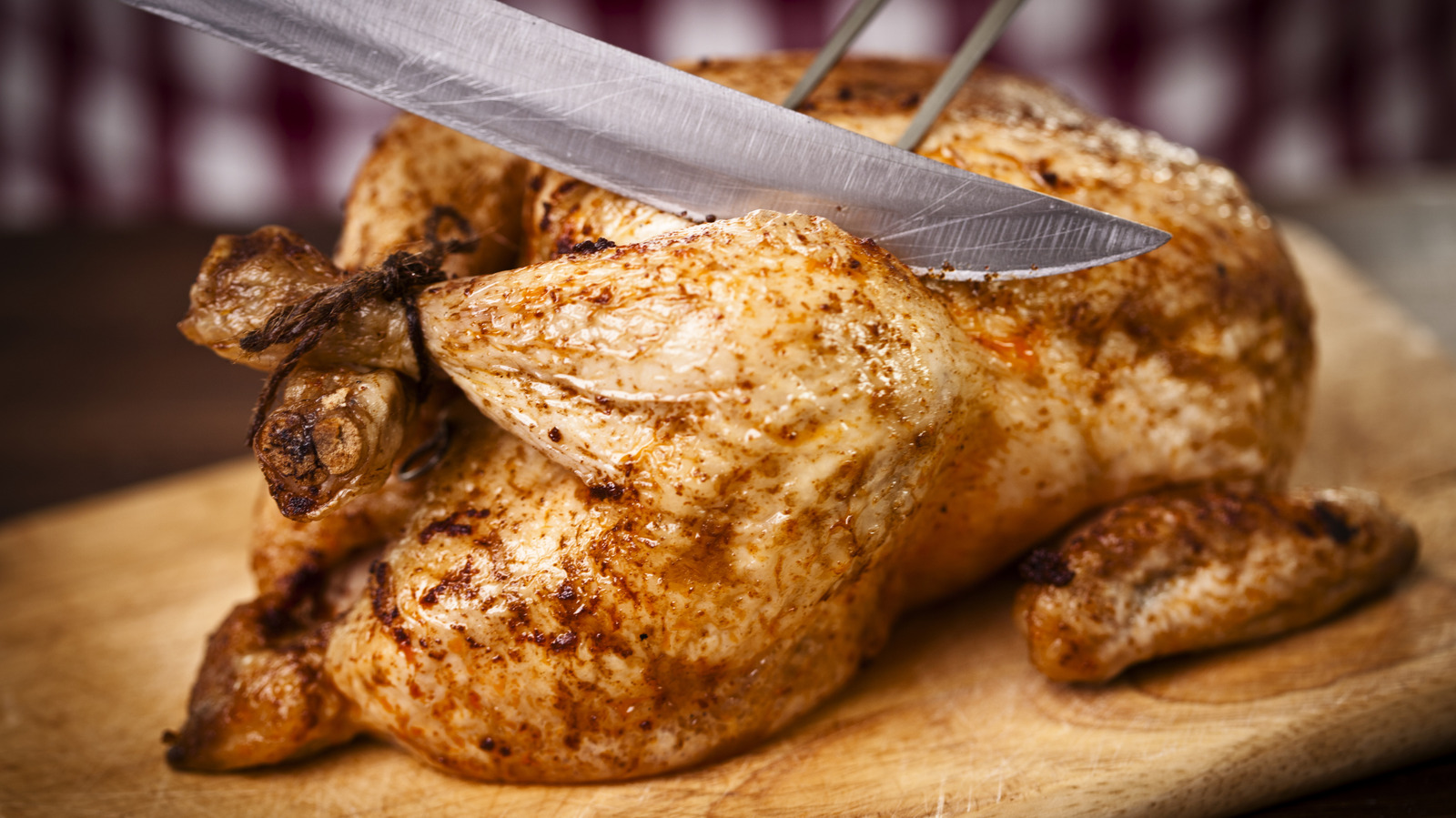
"“Color is a famously unreliable doneness cue in poultry,” Shelke says. “USDA FSIS [the U.S. Department of Agriculture's Food Safety and Inspection Service] notes that safely cooked poultry can range from white to pink to tan, and there are several reasons for the pink blush.” These reasons can even be as simple as the age of the bird. Shelke explains that most rotisserie chickens are made from birds that are just 6-9 weeks old, meaning they have thinner skin and more porous bones than their older counterparts - both of which can lead to a touch of pink when cooked."
"“Gas-fired rotisseries produce CO, NO, and NO₂,” Shelke says, “that penetrate the surface and generate the same family of pink pigments seen in smoked meats.” In the young birds used for rotisserie chickens, these effects are particularly pronounced, as the thinner skin allows the gases to penetrate more readily. The result is a pinkish tint that can appear even when the chicken is cooked safely."
"The increased bone porosity in younger birds allows marrow hemoglobin to leach into the surrounding meat both during storage and the cooking process. “The result,” Shelke explains, “is a dark pink ring around” the bone area. This kind of localized discoloration can occur without indicating that the meat is unsafe or undercooked, because the pigment transfer is driven by the bird’s biology and handling."
Pinkness in chicken does not reliably indicate unsafe doneness or salmonella. USDA guidance notes that safely cooked poultry can appear white, pink, or tan. Rotisserie chickens are often made from young birds with thinner skin and more porous bones, which can allow pigments to show after cooking. Gas-fired rotisseries can produce gases that penetrate the surface and create pink pigments similar to those found in smoked meats. Younger birds also allow marrow hemoglobin to leach into surrounding meat during storage and cooking, sometimes forming a dark pink ring near bones. Additives and other processing factors can further contribute to a pinkish tint without meaning the chicken is undercooked.
Read at Tasting Table
Unable to calculate read time
Collection
[
|
...
]