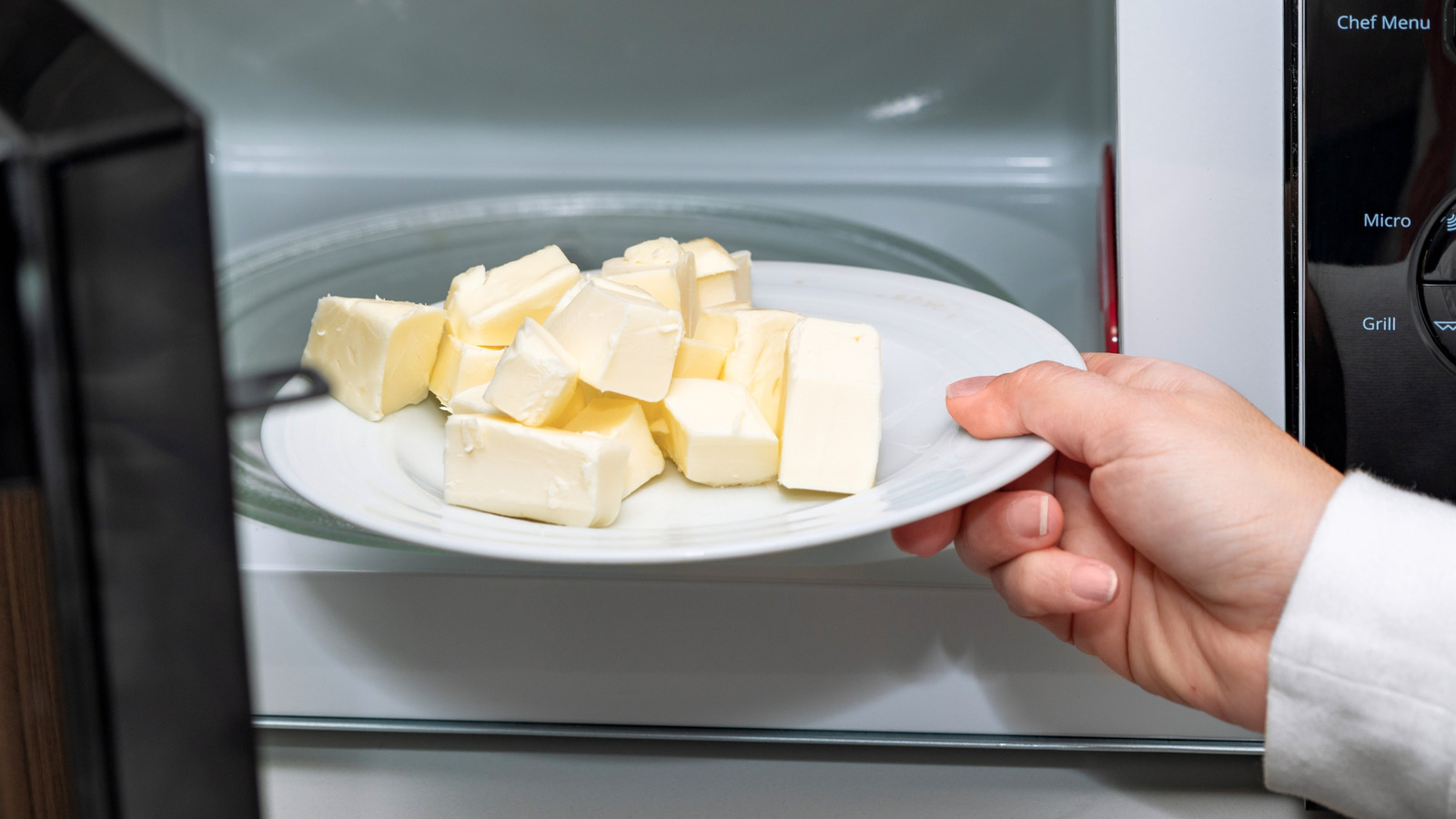
Microwaves heat food by targeting water inside it. Butter contains less than 20% water, so rapid microwave heating can cause butter explosions as water turns to steam and boils butterfat. This can leave some butter still solid while other parts erupt. Consistent softening comes from attention and patience rather than relying on a shortcut setting. Softening one stick of butter using the microwave’s standard factory setting for about 20 seconds, rotating, then heating another 10–15 seconds and repeating until softened helps prevent melted caverns. Properly softened butter stays solid enough to expand and suspend ingredients within the butterfat, supporting its emulsion structure.
"“Microwaves work by targeting the water inside food,” Dunagan explained. “Butter (at least butter in the USA) contains less than 20% of water. Many folks have had the misfortune of a butter explosion on their microwave plate. This eruption comes from rapid heating, changing water to steam, which boils parts of the butterfat.” She added that this is why you might still have solid butter amidst the explosion."
"“When softening butter in the microwave, the standard setting will work perfectly well,” she explained. “Many folks want a programmable button for this, but the best way for consistent outcomes is really just a moment or two of attention.” She suggested incrementally heating butter in the microwave in short time intervals to prevent those melted caverns that boil the fat."
"“I recommend softening one stick of butter, using the standard factory setting of the microwave, by heating for 20 seconds, rotating to one side, heating for another 10-15 seconds, repeating until softened,” she said."
"“Butter needs to remain solid in order to expand and suspend other ingredients within the butterfat. Butter itself is already an emulsion of butterfat, milk solids and water. When it is properly softened, it acts as a founda”"
Read at Tasting Table
Unable to calculate read time
Collection
[
|
...
]