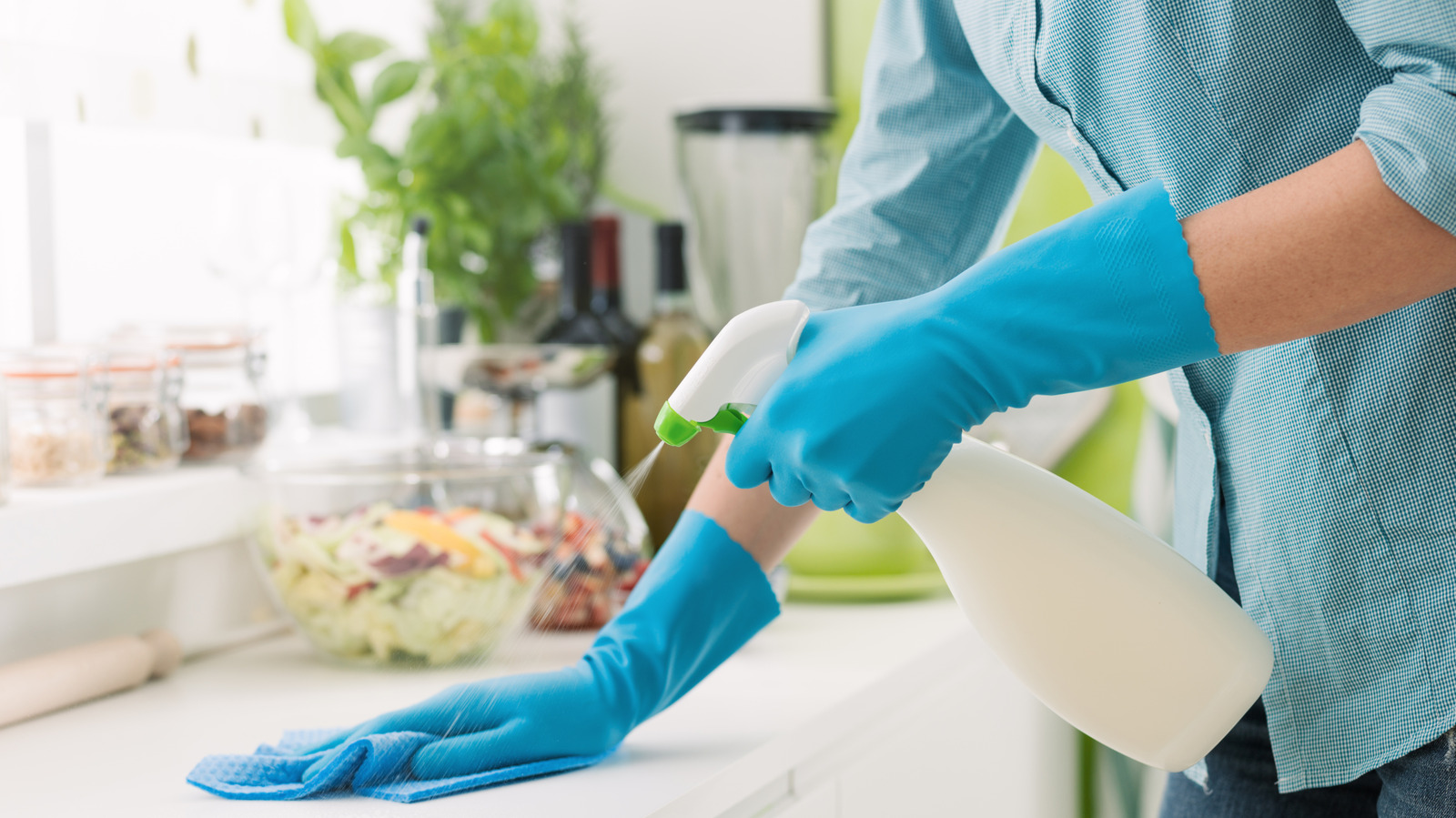
"Cleaning your kitchen really only means removing dirt, grease, spills, and food particles from surfaces using soap and water. This should be a daily task in order to prevent odors and kitchen pests, and generally maintain a functional meal prep environment. While cleaning can lower the risk of spreading germs, it does not actually kill the potentially dangerous pathogens that may be present."
"To disinfect properly, you need to clean first, then use EPA-registered products that state they kill 99.9% of bacteria and viruses on surfaces. This may include bleach sprays or non-bleach disinfecting solutions. You should clean all high-touch, high-risk, and heavily used areas, including sinks, counters, handles and knobs, floors, light switches, and stovetops."
"Disinfecting is not necessarily a daily task, but it should be done if someone is ill, before food prep to prevent the spread of germs from packaging and raw foods to prepared foods, or if there is any chance a surface came into contact with raw poultry, meat, or eggs."
Kitchen hygiene requires understanding three distinct processes: cleaning, disinfecting, and sanitizing. Cleaning removes visible dirt, grease, and food particles using soap and water—a daily task for countertops, stovetops, and appliances. Disinfecting uses EPA-registered products to kill 99.9% of bacteria and viruses after cleaning, necessary when someone is ill, before food preparation, or after contact with raw proteins. Sanitizing reduces germs to safe levels through different methods. Many people confuse these processes, creating potential health risks. Each task requires specific tools and timing to maintain a safe, hygienic kitchen environment for food preparation.
Read at Tasting Table
Unable to calculate read time
Collection
[
|
...
]