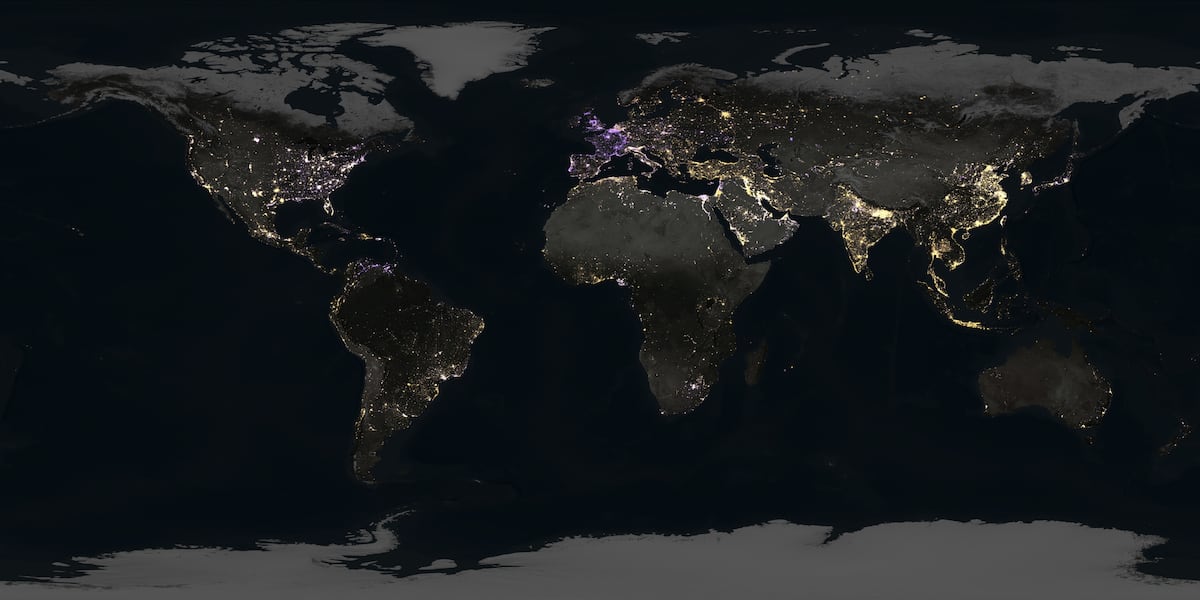
Light pollution is on the rise, with a 16% increase in artificial light since 2014. However, certain areas, particularly in Europe, are seeing a decrease in light due to technological advancements and environmental awareness. Conflicts in regions like Ukraine and Venezuela have also contributed to reduced light levels. The study, utilizing data from 1.16 million satellite images, indicates that decreased nighttime illumination can reflect societal adaptation and effective government policies rather than decline or poverty.
"According to the instrumentation used in the Black Marble project, artificial light captured from space has increased by 16% since 2014. But behind this net increase lies another reality: during the same period, there have been areas of the planet where light radiance has decreased."
"We can consider these dynamics as the heartbeat of society. With this daily data, we can observe the impact of crises. We see how society responds to major disruptions."
"Decreased daylight isn't always a sign of poverty or decline; sometimes, as we see in Europe, it's a sign of adaptation and of government policies working in real time."
Read at english.elpais.com
Unable to calculate read time
Collection
[
|
...
]