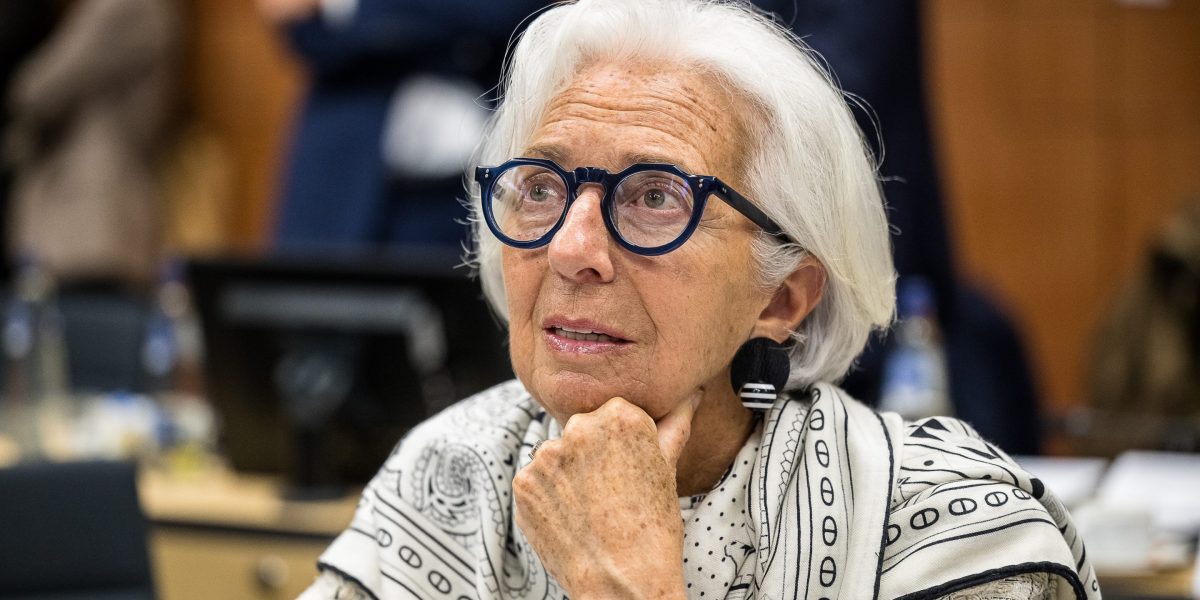
European officials expect oil and gas prices to remain above pre-Iran-war levels until at least the end of 2027, with other goods prices trending upward. Higher energy prices are cited as the main driver of inflation forecasts of 3.1% for this year and 2.4% for 2027, compared with a prior 1.9% forecast for this year. Energy inflation is expected to spread gradually across other sectors. Even if the Middle East conflict ends immediately, lagging effects are expected to keep prices elevated. The ECB plans to take necessary measures to maintain 2% price stability, monitoring aftereffects of the energy shock and relying on EU oil reserves. Eurozone growth is projected at 0.9% this year and 1.2% in 2027, avoiding a recession scenario.
"We expect that this energy inflation will gradually also trickle down to different sectors of the economy. Higher energy prices are primarily responsible for driving inflation to a forecast 3.1% for this year and 2.4% for 2027. That's significantly higher than the earlier forecast for this year of 1.9%."
"Even if the conflict in the Middle East ended now, "lagging effects" would keep the prices of goods elevated. "And it's probably a fact that price levels will be higher at the end of this crisis, when we see the end of the crisis," Lagarde said."
"She said that the ECB would take "all the necessary measures" to keep price stability at 2% by paying close attention to the aftereffects of the initial economic shock brought on by the energy price hike. She also pointed to how much oil the EU holds in reserve to meet possible demand."
"Pierrakakis affirmed that economic growth within the eurozone would reach 0.9% this year and 1.2% in 2027, lower than the previous forecast, "but clearly far from a recession scenario." For the EU, an end to the crisis would mean a return to free navigation without the imposition of any tolls through the Strait of Hormuz, from which roughly a fifth of the world's oil and gas passes."
Read at Fortune
Unable to calculate read time
Collection
[
|
...
]