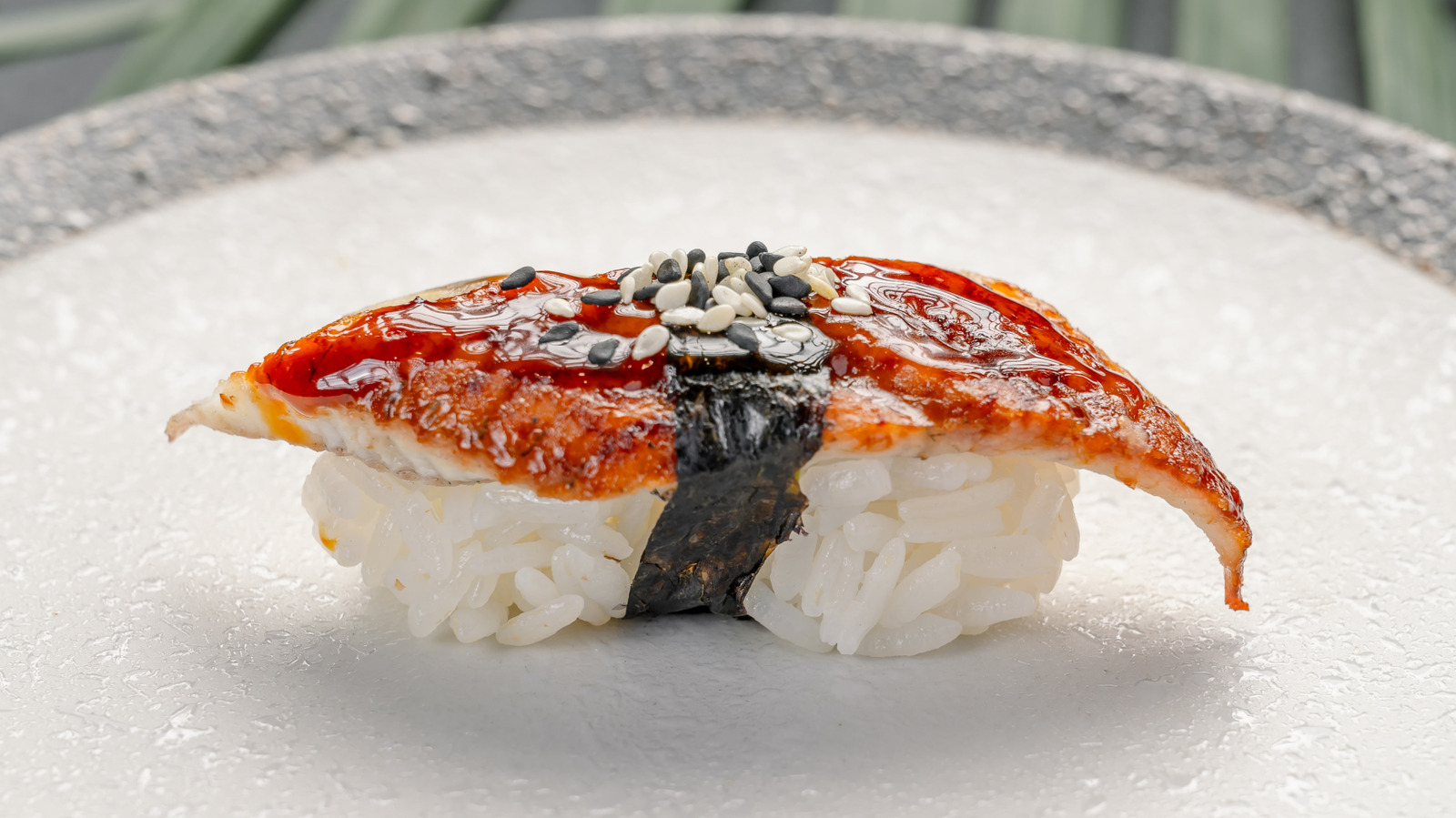
Eel (unagi) is commonly served cooked because raw eel blood contains a toxin called ichthyohemotoxin; cooking neutralizes the toxin and makes the meat safe to eat. Wild eel populations have declined sharply worldwide due to overfishing, habitat loss, climate change, pollution, and disease. Japanese and American eels are endangered and European eel populations are critically endangered. Some fishing remains illegal, while most sold eel now originates from aquaculture. Eel farming produces significant pollution from effluent and chemical use, including banned substances, and raises further environmental and resource concerns due to the species’ carnivorous needs.
"Eel is far from the most common variety of fish to pop up on the menu at the majority of U.S. seafood restaurants, but it is a mainstay at sushi joints. Unagi - the Japanese word for eel - is a common protein found in nigiri and maki, typically cooked and coated in the traditional sweet and savory eel sauce made with mirin, sugar, soy sauce, and sometimes sake. Despite its prevalence in Japanese cuisine, however, you might want to trim that unagi roll from your order."
"The reason eel is typically served cooked even in sushi is that eating raw eel is dangerous, as eel blood contains a toxin called ichthyohemotoxin. Fortunately, cooking neutralizes this toxin, making it perfectly safe to eat, so that fear of toxicity is not why eel is better avoided at the sushi counter. No, the real reason eel is one of the dishes you should never order at a seafood restaurant comes down to questions of sustainability and environmental degradation."
"Wild eel populations around the world are in trouble. Overfishing, habitat loss, climate change, pollution, and disease have resulted in severe drops in freshwater eel stocks across species and regions. Japanese and American eels are listed as endangered, and European eel populations are in even worse shape, being listed as critically endangered. In spite of these populations sitting on the brink of collapse, some are still illegally fished, though the majority of eel sold these days comes from aquaculture."
Read at Tasting Table
Unable to calculate read time
Collection
[
|
...
]