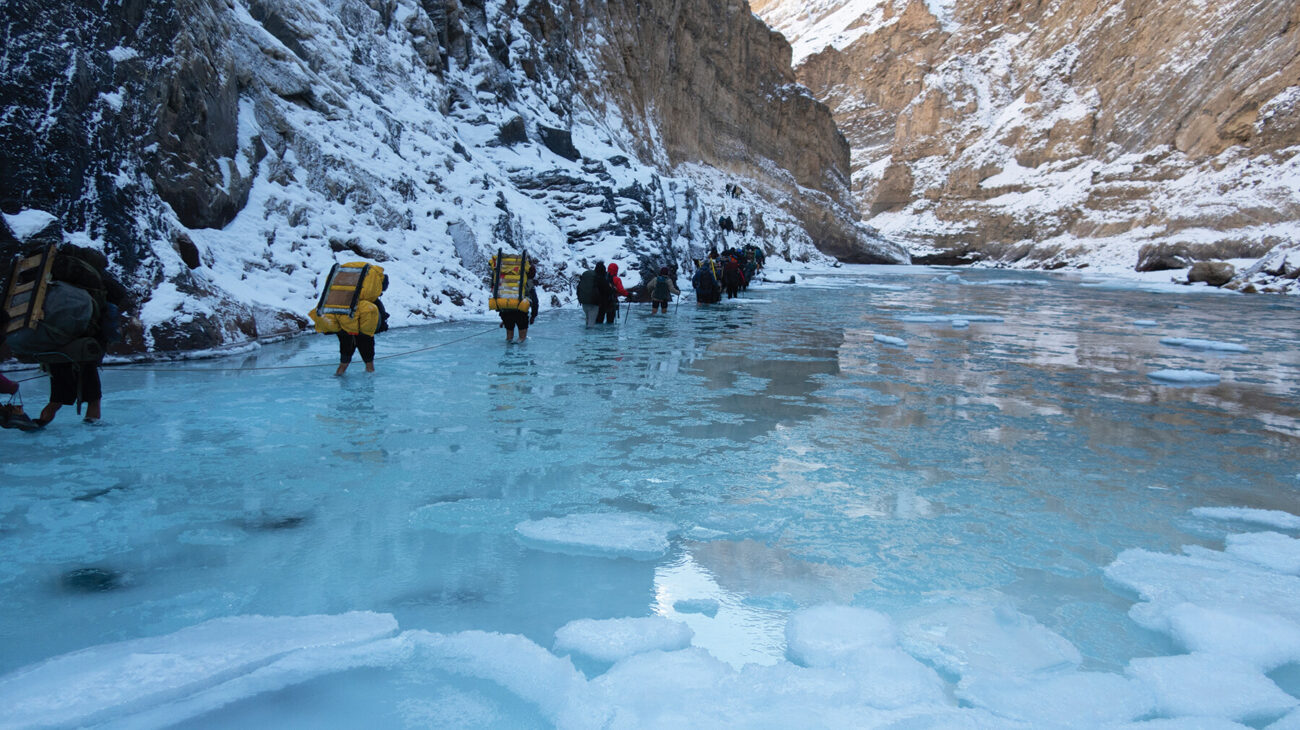
"Every winter in the Ladakh region in northwest India, the two roads that connect the small villages in the Zanskar Valley with the rest of the country close, are overwhelmed by snow. But for centuries, locals have had a workaround: a road of ice formed by the frozen Chadar River. A week-long trek in frozen temperatures connects them to the outside world."
"Climate change is destabilizing the river's freezing patterns, and development is bringing tourism and resources to this long-isolated region. Wealthy adventure tourists are the main Chadar trekkers these days, and though some Zanskaris still use the ice road themselves to access neighboring towns, a new partially-completed paved highway is changing that."
"In isolated regions like the Zanskar Valley, there is little funding or resources for quantitative scientific research on climate change. "There's no scientific research on how the river is freezing, how it is affected. So, there's no other way to talk about it than from the experience of the people living there," explained Gagné, who has worked in the region for over a decade."
In Ladakh's Zanskar Valley, winter snows close the two roads connecting villages; locals use a frozen Chadar River as an ice road, a week-long trek linking them to the outside world. Climate change is destabilizing the river's freezing patterns while development brings tourism and resources to this long-isolated region. Wealthy adventure tourists now dominate Chadar trekking, and a partially completed paved highway is reducing local reliance on the ice route. Limited funding for quantitative research means local embodied experiences provide primary evidence of environmental change and shifting livelihoods.
Read at State of the Planet
Unable to calculate read time
Collection
[
|
...
]