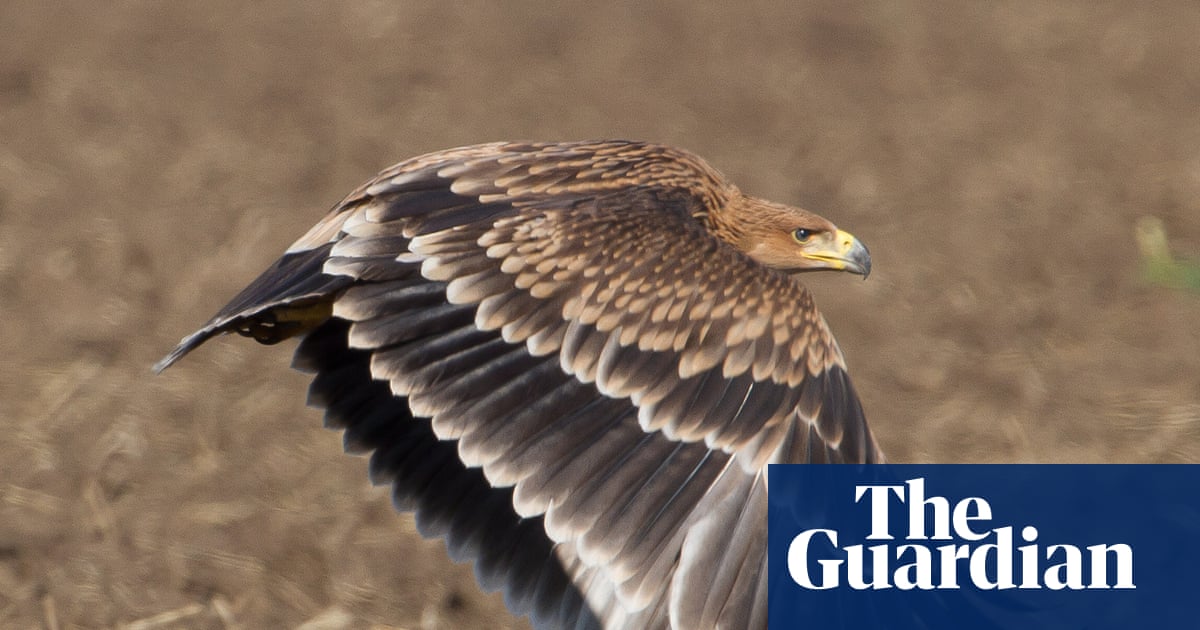
"At the start of every spring, before the trees in northern Serbia begin to leaf out, ornithologists drive across the plains of Vojvodina. They check old nesting sites of eastern imperial eagles, scan solitary trees along field margins, and search for signs of new nests. For years, the work of the Bird Protection and Study Society of Serbia (BPSSS) has been getting more demanding and more rewarding."
"Driving through Vojvodina, vast fields stretch to the horizon, crisscrossed by straight farm tracks. As agriculture intensified, oaks and poplars were cut down to straighten fields and maximise yields. It made Vojvodina one of Europe's least forested regions. In some municipalities, tree cover drops below 1%. You can drive here for an hour and a half and not see a single tree taller than five metres, says Milan Ruzic, executive director of BPSSS."
"The lack of trees is one reason the imperial eagle, once widespread struggled for decades, but it's not the only one. Its decline started with persecution. The region has a history of unrest and war, Ruzic says. Every household had a rifle. People shot birds of prey for fun or to protect livestock. Raptors were the enemy. We'd point out there were fewer imperial eagles left in the country than people drinking beer in the room. People suddenly cared Milan Ruzic"
Ornithologists from BPSSS conduct spring surveys across Vojvodina to locate eastern imperial eagle nests, checking old sites and solitary trees across expansive farmland. Breeding numbers climbed from a single pair in 2017 to 19 pairs, with ten successful nests last year. Intensive agriculture removed oaks and poplars, leaving some municipalities with under 1% tree cover and very few tall trees for nesting. Historical persecution, widespread shooting and postwar poisoning campaigns targeting large carnivores further decimated raptors, because poisoned carcasses attract eagles and vultures and caused significant mortality.
#eastern-imperial-eagle #habitat-loss #conservation #agricultural-intensification #wildlife-poisoning
Read at www.theguardian.com
Unable to calculate read time
Collection
[
|
...
]