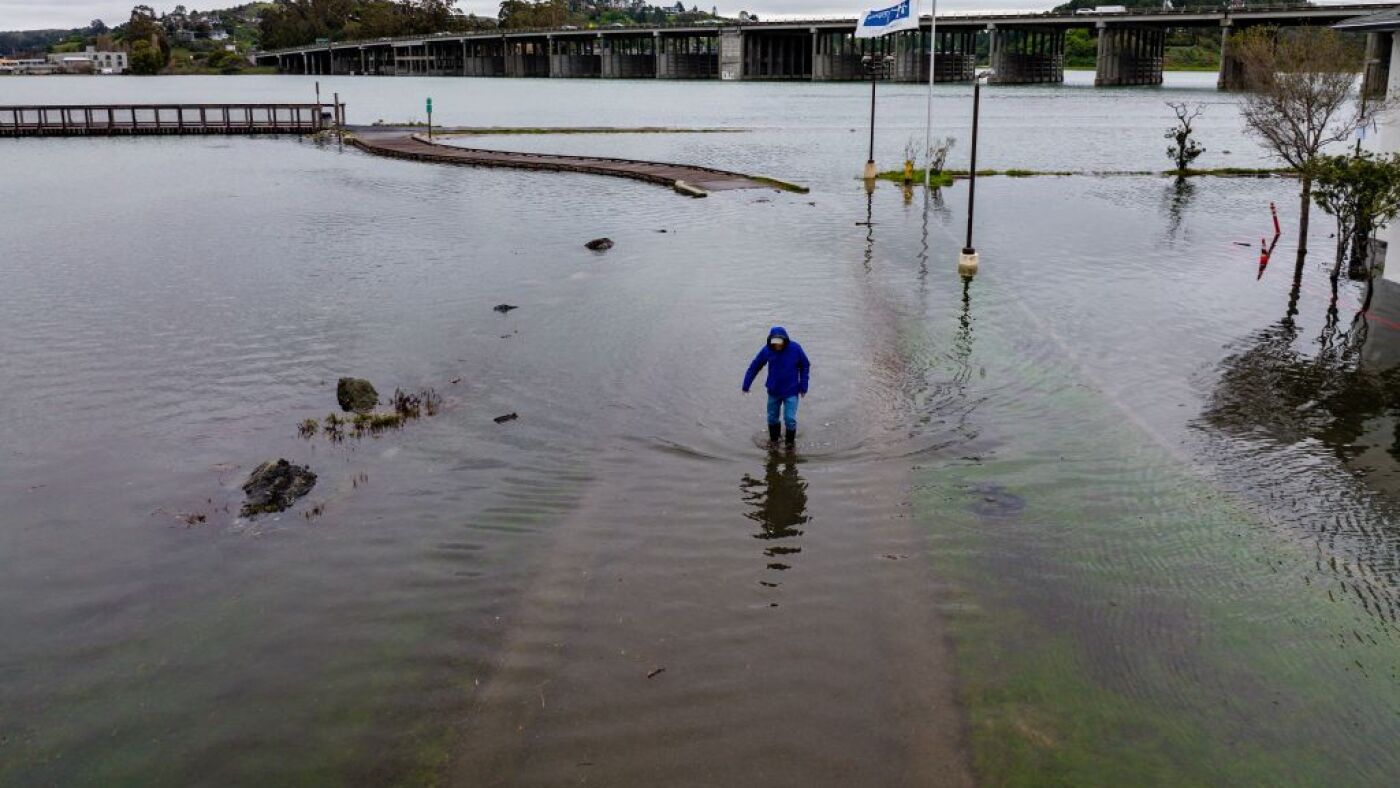
"The new study finds that most scientific research uses ocean heights that are about 10 inches lower than they actually are today. That means the full impact of future sea level rise is underestimated because more land is facing inundation than previous studies have shown. The underestimate is greatest in Southeast Asia and the Indo-Pacific region, where sea levels are more than three feet higher today than most research assumes."
"As many as 132 million more people than previously thought may be in the path of rising seas, according to a study published in the journal Nature. That's if sea levels rise by three feet from where they were from 1995-2014, something that could happen by the middle of the next century, depending on how much humans are able to curtail the burning of fossil fuels that produce heat-trapping emissions."
"People from an island that is very lowly elevated and is already feeling the effects of sea level rise, they know from their own experience standing at the coastline how high the water is. Having an accurate idea of the overall global impact is important, especially for vulnerable countries urging the world to do more in international climate negotiations."
A new study published in Nature reveals that previous sea level rise research significantly underestimated the number of people at risk from coastal inundation. The discrepancy stems from baseline measurements of current sea levels being approximately 10 inches lower than actual measurements. If sea levels rise three feet by mid-century, as projected, 132 million additional people beyond previous estimates could face inundation. The underestimation is most severe in Southeast Asia and the Indo-Pacific region, where actual sea levels are more than three feet higher than assumed in most research. While local communities use direct measurements for planning purposes, accurate global impact assessments remain crucial for international climate negotiations and vulnerable nations advocating for stronger climate action.
#sea-level-rise #climate-change #coastal-vulnerability #scientific-measurement #climate-negotiations
Read at www.npr.org
Unable to calculate read time
Collection
[
|
...
]