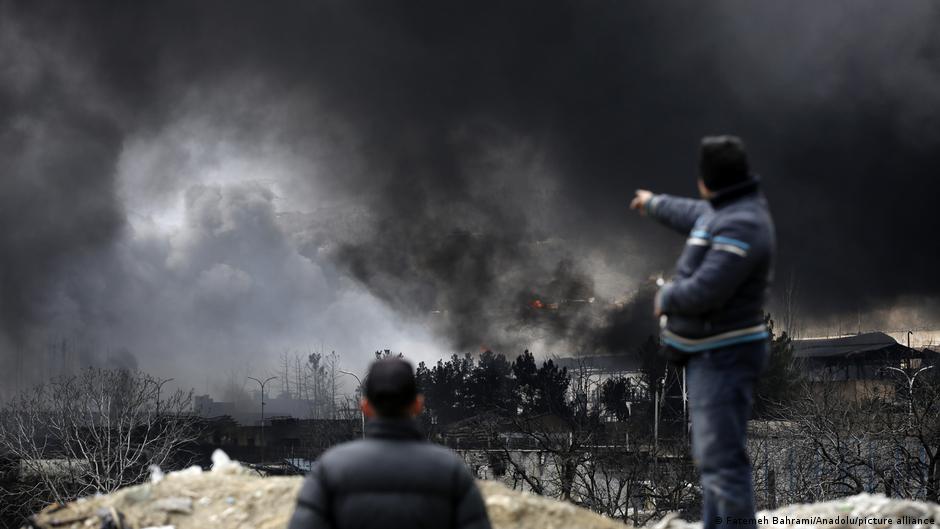
"The US are claiming that they've hit 5,000 sites. So right now, we're just scratching the surface. That's just the tip of the iceberg. The researchers say that figure likely captures only a fraction of the damage from strikes on missile bases to attacks on oil tankers in the Persian Gulf."
"The United Nations has warned that recent strikes on oil facilities could risk serious environmental consequences across the region, with immediate possible impacts on safe water, on air that people need to breathe, and on food."
"The smoke likely included pollutants, including fine particulate matter and sulfur dioxide, but also toxic volatile organic compounds and other hazardous combustion by-products. Such particles can penetrate deep into the lungs and are associated with increased risks of respiratory and cardiovascular illness, particularly among infants and the elderly."
The ongoing conflict between the US, Israel, and Iran has caused extensive environmental damage through strikes on oil facilities and missile bases. The Conflict and Environment Observatory has identified over 300 incidents of potential environmental harm, though this represents only a small portion of the estimated 5,000 sites hit. Recent Israeli strikes on Iranian oil facilities released toxic pollutants including fine particulate matter, sulfur dioxide, and volatile organic compounds into the atmosphere. Black rain—a mixture of oil and precipitation—fell on Tehran, affecting nearly 10 million residents. The UN warns of serious regional consequences including contaminated water, polluted air, and compromised food supplies. Fine particulate matter and hazardous combustion byproducts pose particular risks to respiratory and cardiovascular health, especially for vulnerable populations.
#environmental-damage #air-pollution #public-health-impacts #middle-east-conflict #oil-facility-strikes
Read at www.dw.com
Unable to calculate read time
Collection
[
|
...
]