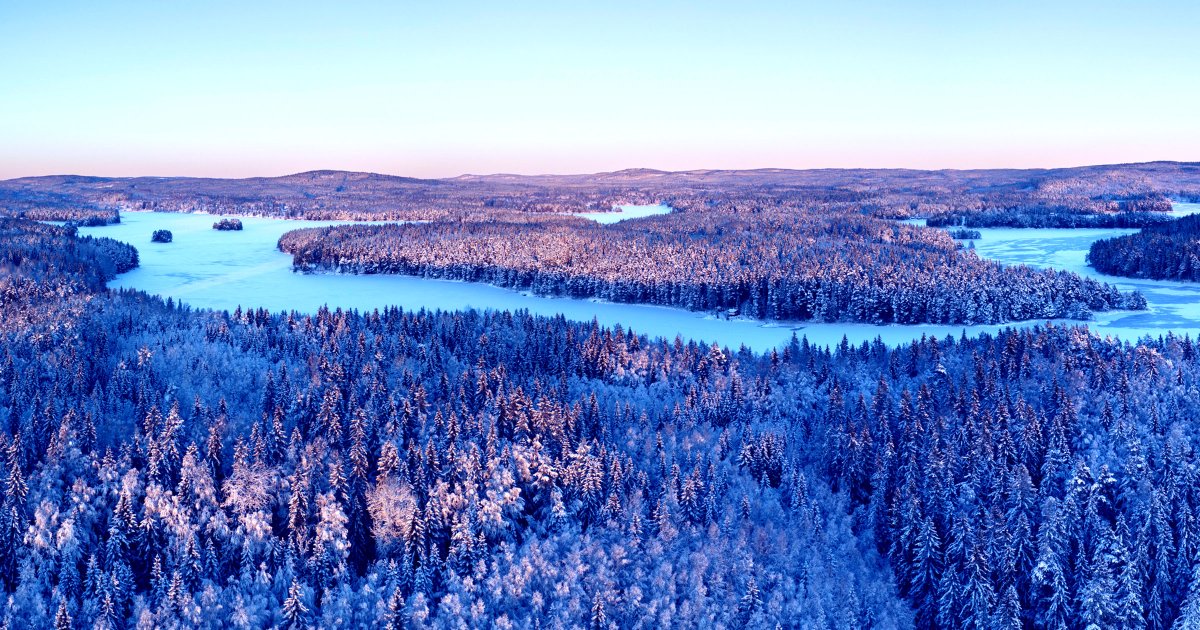
"Climate change is leaving plenty of dramatic reminders behind as it reshapes our planet, from rapidly retreating glaciers to more frequent extreme weather events. Forests are also bearing the brunt of global warming. Scientists recently examined satellite data ranging from 1985 to 2020 and made a striking discovery: that boreal forests, the largest terrestrial biome on Earth - and which are warming faster than any other type of forest - are steadily shifting northwards as they retreat from the heat."
"As detailed in a new study published in the journal Biogeosciences, an international team of researchers - including from NASA's Goddard Space Flight Center - analyzed imagery from the space agency's Landsat satellites. They created a detailed map of tree cover at a resolution of 100 feet to track changes over a 36-year time span. The finding was stark: that boreal forests not only had grown by 12 percent, but had shifted northward by 0.29 degrees of mean latitude."
""These findings confirm the northward advance of the boreal forest and implicate the future importance of the region's greening to the global carbon budget," they concluded in their paper. The implications these changes have on climate change and the future of our planet are nuanced, given the degree of complexity involved. On one hand, a growth in young boreal trees could allow the forests to soak up more carbon in the atmosphere, an estimated 1.1 to 5.9 gigatonnes. To put that number into perspective, all of the world's trees hold approximately 861 gigatonnes of carbon."
Satellite imagery from 1985 to 2020 mapped tree cover at 100-foot resolution and revealed boreal forest growth of 12 percent alongside a mean northward shift of 0.29 degrees latitude. Boreal forests warm faster than other forest types and constitute the largest terrestrial biome and a major carbon sink. Increased young-forest area could sequester an estimated 1.1 to 5.9 gigatonnes of carbon, though ongoing warming creates uncertainty about long-term sequestration capacity. Demographic shifts toward younger trees change forest structure and function, with complex implications for carbon dynamics and ecosystem stability.
Read at Futurism
Unable to calculate read time
Collection
[
|
...
]