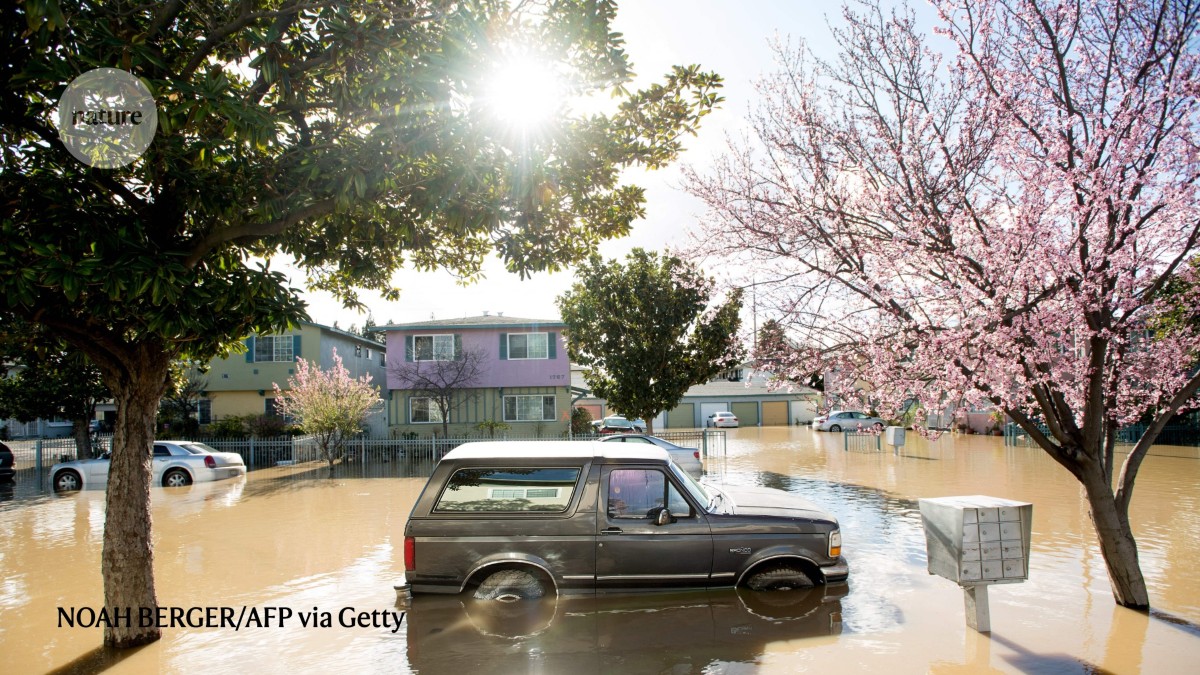
"Coyote Creek's waters rose fast in February 2017 amid a series of storms. Rainfall filled the small river in northern California, which runs 103 kilometres from its headwaters near Morgan Hill to San Francisco Bay. In San Jose, where the river was forced into a channel tightly constrained by development, water surged from the creek. The resulting flooding forced 14,000 people to evacuate and caused more than US$73 million of damage."
"Their approach has solid scientific roots. When land is paved, rain cannot soak into the soil, increasing the risk of flooding. One study found that, for every 1% increase in the area of roads, pavements and car parks, the annual flood magnitude in nearby waterways increases by 3.3%."
"A growing understanding of this connection has led many cities to start de-paving small areas, digging and planting bioswales to absorb storm-water run-off, offering incentives for green roofs, and levying higher taxes on properties with a lot of impervious surface area. But the proposal by San Jose's environmentalists was different. Their aim was not to make the city itself more permeable to water, but to reduce the risk of flooding by taking action upstream in the watershed, beyond the city's urban footprint."
In February 2017 intense storms caused Coyote Creek to surge, flooding San Jose where a constrained, developed channel amplified damage, forcing 14,000 evacuations and causing over US$73 million in losses. Scientific evidence links increased paving to larger flood magnitudes because impervious surfaces prevent infiltration; one study estimated a 3.3% rise in annual flood magnitude for each 1% increase in paved area. Cities have responded by de-paving, installing bioswales, incentivizing green roofs and taxing impervious properties. San Jose voters approved a bond to help purchase 380 hectares of North Coyote Valley to preserve upstream open space and reduce flood risk.
Read at Nature
Unable to calculate read time
Collection
[
|
...
]