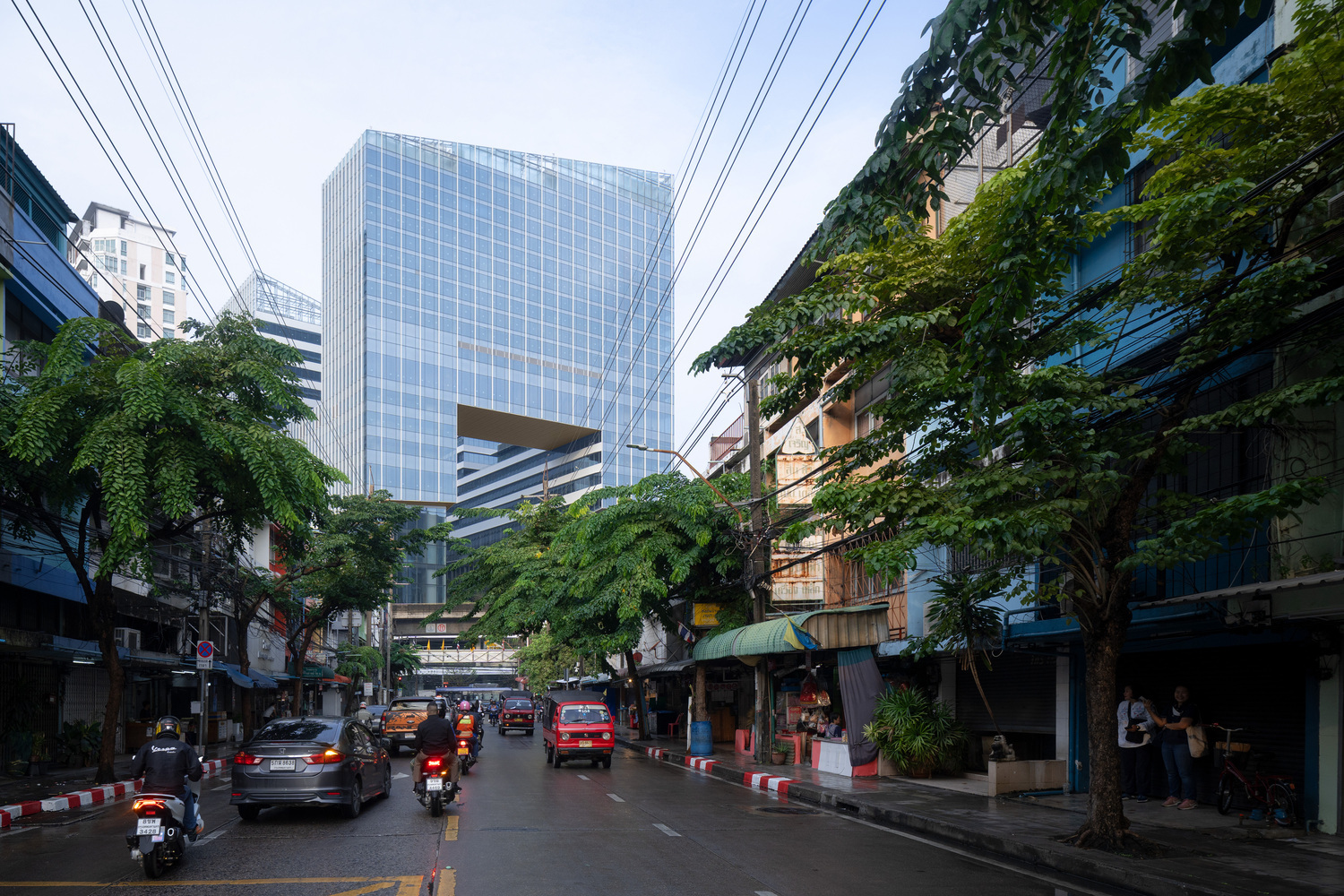
"Climate risk is a shared global condition, marked by intensifying heat, water scarcity, flooding, and ecological loss that no border can contain. In 2025, these pressures have sharpened a collective awareness that government pledges and international agreements are not keeping pace with lived realities. Across geopolitical contexts, the tension is no longer abstract or future-oriented, but immediate and structural, revealing gaps between policy ambition and material change. This moment has exposed a growing reliance on disciplines outside formal governance to respond quickly, intelligently, and with accountability."
"Architecture increasingly occupies this space as a mediator between ecology, culture, and technology, translating environmental constraints into spatial, material, and social responses. Over the past year, the profession has shown a clear shift away from mitigation alone toward strategies of climate adaptation and performance-driven innovation. Buildings and landscapes are no longer conceived as static objects, but as active systems that manage heat, water, energy, and biodiversity while remaining culturally grounded. In this transition, architecture has begun to reclaim its capacity to operate at multiple scales, from the detail of a façade to the resilience of entire urban territories."
"This editorial is structured around six project categories that emerged through close observation of recurring design strategies across regions and contexts. These categories reflect shared priorities around resilience, adaptability, and ecological integration, rather than isolated stylistic or technological trends. While presented as distinct lenses, they intentionally overlap, revealing how contemporary projects often operate across multiple environmental and social objectives simultaneously. Together, they form a practical tool for action, offering designers, planners, and environmental advocates a framework for translating climate optimism into built work."
Climate risk is global and intensifying, producing heat, water scarcity, flooding, and ecological loss that cross borders. In 2025, pressures have made governmental pledges and international agreements insufficient relative to lived realities. The gap between policy ambition and material change is immediate and structural across geopolitical contexts. A growing reliance on disciplines outside formal governance has emerged to provide rapid, accountable responses. Architecture now mediates ecology, culture, and technology, shifting from mitigation toward adaptation and performance-driven innovation. Buildings and landscapes function as active systems managing heat, water, energy, and biodiversity while operating across scales and informing resilient urban territories.
Read at ArchDaily
Unable to calculate read time
Collection
[
|
...
]