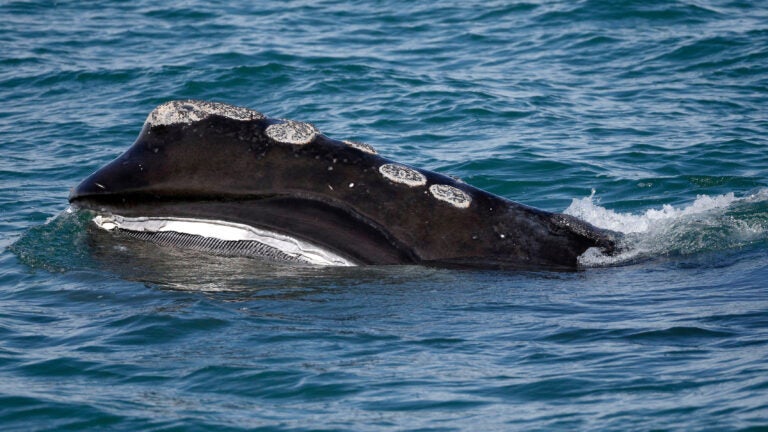
"'There is still time left for more baby whales to be born this winter, but 50 is not a reasonable expectation because of a lack of reproductive females in the population,' Brogan said. 'We're not going to be able to calve ourselves to recovery,' Brogan said. 'We also need to be doing more to tackle the two primary causes of right whale deaths, being entanglement in fishing gear and being hit by boats.'"
"The North Atlantic right whale's population numbers an estimated 384 animals and is slowly rising after several years of decline. The whales have gained more than 7% of their 2020 population, according to scientists who study them. The whales give birth off the southeastern United States every winter before migrating north to feed. Researchers have identified 15 calves this winter, the National Oceanic and Atmospheric Administration said Monday."
The North Atlantic right whale population is estimated at 384 animals and has risen more than 7% since 2020 after several years of decline. Fifteen calves have been identified this winter from coastal southeastern U.S. calving grounds before the whales migrate north to feed. Recovery requires roughly 50 or more calves per year for many years, but the population lacks sufficient reproductive females to reach that level. Primary threats are collisions with large ships and entanglement in commercial fishing gear. Federal protections are currently under moratorium through 2028, and fishing groups are seeking to extend the pause, leaving the species at continued risk.
Read at Boston.com
Unable to calculate read time
Collection
[
|
...
]