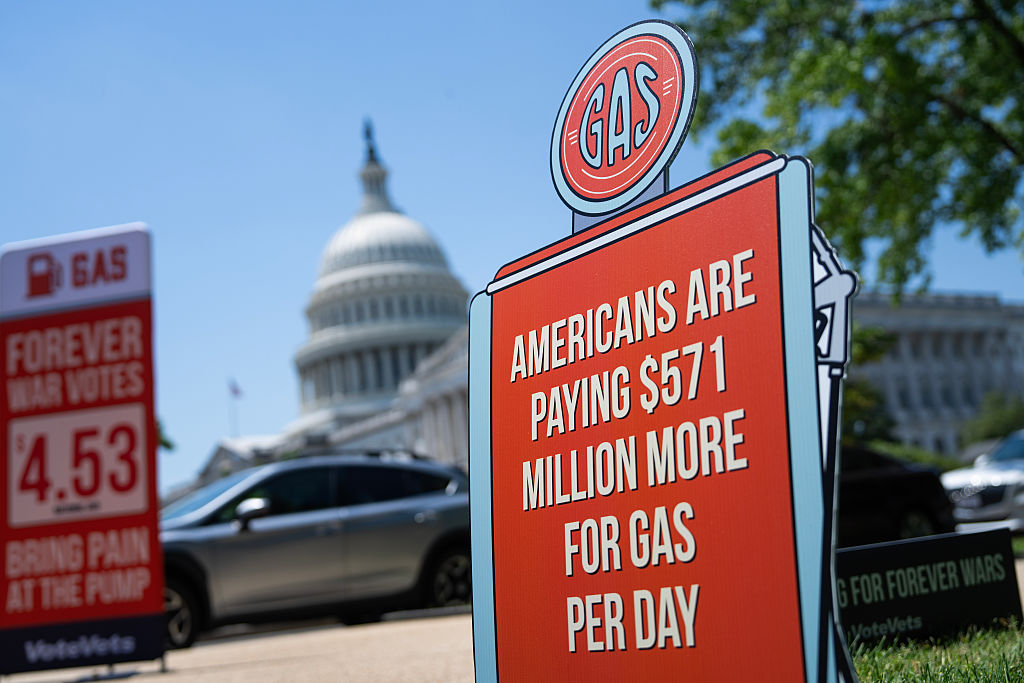
The accelerating global arms race is hindering climate action as critical minerals that are key to a sustainable future are being diverted to make the latest military hardware, according to a report The study from the Transition Security Project a joint US and UK venture reveals how the Pentagon is stockpiling huge stores of critical minerals that are needed for a range of climate technologies including solar panels, wind turbines, electric vehicles and battery storage.
"L.A.'s coal divestment is not just about discontinuing the use of coal to power our city - it's about building a clean energy economy that benefits every Angeleno. This milestone will further accelerate our transition to 100% clean energy by 2035."
When we were children, we relied on the knowledge of our elders-the call of birds, the shape of clouds, the rhythm of winds-to read the weather. But our human-induced changes bent nature out of recognition. The signs no longer matched what our parents and grandparents had known. The climate we inherited had been replaced by something unfamiliar and unforgiving. Later, living as a refugee in Uganda, I studied agriculture to confront the hunger that shaped our lives.
As Australia rides the AI boom with dozens of new investments in datacentres in Sydney and Melbourne, experts are warning about the impact these massive projects will have on already strained water resources. Water demand to service datacentres in Sydney alone is forecast to be larger than the volume of Canberra's total drinking water within the next decade. In Melbourne the Victorian government has announced a $5.5m investment to become Australia's datacentre capital,
China's carbon dioxide emissions have plateaued in 2025, indicating the country may have reached a peak after years of being the world's top emitter. The plateau reflects how China's record-setting build-out of wind and solar power and rapid expansion into electric vehicles has tempered fossil-fuel emissions, according to the nonprofit Center for Research on Energy and Clean Air. China accounts for around one third of all global greenhouse gas emissions, although historically the U.S. has emitted more carbon.
Forecasters said people can expect difficult travelling conditions and for debris and loose objects to be displaced. They also reported the rest of the week to be characterised by "changeable" temperatures as conditions are forecast to get wetter over the next seven days. Met Éireann's extended-range forecast for next week predicts "above average" rain and temperatures, with the exception of chillier nights.
It was only when huge areas of Iceland started turning purple that authorities realised they had made a mistake. By then, it was too late. The Nootka lupin, native to Alaska, had coated the sides of fjords, sent tendrils across mountain tops and covered lava fields, grasslands and protected areas. Since it arrived in the 1940s, it has become an accidental national symbol. Hordes of tourists and local people pose for photos in the ever-expanding fields in June and July, entranced by the delicate cones of flowers that cover the north Atlantic island.
Judging by the sale and well-stocked rails, the items didn't appear to be in demand, and with so many identikit sequin garments in existence (more than 500 black sequin vests at the same price and under on Vinted at the time of writing in the UK), what's the point of producing more every year? You may have guessed I am not a fan of sequins.
During the twentieth century, the United States declared war on wildfires. In 1935, the chief of the U.S. Forest Service announced "an experiment on a continental scale": every blaze was to be put out by 10 A.M. on the morning after it began. Given that fires had been burning regularly for hundreds of millions of years, this was an enormous departure from the natural order. Fire clears vegetation and delivers nutrients to soil, creating fresh cycles of growth that help ecosystems.
In the most wide-ranging analysis of the global plastic system, the Pew Charitable Trusts, in collaboration with academics including at Imperial College London and the University of Oxford, said plastic, a material once called revolutionary and modern, was now putting public health, world economies and the future of the planet at risk. If nothing is done, plastic pollution will more than double in the next 15 years to 280m metric tonnes a year, the equivalent to a rubbish truck full of plastic waste being dumped every second.
The rapid growth of "energy-hungry" data centres is delaying new homes in London, just as its housing crisis is "at its worst", a new report has warned. Data centres are giant warehouses full of powerful computers used to run digital services, such as streaming and artificial intelligence. However, they require masses of electricity from the National Grid to keep running.
The plan - hatched by Troy's economic-development office to revitalize the downtown area and now driven by regional utility company National Grid - is to combine the buildings' heating and cooling systems in a single high-efficiency, low-carbon network. The hope is that more buildings will join the scheme before the thermal network begins operating in 2027. Ultimately, it might wean all of the Central Troy Historic District off natural gas.
Whether it's investigating the financials of Elon Musk's pro-Trump PAC or producing our latest documentary, 'The A Word', which shines a light on the American women fighting for reproductive rights, we know how important it is to parse out the facts from the messaging. At such a critical moment in US history, we need reporters on the ground. Your donation allows us to keep sending journalists to speak to both sides of the story.
When the first skyscraper was built in Chicago in 1885 - a modest ten storeys - people were afraid to walk under the steel-framed building, fearing it would collapse. Today, as towers made of wood go up in cities around the world, the response is a similar mixture of wonder and fear. People are concerned about the fire risk and the structural stability, but the truth is that wooden construction is healthier, both for people and for the planet.
The MFD sample collection includes samples collected as part of the MFD sampling campaign, as well as samples contributed by members of the MFD consortium. The samples taken as part of the MFD sampling campaign were registered and associated with the appropriate metadata using codeREADr ( https://www.codereadr.com) using a linear barcode attached to sterile 100 ml sample containers. After collection, the samples were stored between 4 °C and 10 °C for up to 48 h before being deposited at −20 °C for later processing.
City living is proving pretty popular. The proportion of people living in urban areas in 1950 was a bit less than one-third. Today, it's more than half. By 2050, two-thirds of the global population will call a city home - a complete reversal of the situation 100 years earlier. The health and happiness of these people, and the world's responses to the specific challenges faced by city-dwellers, are therefore central to the future prospects of humanity.
It encircles eight square miles of lagoon, forming a thin border between sky and ocean. Migratory birds make it their landing strip; green turtles use it as a nesting ground, plowing tracks through sand as powdery as snow. Though Astove's sand flats are as smooth as mother-of-pearl, its reefs are treacherous. Sharp blades of fossilized coral, or champignon, can shred feet and destroy vessels.
Record-breaking heat is now routine. The devastating heatwave that wracked southwestern Europe in 2003 and claimed more than 70,000 lives produced temperatures not experienced in the region since the sixteenth century. Subsequent summers have extended this trend. In 2024, the continent recorded its hottest summer on record. In urban environments, where most of the world's population lives, the problem is especially acute. "If you build a city, inevitably it will be hotter," says Edward Ng, an architect at the Chinese University of Hong Kong.
Colombian Bitcoin and crypto mining company Horeb Energy reveals 2.5 cents per kWh of green biogas energy in the North Santander region of the Latin American country. The company has achieved energy prices 50% lower than the North American average of 3.5 to 6 cents per kwh for Bitcoin mining operations, through a strategic alliance with multinational energy company Veolia. Authorized in 1853 by Napoleon III to help build out public water works infrastructure in France, Veolia is a global leader in environmental services focused on water, waste, and energy solutions. Today in Norte de Santander, Colombia, the company operates critical facilities dedicated to biogas valorization and solid waste management - a common problem in Colombia and Latin America in general, known for massive landfills. Veloia also operates the "Centro Inteligente de Gestión Ecológica" - CIGE Guayabal landfill, a pioneer in biogas systems development in the region.
Adrian Wolf is not studying just one bird, not anymore. He manages forests in western Washington state. He is stewardship director for the Great Peninsula Conservancy, and he relies on bird sounds to measure his work. He thinks of it like the birds are leaving reviews. WOLF: This habitat is good. I'm going to keep coming back here, and I'm going to keep reading. That's the best yelp review you can have is you come back.
With costs climbing across the US, energy prices stand out, made worse by record-breaking summer heat and recent waves of scorching temperatures that have affected multiple states. Having endured several of them this season, I'm always looking for ways to reduce energy use. There are many small things you can do to shave dollars off your monthly energy bill, and they go beyond simply switching off the lights when you leave the room. Did you know that you can save 3% on cooling costs for every 1°F decrease in your thermostat setting? As a fan of data, I've explored multiple quantifiable ways to save energy and how these methods translate into financial savings.
For more than a century, residents of growing American cities reshaped their rivers to serve industrial and manufacturing needs. Waterways were straightened, deepened, paved, or buried to support shipping routes and to move materials efficiently across regions. These transformations created an urban landscape in which rivers were treated as productive infrastructure rather than as living ecological systems.
One major limitation to achieving conservation goals is the lack of information on the impacts of diverse human activities on biodiversity and resulting ecosystem functions and services2,3. To be useful in national and international decision-making, such information needs to be comparable across spatial and temporal scales and capture changes in biodiversity relevant to sustaining societies and economies2,3. Ecosystem condition or integrity represents the degree to which the composition, structure and function of an ecosystem resembles that of its reference state7.
The country recorded an average of 493mm of rain this autumn, making it the fourth wettest in 85 years of records for Ireland, according to preliminary Met Éireann data from 25 weather stations. In its latest seasonal climate report, the national forecaster said autumn 2025 was very wet but mild. September was relatively cool and wet. It was followed by a mild, dull, and wet October, with Storm Amy bringing widespread heavy rain and the windiest period of the season.
Christopher Swain's deep relationship with water began as a child. He recalls splashing around in the water, searching for the protruding edge of a pirate's gold chest along the shores of Massachusetts, and feeling an almost spiritual connection to the ocean. For Swain, the water has always been a place of belonging. His sunlit childhood memories of the ocean later shaped his life's mission to protect water and the natural world.
Tropical storms and heavy rainfall have caused devastating flooding and landslides across much of South and Southeast Asia in recent days, with officials saying more than 1,250 people have been killed across Indonesia, Sri Lanka and Thailand alone and that many others are still missing. Two cyclones and a typhoon, all different kinds of tropical storms, contributed to the disaster, which left towns and villages buried under mud across Sri Lanka, Thailand and the Indonesian island of Sumatra.