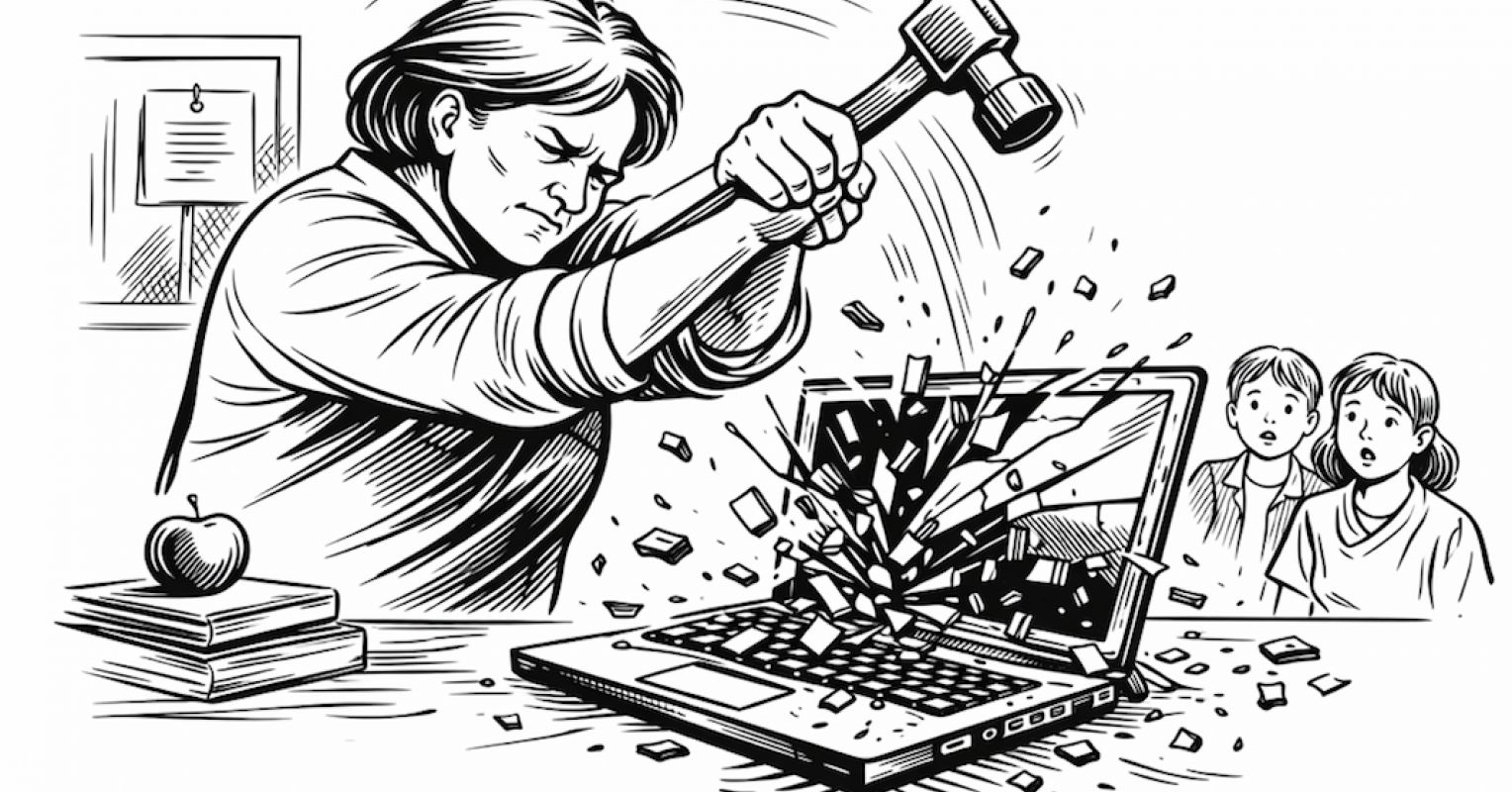
"Parents are opting their children out of school-issued laptops and are asking teachers to return to pen and paper. In a recent report, families described a growing discomfort with this digital imperative in education. Importantly, this is less about the logistical aspects of technology and more about something universal: Control. These instincts seem reasonable. Screens distract, and artificial intelligence hovers over homework like an invisible, or worse, a co-conspirator in cheating."
"They were skilled workers responding to a system that threatened both craft and identity. Automation altered the economic logic of their world, and with it, their sense of agency. Today's backlash carries a similar emotional tone. When a student can generate a complete essay in seconds, the relationship between effort and understanding begins to feel precarious if not unstable. The "academic output" no longer guarantees the cognition behind it. The natural response is retreat, restore the notebook, and remove the device."
Parents are withdrawing children from school-issued devices and requesting a return to pen-and-paper workflows out of concerns about distraction, control, and AI-enabled cheating. The visible resistance centers on control and the perceived distortion of learning when tools can produce academic work without corresponding understanding. Historical parallels to Luddites emphasize threats to craft, identity, and agency when automation changes value relations. Artificial intelligence reframes cognition rather than merely automating tasks, revealing preexisting fragilities in educational design. Protecting human thought requires redesigning assessment and pedagogy, not simply rejecting technology.
Read at Psychology Today
Unable to calculate read time
Collection
[
|
...
]