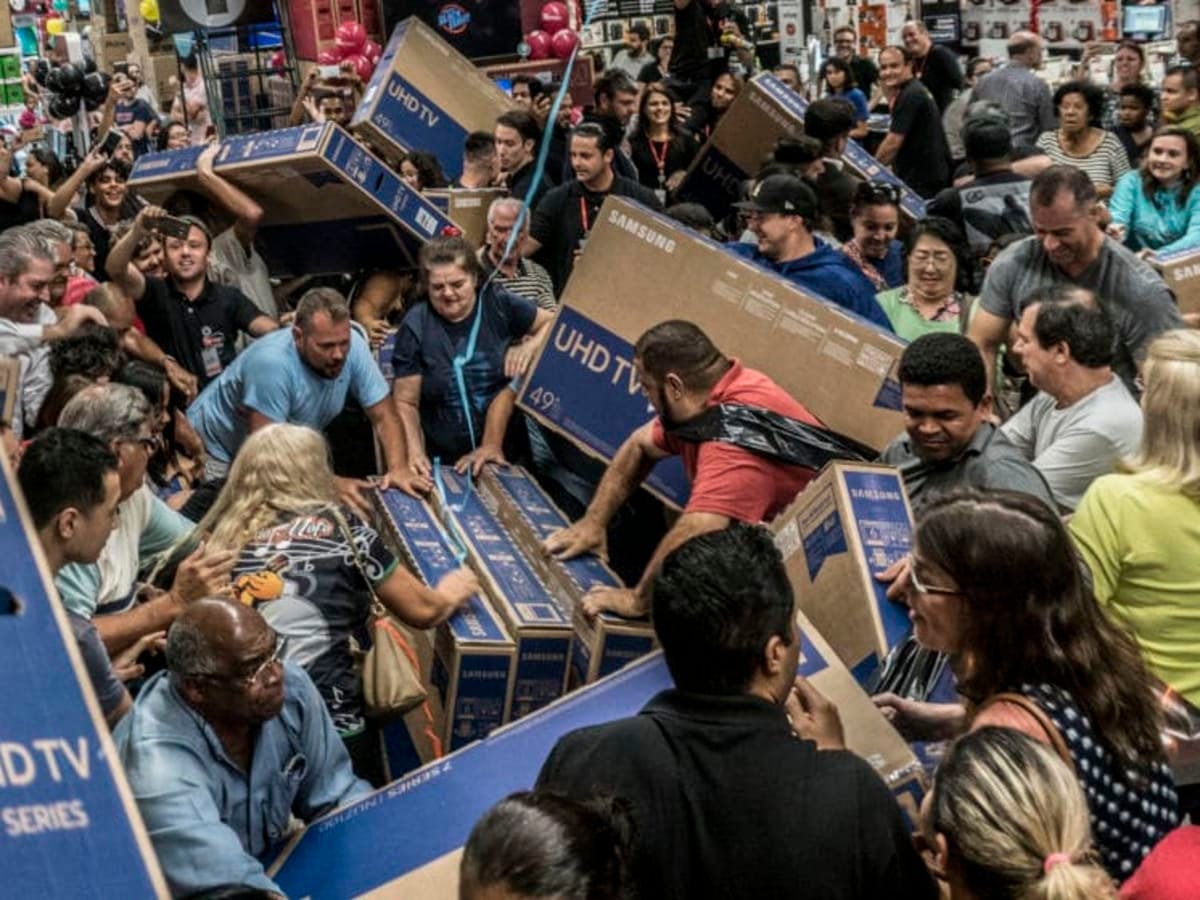
"I remember growing up, and I was terrified of Black Friday shopping. I'd see the news coverage every year, where people lined up for hours in the cold, the countdown to store opening, then the sudden flood of bodies pushing through the doors. The videos of shoppers wrestling over discounted TVs, the reports of injuries, and the overall chaos of it all."
"How retailers evolved from preventing stampedes to fighting bots, and why fairness at scale is harder than it looks I remember growing up, and I was terrified of Black Friday shopping. I'd see the news coverage every year, where people lined up for hours in the cold, the countdown to store opening, then the sudden flood of bodies pushing through the doors. The videos of shoppers wrestling over discounted TVs, the reports of injuries, and the overall chaos of it all."
Retail environments evolved from visible, physical crowd-control measures to complex online defenses against automated bots and scalpers. Retailers now implement technology-driven mitigations such as rate limiting, bot detection, access controls, and queuing systems to protect inventory and genuine customers. Designing fairness at scale presents trade-offs between user experience, operational cost, and revenue objectives. Detection systems produce false positives and negatives, creating customer friction and potential exclusion. Scarcity and high demand amplify distribution challenges and incentivize adversarial behavior. Continuous adaptation and multidisciplinary approaches are necessary to balance accessibility, security, and equitable allocation of limited goods.
Read at Medium
Unable to calculate read time
Collection
[
|
...
]