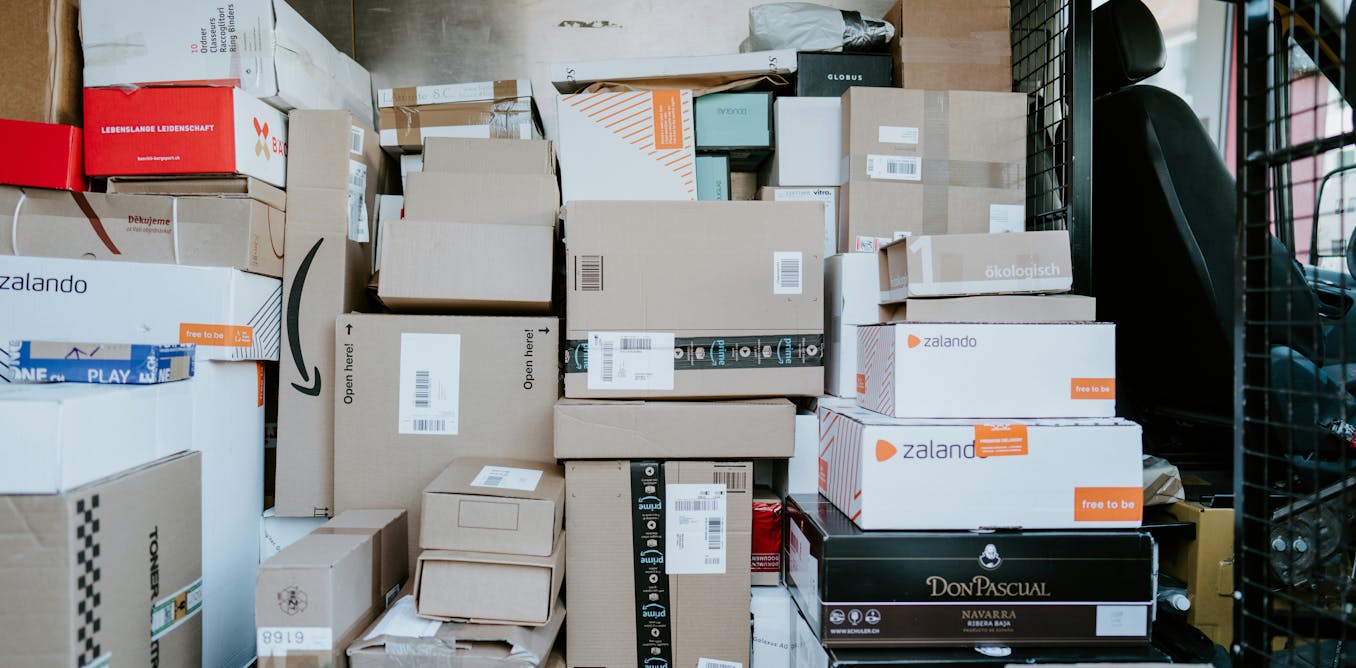
"When a transaction involves a cost, we instinctively weigh the downside. But when something is entirely free, we experience a positive emotion and perceive the offer as more valuable than it is mathematically. Retailers no doubt realise that offering free delivery is one of the most effective ways to stop a consumer from abandoning a digital shopping cart."
"If your shopping cart is sitting at $40, you face a dilemma. You can pay $10 for postage, or you can find a $15 item to reach the threshold. Many of us choose the latter, reasoning it is better to get a tangible product, such as a pair of socks, than to 'waste' money on shipping. This tactic uses the 'goal gradient effect', which describes the tendency to put in more effort the closer we get to a goal."
E-commerce retailers employ sophisticated marketing strategies to disguise shipping costs through free shipping offers. The concept of 'free' triggers a psychological switch in behavioral economics, making consumers perceive greater value than mathematically exists. Retailers commonly use minimum spending thresholds to qualify for free shipping, exploiting the goal gradient effect—consumers' tendency to increase effort as they approach a goal. When faced with a $10 shipping fee, customers often abandon purchases, but the same total cost embedded in a higher base price with free shipping appears more attractive. These tactics effectively increase sales and average order values while consumers unknowingly absorb the actual shipping expenses through higher product prices.
#e-commerce-marketing-tactics #behavioral-economics #free-shipping-psychology #consumer-behavior #pricing-strategies
Read at The Conversation
Unable to calculate read time
Collection
[
|
...
]