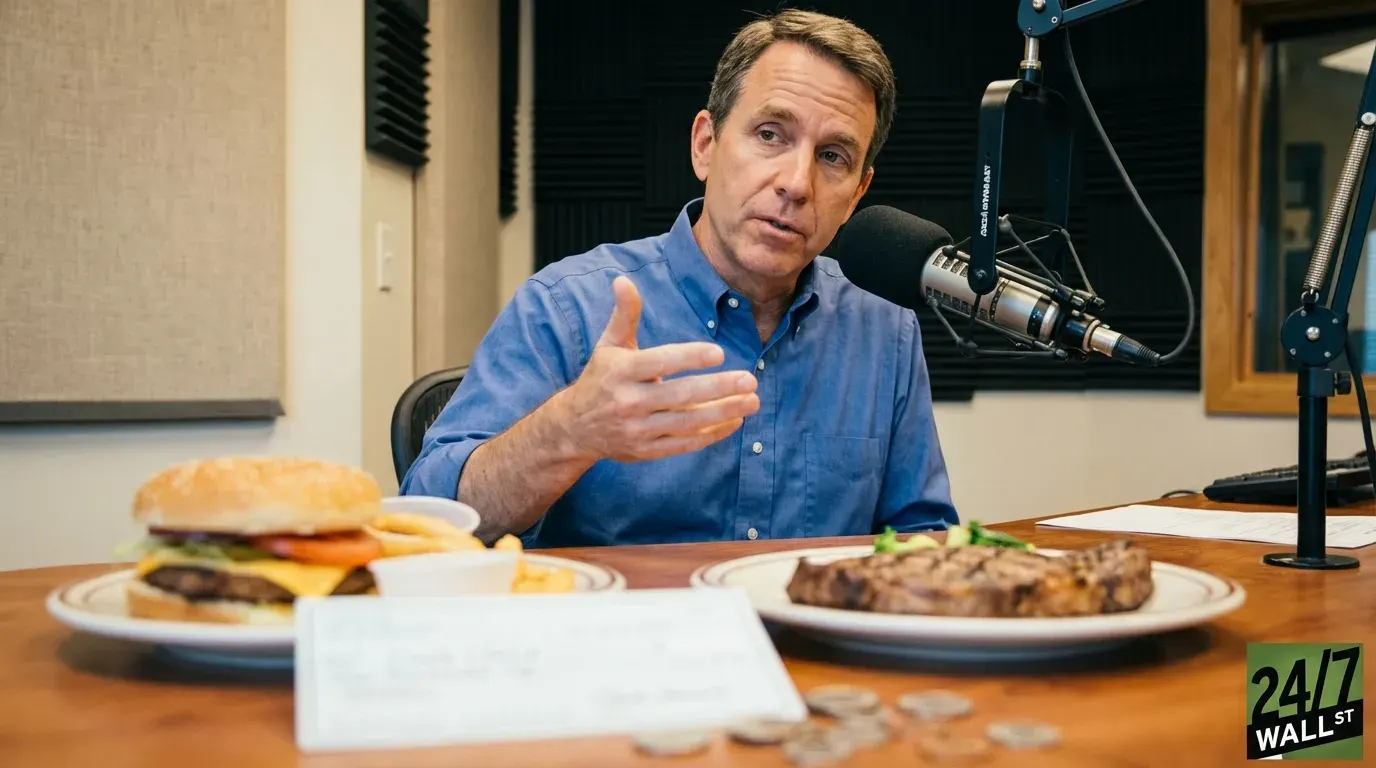
A caller questioned the standard 20% tipping model, noting that servers perform identical labor regardless of whether customers order expensive or inexpensive entrees. His logic suggests flat-dollar amounts would be more equitable. However, the percentage system serves a broader economic function. Across multiple tables per shift, servers' earnings average out proportionally to their restaurant's price tier. Since federal tipped minimum wage is $2.13 per hour, servers depend almost entirely on tips. The percentage model effectively ties server compensation to the economic level of their establishment, ensuring servers at upscale restaurants earn more than those at budget establishments, reflecting different customer bases' ability to pay.
"A server who brings you a $30 steak and a $10 burger to the same table in the same number of trips earns $6 in tips under a 20% model versus $2. The labor input is nearly identical. The pay is three times higher for the steak table."
"At a restaurant, normally there's a pretty narrow band on what the entrees cost. There will be some outliers at both ends. So for the servers, it pretty much evens out. He is describing a portfolio effect. Across dozens of tables per shift, a server's income averages out to something proportional to the restaurant's overall price tier."
"The federal tipped minimum wage is $2.13 per hour, meaning servers in most states depend almost entirely on tips for their income. The percentage model makes the customer base collectively responsible for setting the server compensation proportional to the economic tier of the establishment."
Read at 24/7 Wall St.
Unable to calculate read time
Collection
[
|
...
]