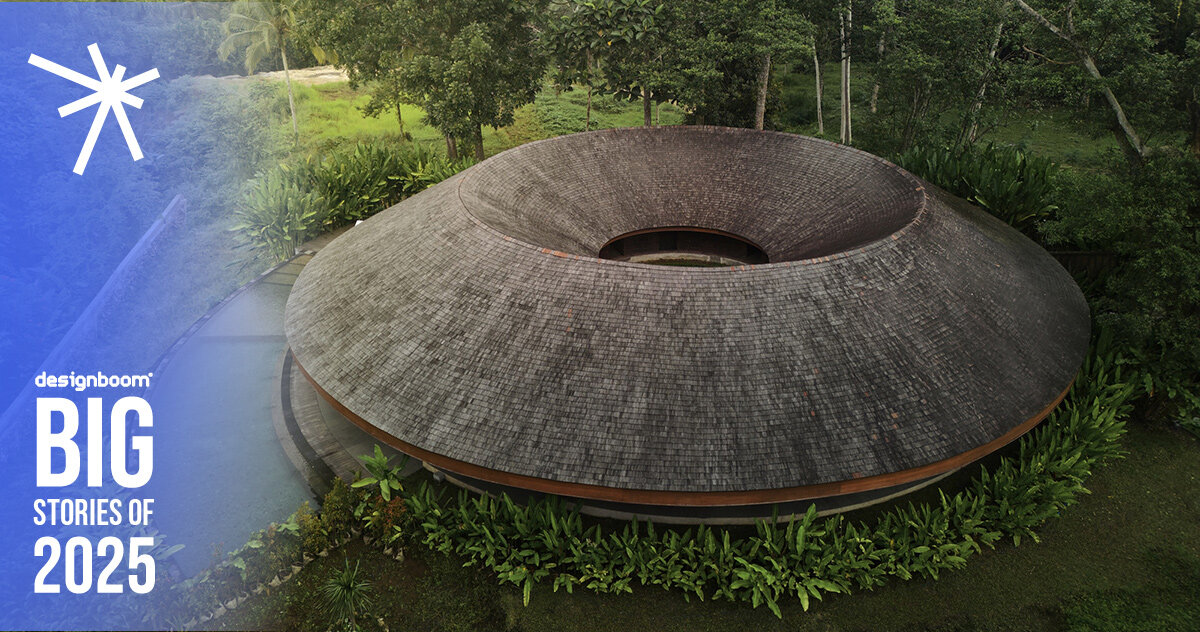
"In 2025, architects around the world continue to expand the possibilities of domestic design, presenting a diverse collection of private houses that reconsider how we inhabit landscape, community, and climate. This year's selection ranges from net-positive, off-grid experimentation in rural Japan to rammed-earth dwellings carved into the terrain of Crete, revealing a field increasingly attuned to resourcefulness, site specificity, and the choreography of indoor-outdoor living."
"Shared themes emerge across these works - some occupying their natural context gently, others defined by a bold sculptural form. Florian Busch Architects pioneers an energy-generating modular residence amid agricultural fields in Hokkaido, while Wallmakers suspends a thatched, occupiable bridge over a gorge in India. Social frameworks also come to the fore, with TEN's collaborative housing for women in Bosnia-Herzegovina proposing new models of care-based living. Explore designboom's top 10 private houses of 2025 below!"
"Hidden within the dense greenery of Brazil's Atlantic forest, the Iporanga House stands as architect Arthur Casas's own retreat. Conceived as a place to 'recharge his energies,' the home sits lightly in a protected natural reserve along the São Paulo coast. Its design is guided by a desire for harmony with the surrounding vegetation, a goal demonstrated by wood cladding that blends with the forest's shifting tones and textures."
Private residential design in 2025 emphasizes adaptability to landscape, climate, and community needs through diverse approaches. Projects range from net-positive, off-grid experimentation in rural Japan to rammed-earth dwellings carved into Cretan terrain, demonstrating resource-efficient methods and material sensitivity. Architects explore both gentle integration with nature and bold sculptural forms, incorporating energy-generating modular systems, suspended occupiable bridges, and collaborative housing models that address care and social needs. Exemplary houses include a forest-harmonizing retreat with wood cladding and expansive glazing, modular agricultural-field residences, and site-specific constructions that choreograph indoor-outdoor relationships while prioritizing sustainability and local context.
Read at designboom | architecture & design magazine
Unable to calculate read time
Collection
[
|
...
]