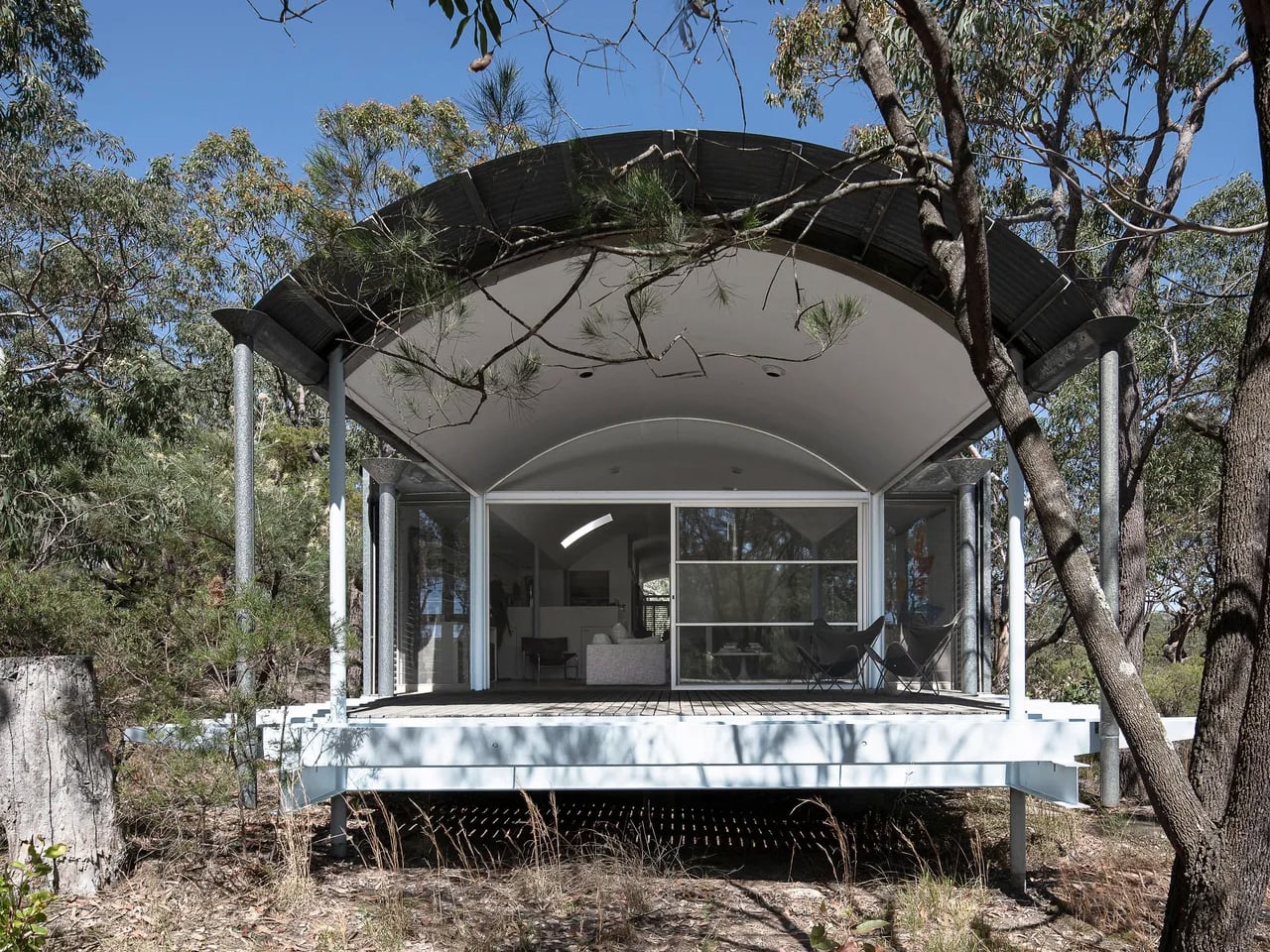
"The rugged site presented Murcutt with a natural rock ledge that became the building's platform, and rather than taming the land, the architect worked with it. Not a single tree was removed during construction, a commitment that shaped every decision made from the ground up."
"Murcutt has long described this approach as "touching the earth lightly," placing humanity within nature rather than above it. The exterior is clad in corrugated iron, marking the first time Murcutt used the material on a residential project, and its gently curved roofline reads almost like a topographical feature rather than a built structure."
"Inside, the design is as considered as the form suggests. Aluminium shading devices and timber-lined interiors regulate heat and light throughout the seasons, while expansive north-facing glazed walls and skylights draw in the kind of soft, sustained light that painters depend on."
The Ball-Eastaway House, designed by Glenn Murcutt and completed in 1983, represents a landmark in Australian residential architecture. Located on 25 acres of dry sclerophyll forest near Sydney, the home exemplifies Murcutt's philosophy of "touching the earth lightly." The structure sits elevated on steel pipe columns without removing any trees, working with the natural rock ledge as its foundation. The exterior features corrugated iron cladding in Murcutt's first residential application of this material. Interior spaces incorporate aluminium shading devices and timber finishes to regulate temperature and light seasonally. The home was custom-built for abstract artists Sydney Ball and Lynne Eastaway, with studios and gallery spaces integrated into the design to support their artistic practice.
#glenn-murcutt-architecture #sustainable-design #residential-architecture #artist-studio-home #australian-heritage-property
Read at Yanko Design - Modern Industrial Design News
Unable to calculate read time
Collection
[
|
...
]