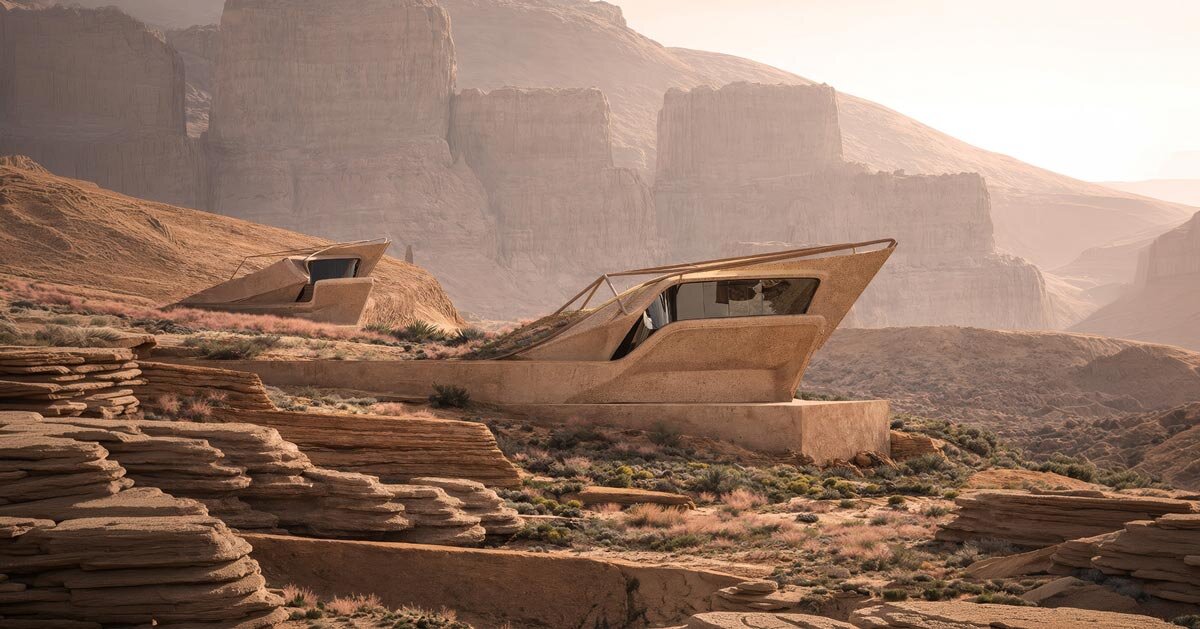
"The design interprets the surrounding mesas, cliffs, and stratified terrain through a series of elongated, low volumes that appear to rise from the ground like rocky outcrops. The architectural composition consists of several prism-shaped forms positioned across the site. Their inclined surfaces and sharp geometries reference the fractured rock formations found throughout the region."
"The project proposes the use of rammed earth, sourced from the local ground, as the primary construction material. This approach allows the surfaces to retain a textured appearance similar to eroded rock while reinforcing the visual continuity between architecture and landscape. Several portions of the structure are partially embedded within the desert terrain."
"This subterranean strategy reduces the visual presence of the building while also using the thermal mass of the earth to moderate interior temperatures. By combining exposed and buried volumes, the design creates thermally protected interior spaces suited to the extreme climate of the region."
The Desert Observatory House is a conceptual residential design by Vrantsi positioned within Utah's canyonlands. The architecture emerges from geological conditions rather than contrasting with them, featuring elongated, low-volume prism forms that reference the region's fractured rock formations and mesas. The design distributes building mass across the landscape to align with natural terrain slopes. Rammed earth sourced locally serves as the primary material, creating textured surfaces that visually continue the landscape. Portions of the structure are partially embedded underground, reducing visual impact while utilizing earth's thermal mass to regulate interior temperatures in the extreme desert climate. Strategic openings frame horizon views, serving the dual purpose of residence and observatory.
#desert-architecture #geological-integration #sustainable-design #rammed-earth-construction #landscape-responsive-design
Read at designboom | architecture & design magazine
Unable to calculate read time
Collection
[
|
...
]