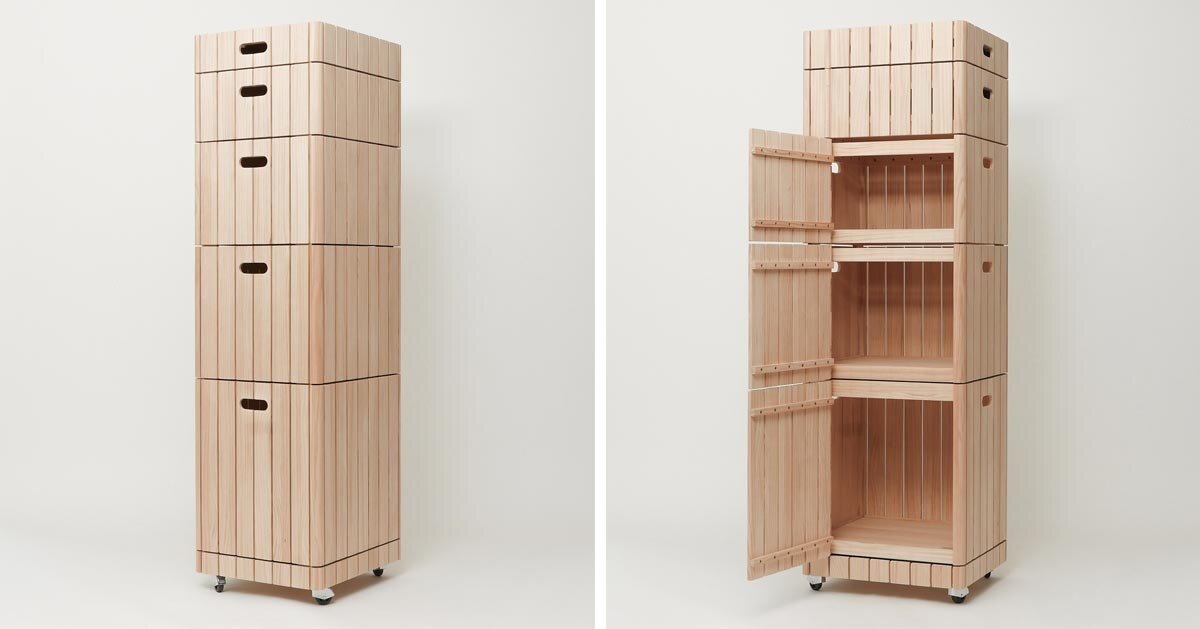
"The series draws on the logic of wooden fences, where evenly spaced vertical boards create rhythm, order, and enclosure through simple modular components. The arrangement of regularly dimensioned planks establishes a consistent visual cadence. This ordered framework provides a structured setting for the objects stored within, addressing the need for coordination as personal belongings accumulate over time. Rather than concealing storage, the system defines it through visible construction and measured spacing."
"This project restores its physical presence, treating the cabinet as an independent architectural element within the room. Construction is based on a system that increases the number of connection points while reducing rigidity between parts. Instead of relying on fixed joints, adhesives, or concealed fasteners, the components are segmented and connected in a way that allows for measured flexibility. This method enables individual elements to be replaced if damaged, supporting maintenance and long-term use."
A Cabinet Collection constructs storage from a modular system of planks and exposed screw connections inspired by wooden fences. Regularly dimensioned planks create rhythm and a consistent visual cadence that organizes stored objects. The system emphasizes visible construction and measured spacing rather than concealing storage. The material approach starts with cut timber standardized and reorganized by a defined assembly rule, reframing wood as both structural unit and surface. Freestanding cabinets are treated as architectural elements. Construction increases connection points while reducing rigidity, allowing segmented components to be replaced for repairability and long-term use.
Read at designboom | architecture & design magazine
Unable to calculate read time
Collection
[
|
...
]