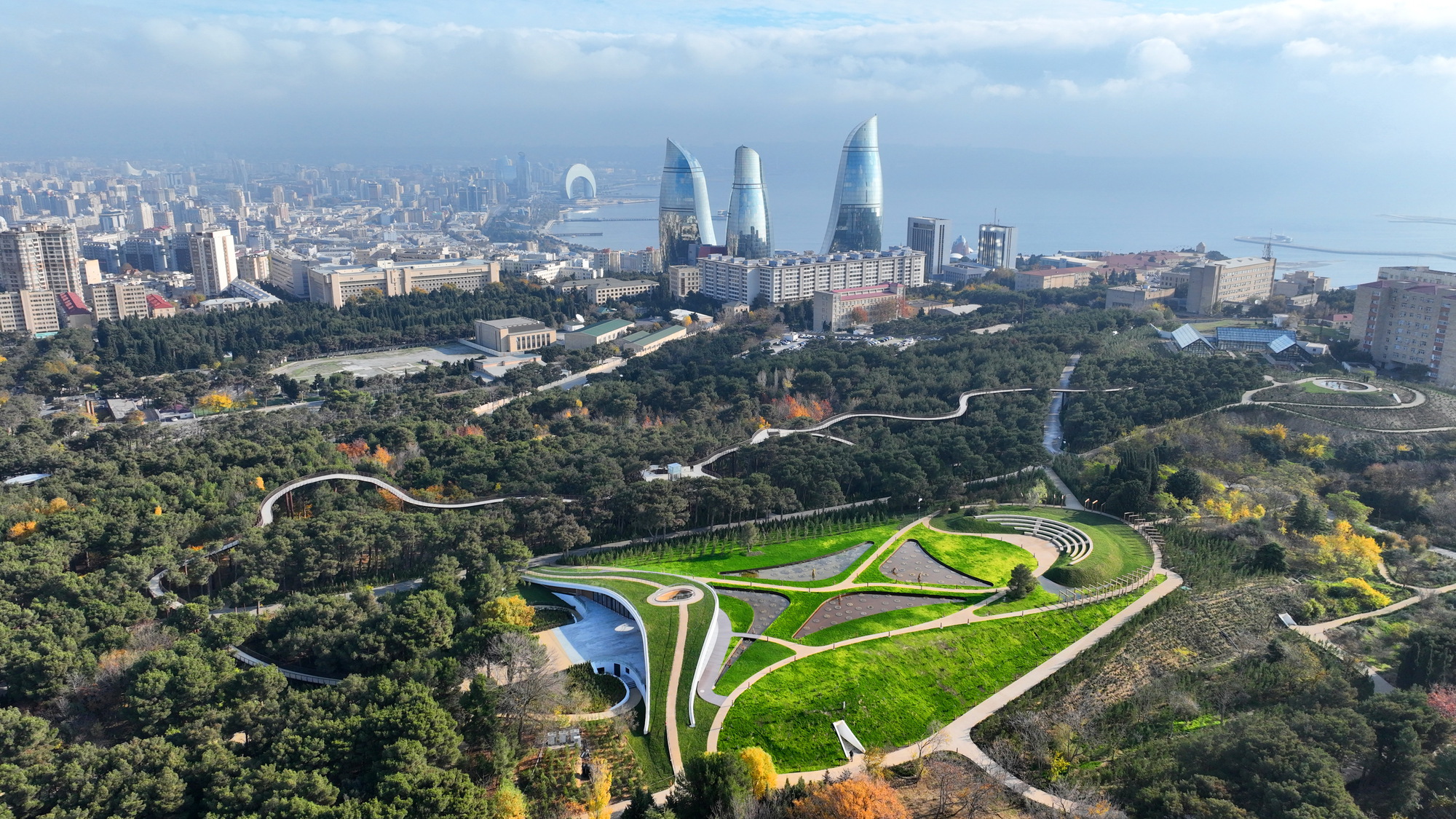
Baku's urban landscape reflects a duality of growth, balancing historical continuity in its core, Icherisheher, with modern expansion beyond its walls. The city has undergone significant transformation over the past two decades, fueled by oil wealth and a strategic focus on architecture as a means of self-representation. Iconic structures like the Heydar Aliyev Center and Flame Towers symbolize this shift, emphasizing visibility and singularity over traditional continuity, thereby redefining the urban experience and the role of architecture in shaping the city's identity.
"Baku's historic core, Icherisheher, maintains a spatial logic that resists expansion, characterized by density and proximity, while the areas beyond exhibit a shift towards increased scale and visibility."
"The transformation of Baku is marked by deliberate architectural efforts, with oil wealth enabling projects that serve as symbols of the city's new identity, such as the Heydar Aliyev Center and Flame Towers."
"These modern structures are designed not only for their physical presence but also to circulate through media, reflecting a new urban logic that prioritizes singularity and representation over continuity."
Read at ArchDaily
Unable to calculate read time
Collection
[
|
...
]