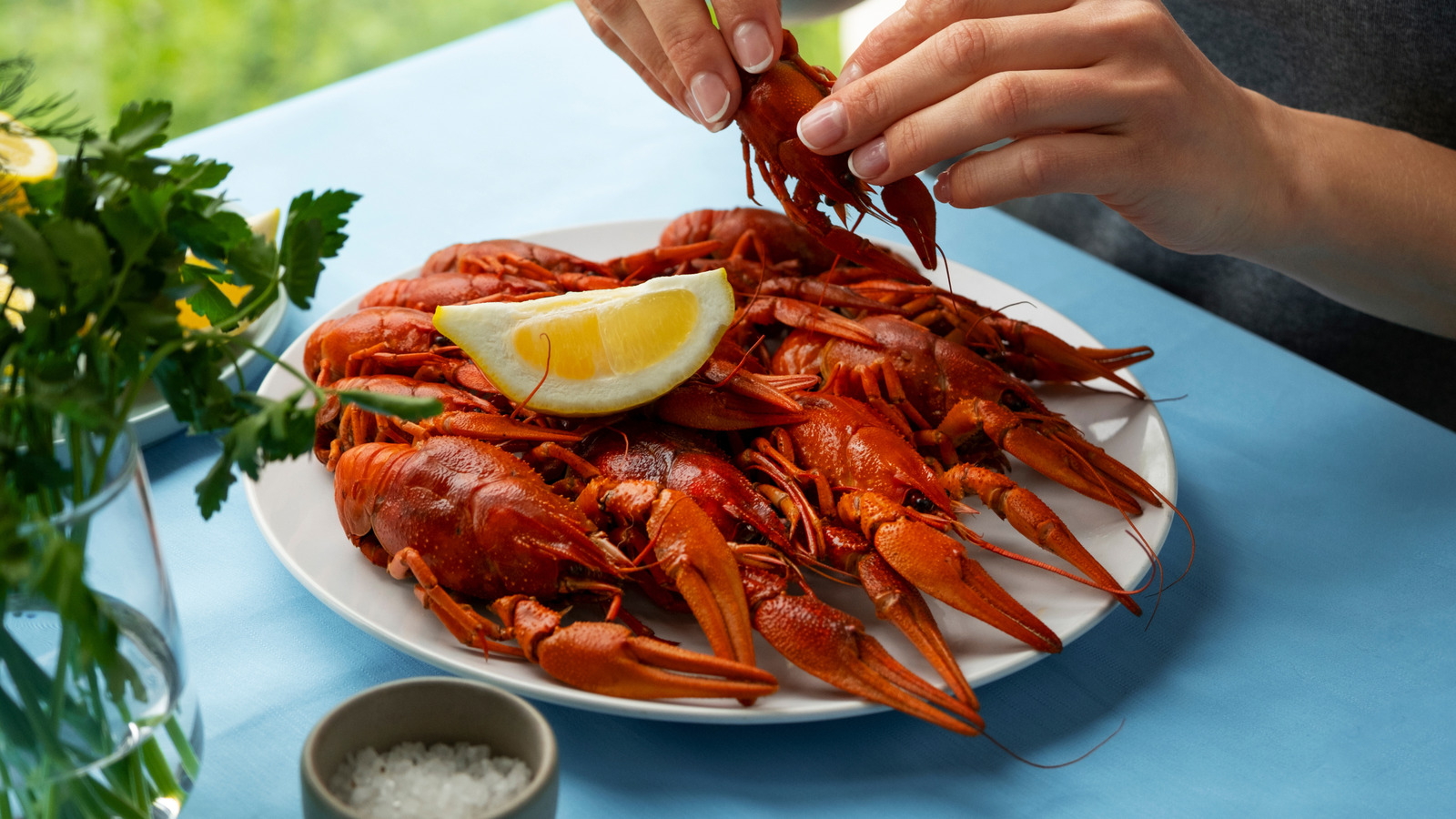
"And usually, there's only one thing left on the plate: the shells. Now, if you ask the Southerners, they'd tell you that every part of this crustacean is edible, and you should go ahead and eat the shells because they have a nice crunch. But in reality, you're better off not eating the shells. Put simply, your digestive system literally can't handle what crawfish exoskeletons are made of."
"Crawfish shells are made of chitin, a material so tough our bodies literally can't process it. This is because chitin is insoluble and requires a special enzyme called chitinase to break it down. Animals that regularly eat crustaceans produce plenty of this enzyme. We don't, and, as such, chitin can be quite tough on our stomachs. Another problem is that chitin is really hard, and our jaw isn't really evolved to break through a crustacean exoskeleton."
"While eating crawfish shells is a bad idea, the trash can shouldn't be their final destination after the crawfish boil has wrapped up. Those translucent, brittle pieces hold pure, concentrated crawfish essence, which is the perfect foundation for a stock. Just put all of the leftover shells in a pot, then add water, followed by onions, garlic, and whatever additional aromatics you've got lying around. Cook it low and slow,"
Eating crawfish involves cracking the tail, peeling back the meat, eating the head, and enjoying the tender meat, leaving mostly shells. Crawfish shells are composed of chitin, an insoluble, tough material that human digestive systems cannot break down because humans lack sufficient chitinase. Chitin fragments are hard, pose choking hazards, and offer little flavor or desirable texture, so shells should not be eaten. Rather than discarding shells, simmer them with water, onions, garlic, and aromatics to extract concentrated crawfish flavor. Low and slow cooking produces a silky, briny stock that serves as a flavorful base for soups, sauces, or seafood dishes.
Read at Tasting Table
Unable to calculate read time
Collection
[
|
...
]