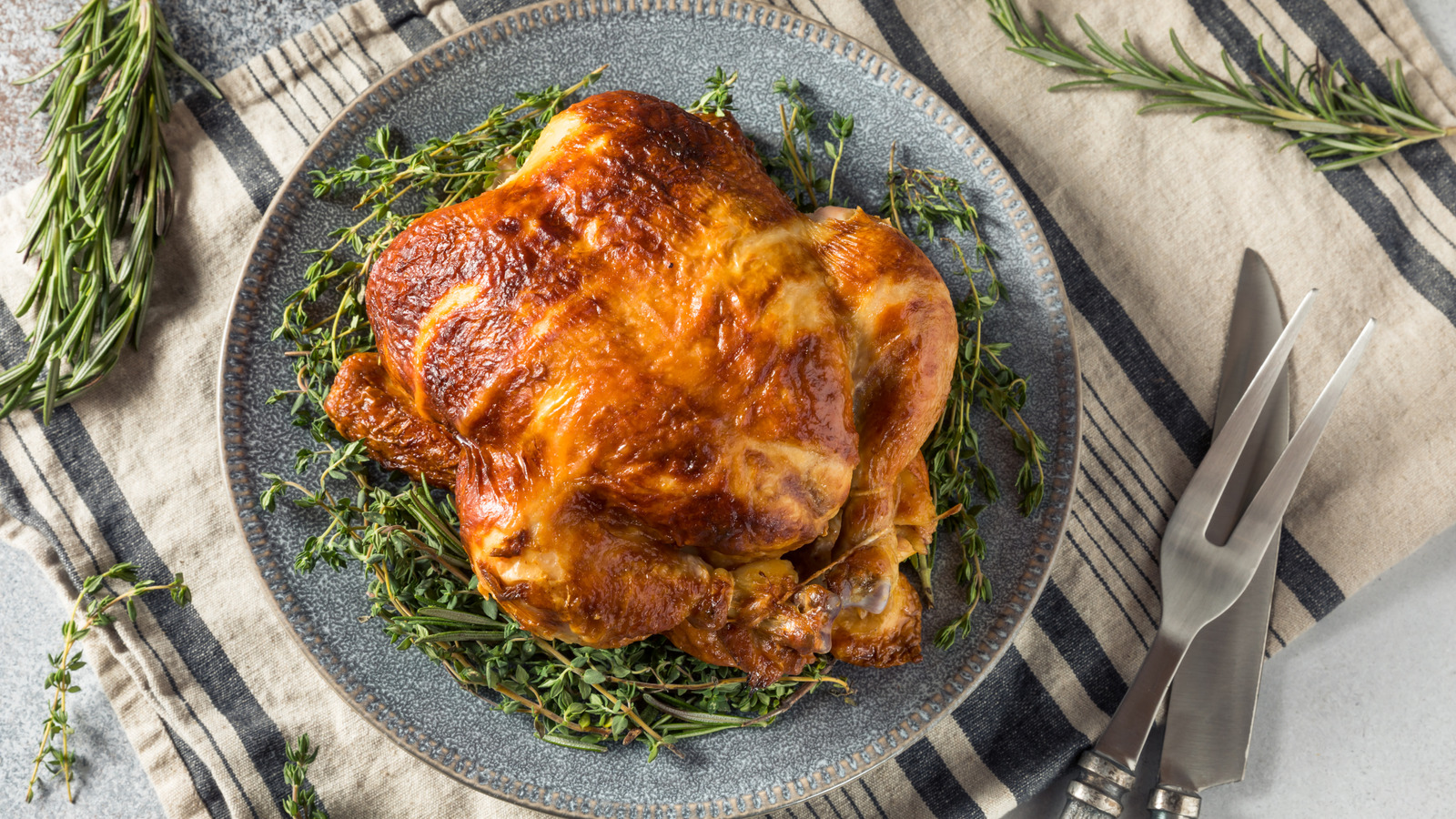
"Politte gave us a great guide to positive signs to look for (and red flags to avoid) based on the appearance of your rotisserie chicken. On the plus side he says, "The skin should be an even golden-brown. This means the chicken was roasted well and will likely taste good." Politte also notes that coloring should be uniform around the whole chicken with no real pale or burnt areas. Beyond that, he tells us, "Look for skin that looks crisp and firm, not loose or rubbery." Politte also warns against buying rotisserie chickens that look too greasy, saying, "A little shine is fine, but the skin shouldn't be very oily.""
"As a key warning sign, Politte explains, "Sometimes, added sugar or glaze makes the skin look too shiny or sticky to cover up poor quality." Once again, skin color is the biggest giveaway. He says, "Chicken that isn't cooked enough can look pale or gray," whereas burnt dark areas are a sign of an overcooked, dry chicken. Since rotisserie chickens can sit out for a long time, Politte also notes, "If the skin looks wet or wrinkled, the chicken may not"
Store-bought rotisserie chickens are convenient but can vary widely in freshness and quality due to high-volume production and prolonged holding under heat lamps. Ideal birds display even golden-brown coloring and uniform skin tone with no pale or burnt patches. Skin should be crisp and firm rather than loose, rubbery, wet, or wrinkled. Moderate shine is acceptable, but excessive oiliness or an overly sticky, glazed look can indicate added sugar or poor quality. Pale or gray skin suggests undercooking, while very dark or burnt areas signal overcooking and dryness.
Read at Tasting Table
Unable to calculate read time
Collection
[
|
...
]