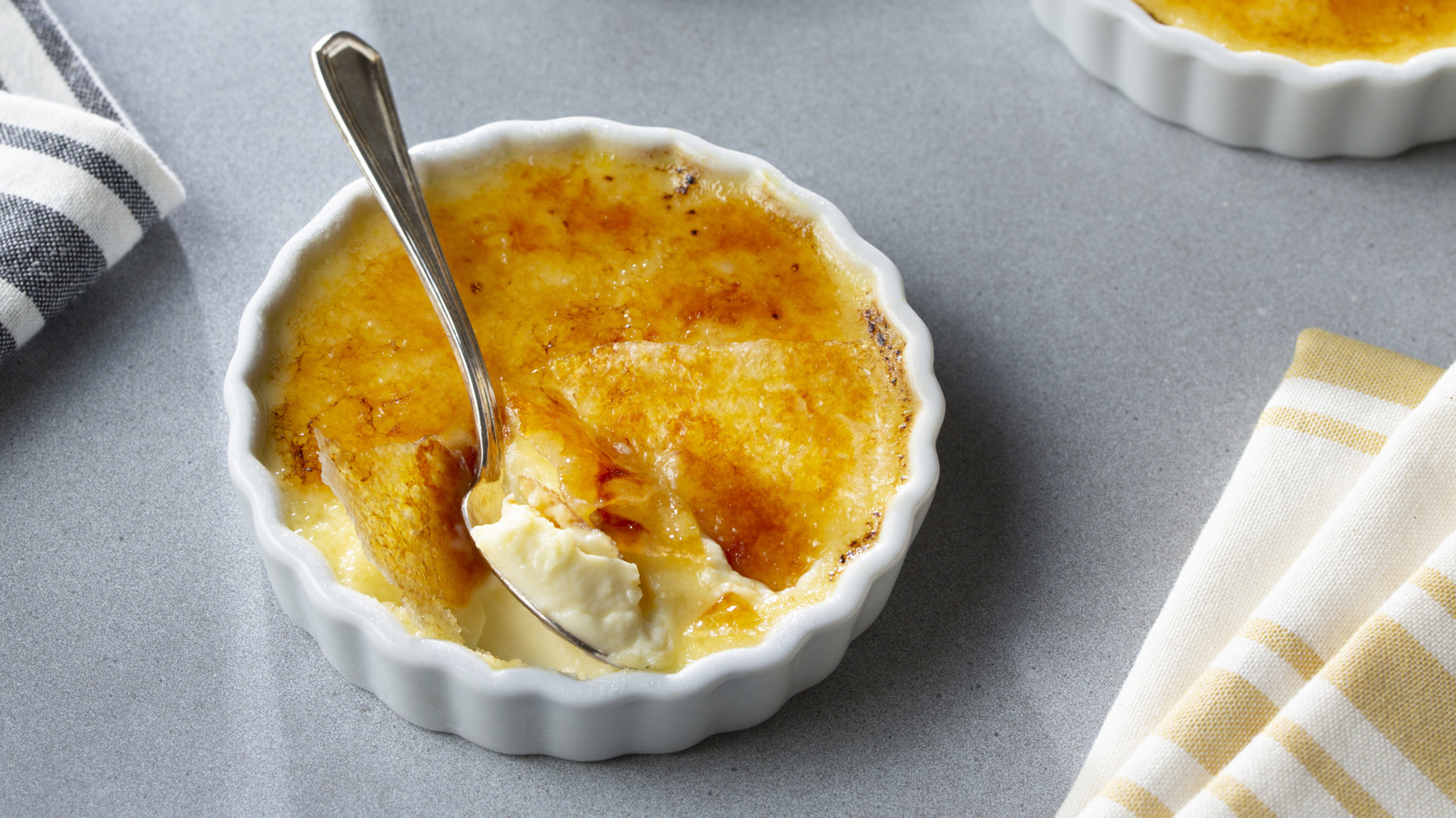
"Adding honey to a crème brûlée base is a beautiful way to introduce nuance and depth. Because crème brûlée has a naturally delicate flavor profile with cream, egg yolks, and vanilla, the honey doesn't just add sweetness; it becomes a defining flavor component."
"Much like wine, honey reflects its origin and depending on the varietal, it can bring floral, fruity, earthy, herbaceous, or caramel notes to the dessert. Given the subtlety of the flavors in the dessert, he suggests opting for a floral honey, such as orange blossom, clover, or lavender, which can play its part without becoming the star of the show."
"Ultimately, there are no wrong answers if you understand the fundamentals of a proper brûlée base. Stronger-flavored honeys, like buckwheat, chestnut, or manuka honey, can work too, so long as they are used judiciously."
Crème brûlée, a classic dessert featuring a caramelized sugar top and silky custard, can be elevated with the addition of honey. Chef Trew Sterling recommends carefully selecting honey varieties to enhance the dish's complexity without overwhelming its delicate flavor profile. Different honey types contribute distinct characteristics: floral honeys like orange blossom, clover, and lavender provide subtle enhancement, while stronger varieties such as buckwheat, chestnut, and manuka honey can work when used sparingly. The honey selection process mirrors wine pairing, as each varietal reflects its origin and brings unique flavor dimensions to the dessert.
Read at Tasting Table
Unable to calculate read time
Collection
[
|
...
]