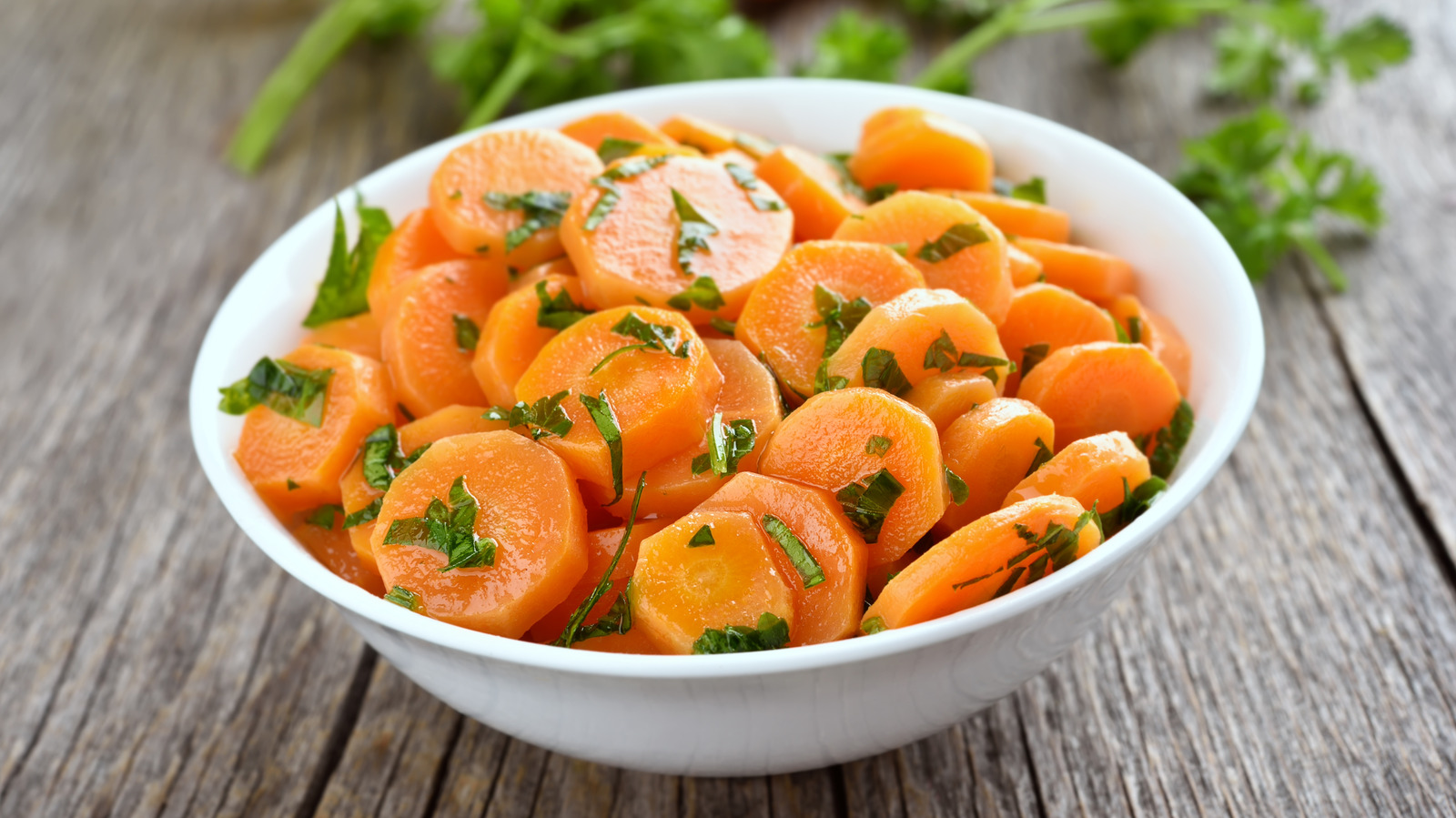
"Of all the ways in which we can prepare vegetables, boiling is perhaps the worst thing we can do to them. While it's not necessarily true that boiling vegetables reduces the efficacy of their nutrients, it is true that some of the chemical compounds responsible for their flavors tend to leak into the water as they boil. This is especially noticeable in carrots."
"According to food scientists, carrots naturally contain sugars like sucrose, glucose, and fructose, and nutrients including beta carotene for vitamin A, plus vitamin C, vitamin K, vitamin B6, potassium, and fiber, all of which can be diluted into the boiling water. On the other hand, when they are steamed, sauteed, or roasted, their sweetness and flavors are enhanced. That's because cooking carrots forms lipid droplets which contain many of their flavor compounds, therefore increasing their flavor intensity."
Boiling vegetables causes flavor compounds to leach into the water, reducing taste and crispness, particularly in carrots. Carrots contain sugars such as sucrose, glucose, and fructose and nutrients including beta carotene (vitamin A), vitamin C, vitamin K, vitamin B6, potassium, and fiber, which can be diluted during boiling. Steaming, sautéing, or roasting preserves or enhances sweetness and flavor by forming lipid droplets that concentrate flavor compounds. Blanching brightens color and maintains crunch. Roasting intensifies sweetness through caramelization while producing tender, caramelized carrots that retain some bite and can be upgraded with added ingredients.
Read at Tasting Table
Unable to calculate read time
Collection
[
|
...
]