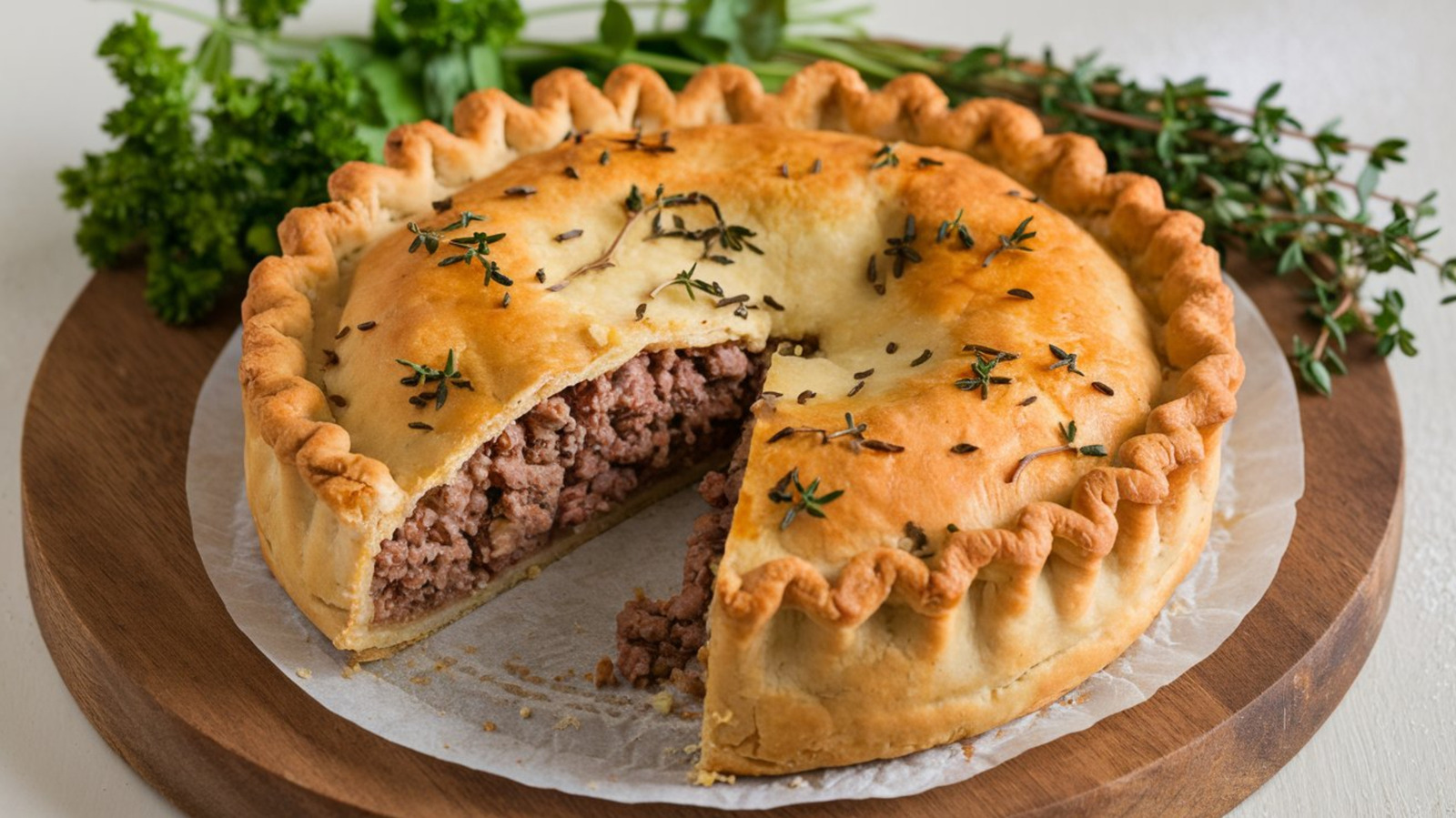
"Between flaky phyllo dough, complex pâte à choux, and a humble crumb crust, there are a number of different types of pie crust to consider when planning your next bake. Fruit and cream pies tend to do better with crusts made using cold ingredients, including both butter and water to create a delicate and flaky housing. On the other hand, a hot-water crust is the unsung hero that will hold up to heartier standalone pie fillings."
"The lesser-known hot-water crust is an absolute must when baking a variety of savory-style pies such as Cornish pasties, pot pies, and meat pies. It also works astoundingly well to contain hand pies without the risk of them falling apart. Unlike its flaky crust cousin, hot-water crust is made using hot instead of cold water. Whereas the cold water lends itself to a more tender texture, hot water helps the starches in flour to pre-gelatinize, making for a crust with considerably better structural integrity."
Different pie crusts suit different pies: flaky phyllo, pâte à choux, and crumb crusts serve varied textures. Fruit and cream pies use cold-ingredient crusts with butter and cold water for delicate, flaky results. Hot-water crust is made with boiling water plus flour and fat (butter, shortening, suet, or lard) and causes starch pre-gelatinization, yielding superior structural integrity. Typical preparation involves mixing boiling water with dry ingredients, kneading lightly, rolling out, filling, optionally brushing with egg wash, and baking. Hot-water crust excels for savory pies, Cornish pasties, pot pies, meat pies, hand pies, and hearty vegetarian fillings (use plant-based shortening for vegan versions).
Read at Tasting Table
Unable to calculate read time
Collection
[
|
...
]