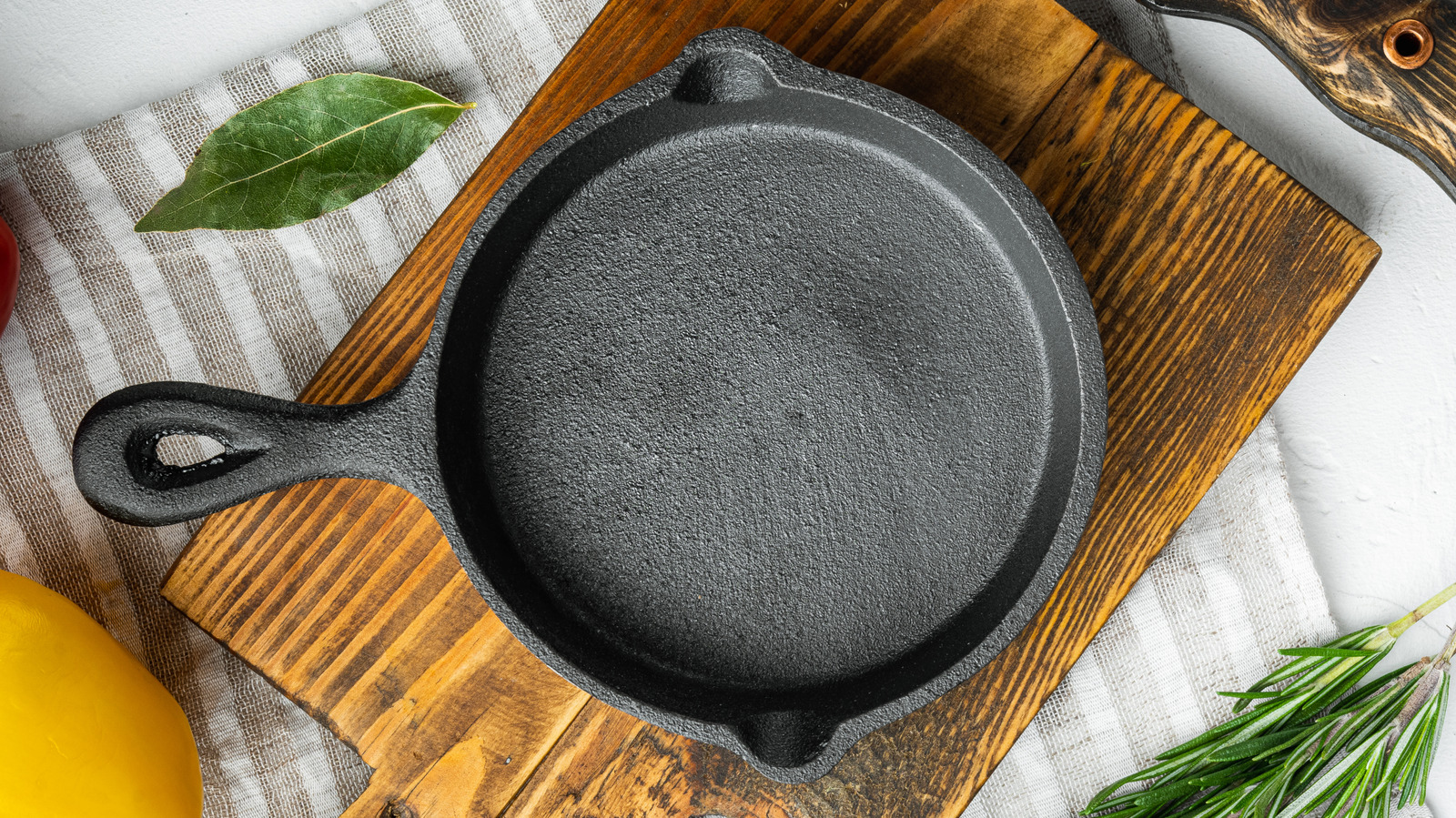
"If you are a fan of cast iron, you're probably excited whenever you run across a good deal on one. Cast iron is great at retaining heat, naturally non-stick, and incredibly durable. Some families pass cast iron down through generations. But you do need to be wary if you're picking up a secondhand skillet to avoid grabbing a warped pan. But don't worry, there are simple ways to test for this."
"There are a lot of things to know about cast iron, but its ability to heat evenly and hold that heat is one of the reasons it's so prized. However, a warped pan that sits unevenly on your stovetop isn't as reliable. Even if the cooking surface is smooth without pitting or cracks, an uneven pan can cause fats and liquids to pool on one side, and foods may cook unevenly."
Cast iron retains heat well, develops natural nonstick seasoning, and often becomes a durable heirloom. A warped skillet will sit unevenly on a cooktop, causing fats and liquids to pool on one side and foods to cook unevenly even if the surface lacks pitting or cracks. Warping can result from excessive heat or sudden temperature changes that stress the metal. Simple tests reveal warping: place the pan flat on a shelf to check for wobble or spin, or set a credit card edge-down on the cooking surface to spot gaps. Warped pans cannot be reliably flattened; grinding can create uneven thickness and inconsistent heating. Vintage, high-quality pieces may still be useful despite wobble.
Read at Tasting Table
Unable to calculate read time
Collection
[
|
...
]