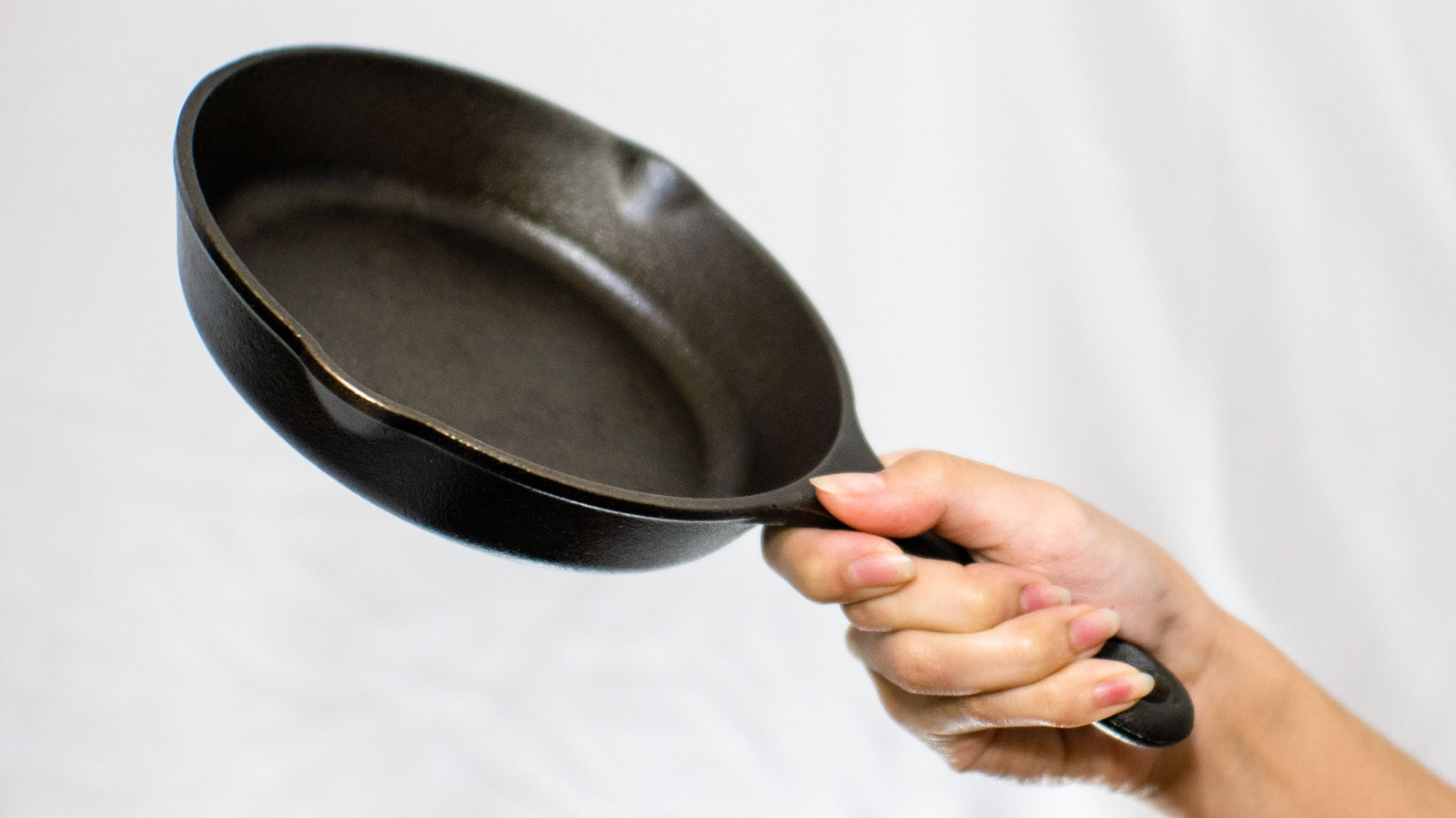
"Seasoning cast iron involves coating the pan with a thin layer of fat (typically oil) to create a protective barrier. When the oil is heated, the fatty acids inside of it link together and bond to the iron, producing that invisible, non-stick barrier that's necessary for successful cooking."
"It's an old myth to season with a saturated fat (bacon fat, for example)."
"From a chemistry perspective, saturated fats by nature don't polymerize (creating the seasoning layer)."
"Instead, the best oils to opt for include grapeseed, sunflower, canola, or vegetable oil. These balanced, neutral oils are all made up of more polyunsaturated to monounsaturated fats, which is ideal for the polymerization process. They also have high-smoke points, and won't pass any strong flavors onto your food. Plus, they're pretty cheap and easy to find."
Cast iron requires a seasoned layer of polymerized fat that bonds to the iron to create a protective, nonstick surface. Saturated fats do not polymerize effectively, so using them for seasoning is inefficient; any success from saturated fats comes from their small unsaturated fraction. Oils higher in polyunsaturated and monounsaturated fats—such as grapeseed, sunflower, canola, and vegetable oil—polymerize more reliably, have high smoke points, impart neutral flavors, and are inexpensive. Proper seasoning involves clean, dry cookware, a thin layer of suitable oil, and heat to convert the oil into a durable coating.
Read at Tasting Table
Unable to calculate read time
Collection
[
|
...
]