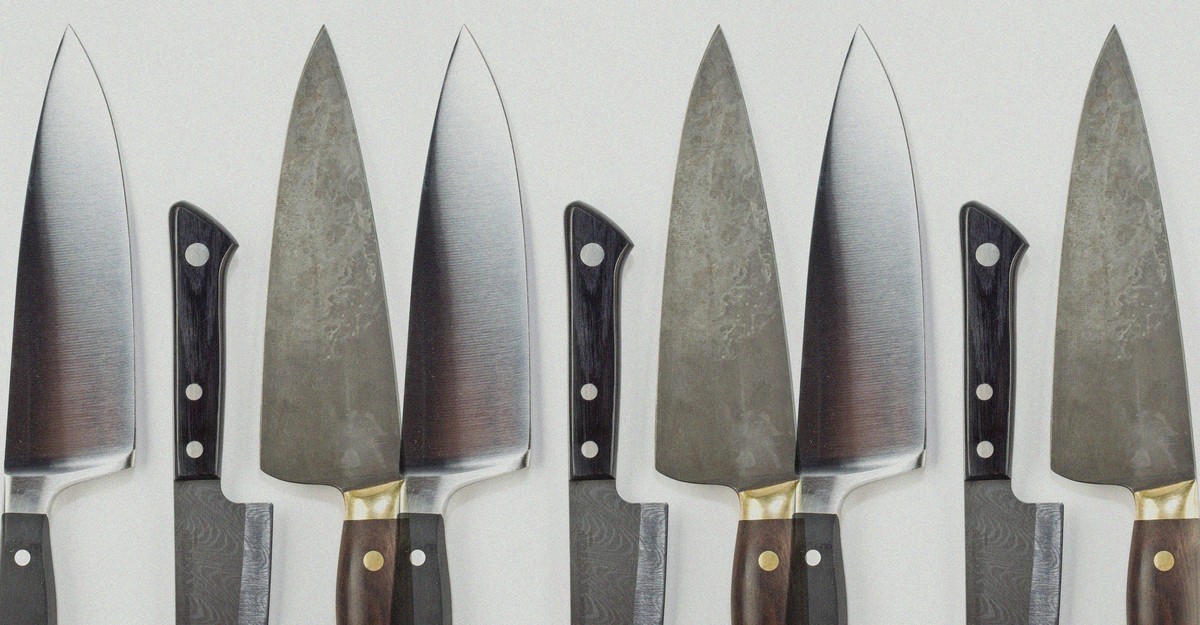
"My relationship with carbon-steel knives began with a lie. When I was in graduate school a few years ago, I walked into a schmancy New York City knife shop, determined to buy a lithe 210-millimeter Suisin Gyuto. But the clerk didn't want to sell it to me. The poor man had quite evidently been traumatized by prior customers who had bought (and presumably returned) high-maintenance knives that they were not prepared to take care of."
"They rust easily, react poorly when exposed to acidic ingredients such as tomatoes and lemons, and lose their shine almost immediately, taking on splotchy mottling that can charitably be described as "rustic." Stainless steel, by contrast, embodies everything that modern, technological civilization esteems: It is low-maintenance, looks permanently brand-new, and can be purchased at a big-box store. Still, after I brought my Gyuto home to my small Queens kitchen and used it to slice and dice onions, carrots, and mushrooms for Julia Child's beef bourguignon,"
A graduate student entered a New York City knife shop intent on buying a 210-millimeter Suisin Gyuto. The clerk warned about rust, hand-washing, and intensive maintenance, preferring stainless alternatives. A fabricated claim that the knife was a Christmas gift for a friend secured the purchase. Carbon-steel knives rust easily, react poorly to acidic ingredients like tomatoes and lemons, and develop splotchy mottling quickly. Stainless steel resists these issues, requiring less upkeep and retaining a new look. After using the Gyuto to prepare vegetables for beef bourguignon, the buyer appreciated the knife's sharpness, balance, and humble beauty despite its demanding care.
Read at The Atlantic
Unable to calculate read time
Collection
[
|
...
]