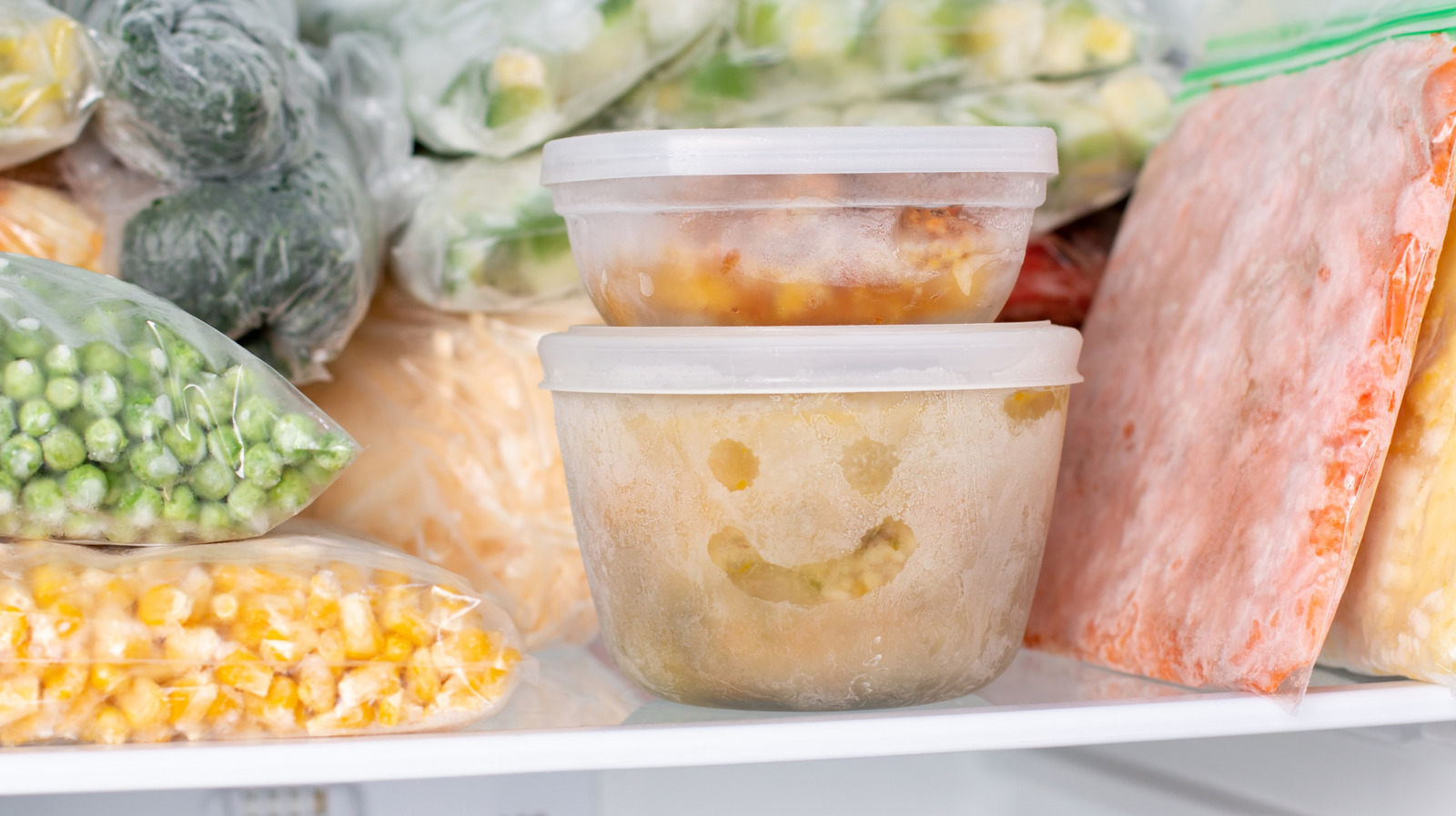
"In theory, food that has been preserved at below freezing temperatures will be safe to eat for years, but this doesn't mean you will want to. For optimal texture and taste, most vegetables keep for about one year, but some only last as little as three months. Starchy vegetables such as carrots or broccoli freeze particularly well, but those with higher moisture content (such as tomatoes or peppers) will have a shorter freezer life."
"Over time, the freezing process draws moisture out of food, leading to ice crystals on the surface, which we identify as freezer burn. It's not so much the ice that is the issue, but the loss of moisture on the inside that irreparably changes the food's texture. Temperature fluctuations in the freezer can also cause these ice crystals to evaporate, leaving the surface of the food exposed to oxygen, speeding up the rate of deterioration."
Frozen vegetables provide a convenient way to add nutrients to meals, but freezing does not preserve optimal quality indefinitely. Food preserved below freezing is safe to eat for years, yet most vegetables maintain best texture and taste for about one year, while some last only three months. Starchy vegetables such as carrots and broccoli freeze well, whereas high-moisture items like tomatoes and peppers have shorter freezer lives. Freezing draws moisture out and forms ice crystals that cause freezer burn, and temperature fluctuations accelerate deterioration. Freezer burn does not cause illness but creates leathery, woody textures and musty flavors. Proper preparation includes washing, cutting evenly, and blanching to kill microorganisms and halt ripening enzymes.
Read at Tasting Table
Unable to calculate read time
Collection
[
|
...
]