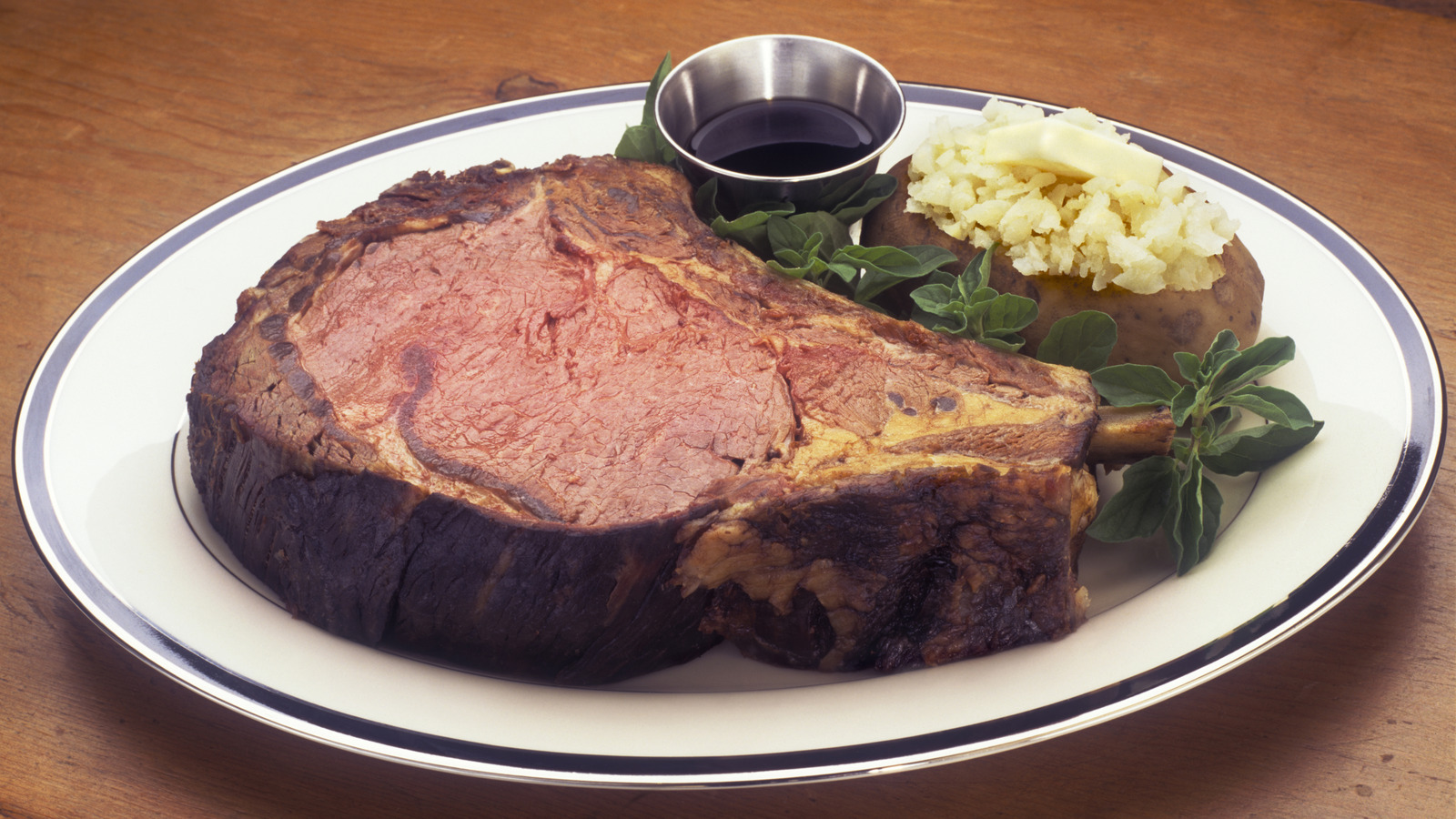
"A plate of slow-roasted prime rib is a decadent dinner that takes some care and finesse to properly prepare. Between choosing the right cut, using a flavorful spice rub, and cooking your meat low and slow until it reaches an optimal level of doneness, there's a lot for you to consider. But, of all the tips you need to make the best prime rib, having a meat thermometer on hand is the most essential."
"Using a reliable meat thermometer like helps you to achieve the ideal roasting temperature for tender prime rib, which is around 120 to 130 degrees Fahrenheit for medium rare and between 115 to 120 degrees Fahrenheit for rare. Rather than attempt to guess the proper timing or proceed based solely on the weight of your meat, a thermometer gives you the exact temperature in real time as your prime rib cooks."
Prime rib requires careful selection of cut, a flavorful spice rub, and low-and-slow cooking to reach optimal doneness. A reliable meat thermometer ensures the beef reaches correct internal temperatures, preventing overcooking or undercooking. Target temperatures include about 120 to 130°F for medium-rare and 115 to 120°F for rare. A simple, accurate digital thermometer is sufficient; high-tech features are unnecessary. Leaving the thermometer in place during the resting period provides accurate carryover-cooking information and avoids opening the oven, which disrupts cooking and affects final doneness and food safety.
Read at Tasting Table
Unable to calculate read time
Collection
[
|
...
]