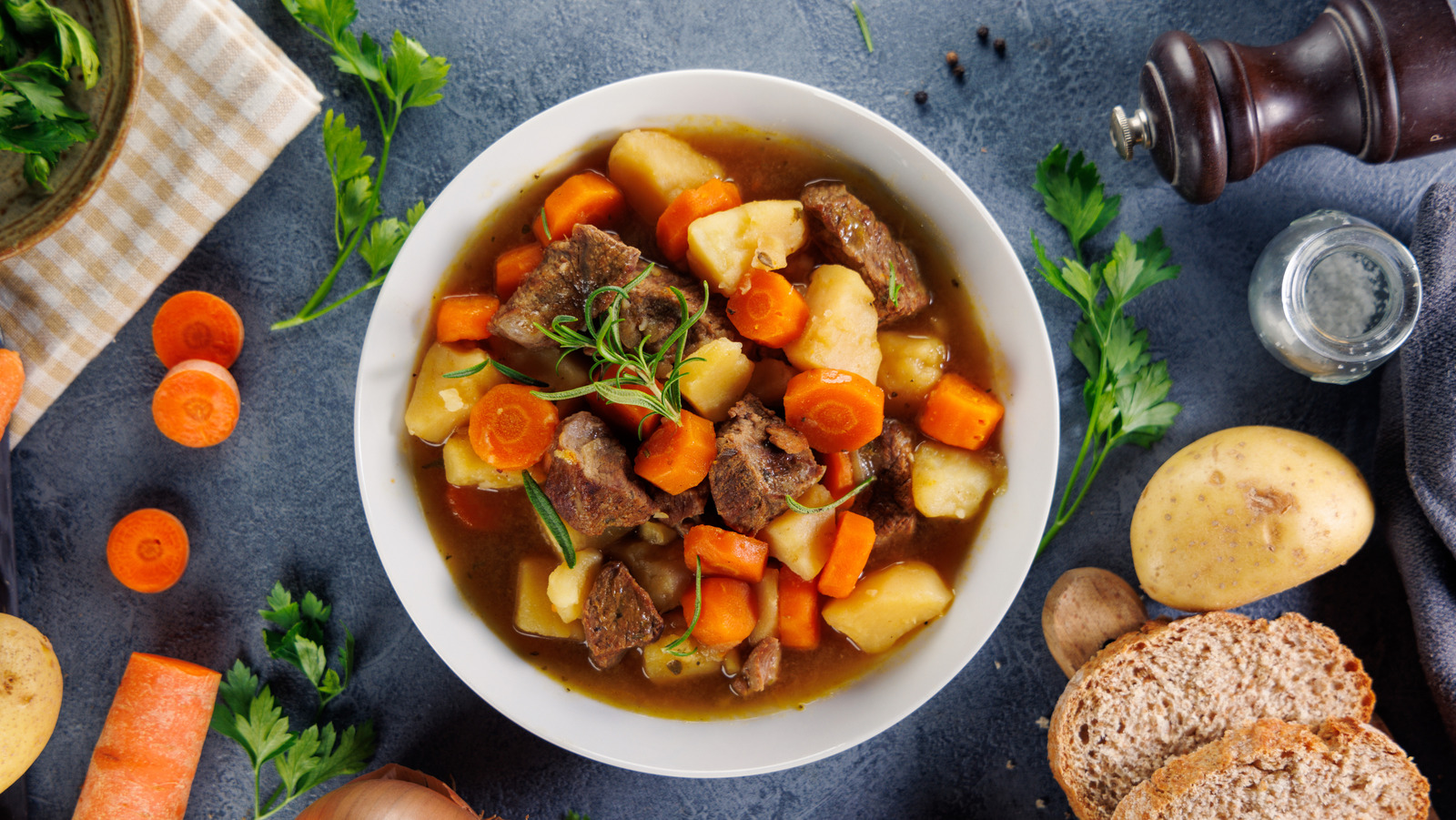
"The history of beef stew dates back centuries and it's not American in origin. The Bible has references to stewed meats and the first published beef stew recipes date to the 14th century France. European recipes came to America with settlers and were adapted to local ingredients. Stews are generally cheap as they utilize tough meat and require long, slow cooking to tenderize it."
"Other ingredients need to be able to stand up to the cooking process, making carrots and potatoes ideal. The popularity of stews can be attributed to their affordability, versatility, and how filling they are. A modern American beef stew is made from collagen-rich cuts of beef like chuck roast and usually includes vegetables like onion, carrot, potatoes, and various herbs and spices."
Beef stew has centuries-old origins, with references in the Bible and published recipes in 14th-century France. European stew traditions arrived in America with settlers and adapted to local ingredients. Stews use tough, collagen-rich cuts and long, slow cooking to tenderize meat, with hearty vegetables such as carrots and potatoes that withstand extended cooking. Modern American beef stew commonly uses chuck roast, onions, carrots, potatoes, herbs, and sometimes tomato paste, red wine, peas, or celery, with flour to thicken the broth. Carne guisada, meaning 'stewed meat,' shares similarities but is typically more robustly seasoned with cumin, oregano, cloves, and chiles de arbol.
Read at Tasting Table
Unable to calculate read time
Collection
[
|
...
]