"Organizations across finance report that building strong quantitative teams is getting harder as artificial intelligence spreads through workflows and raises the bar for technical depth. New data from a global survey of practicing quants shows that the requirements for success in these roles are expanding faster than the available talent pool, with the burden falling on both employers and candidates to close the gap through focused training, better hiring practices, and clearer role design."
"The central driver is the expectation that traditional strengths in math, statistics, and financial modeling are now paired with practical competence in modern data science and machine learning. As advanced systems move from pilot projects into production, teams need people who can code efficiently, reason about model risk, work with large and messy datasets, and explain complex outputs to stakeholders. The result is intensified competition for a relatively small cohort of candidates who bring both depth and breadth."
"The survey results point to three broad shifts. First, responsibilities are expanding. Well over half of respondents say that artificial intelligence tools have increased the scope of their day to day work over the past two years. In practice, that means more time spent on feature engineering, software tooling, data pipelines, and monitoring, in addition to the core tasks of model development and validation."
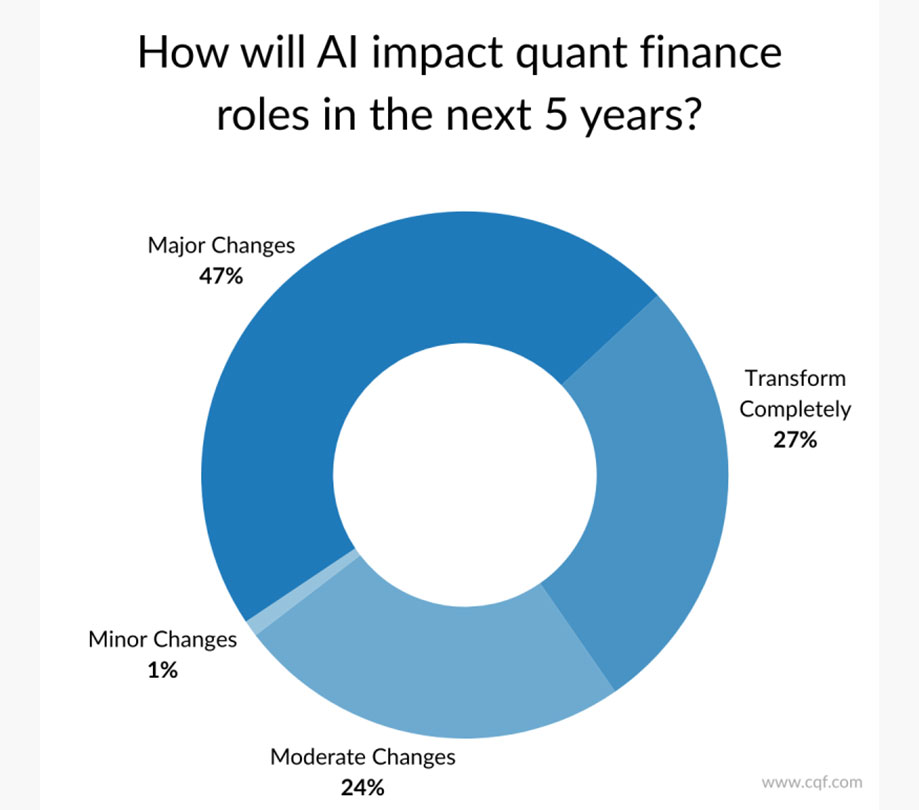
"Second, the pace of change is high. A strong majority expect major transformation of quant roles within the next five years as new methods and infrastructure mature. Third, the skills gap is widening. More than seven in ten respondents believe the distance between job requirements and available talent has grown, with many pointing to"
Organizations in finance report that building strong quantitative teams is becoming harder as AI spreads through workflows and increases the technical bar. A global survey of practicing quants finds that job requirements are expanding faster than the available talent pool. Success increasingly requires combining traditional strengths in mathematics, statistics, and financial modeling with practical data science and machine learning capabilities. As AI systems move into production, teams need people who can code efficiently, manage model risk, handle large and messy datasets, and communicate complex outputs to stakeholders. Survey results show expanding responsibilities, faster transformation of quant roles over the next five years, and a widening gap between job demands and market supply, with employers and candidates needing training, improved hiring, and clearer role design.
#quantitative-finance #artificial-intelligence #machine-learning #data-science #workforce-skills-gap
Read at App Developer Magazine
Unable to calculate read time
Collection
[
|
...
]