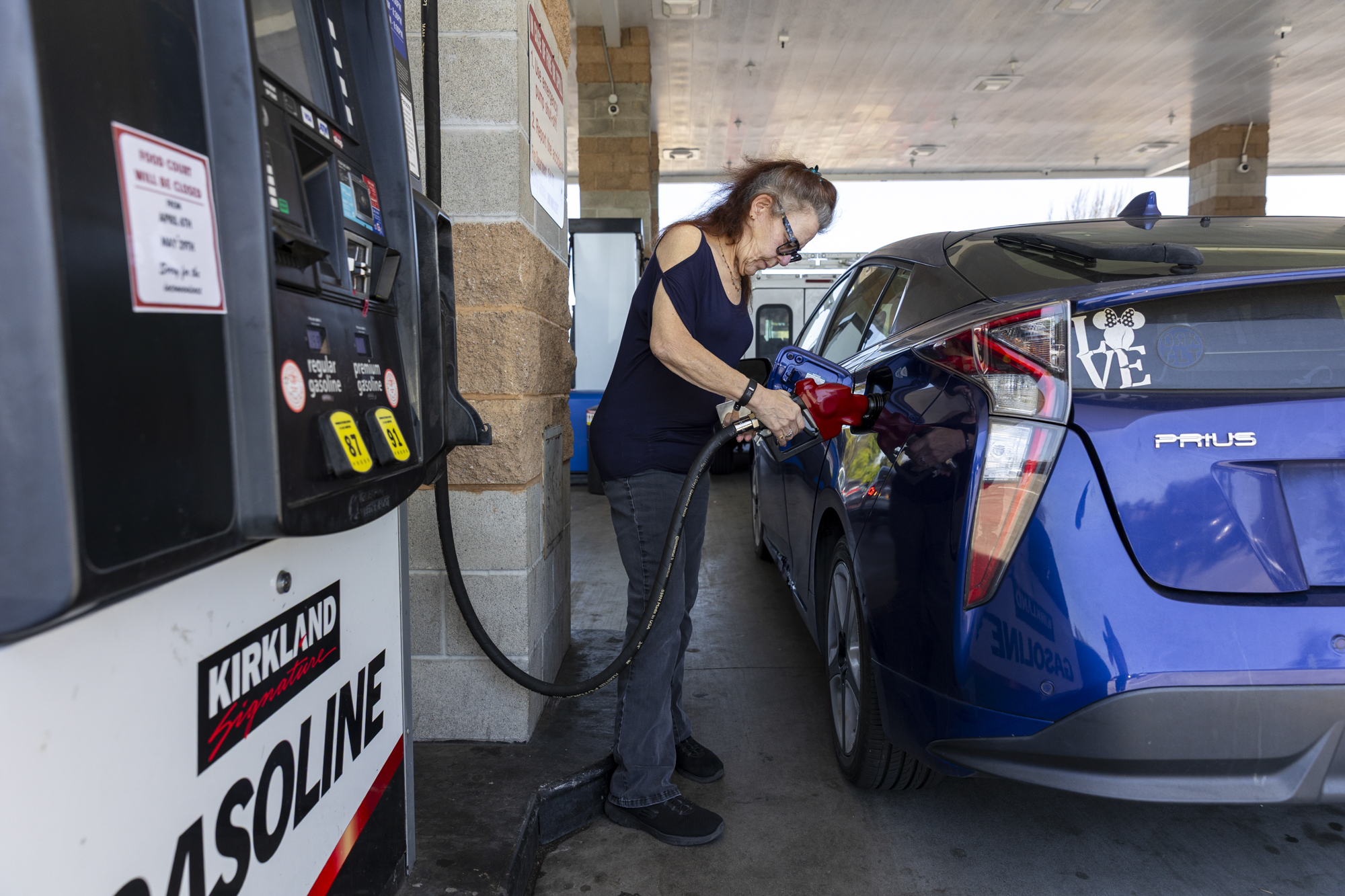
"California requires that cars burn a specialized fuel blend, shipments can be tougher to source and take longer to arrive, exposing consumers to delays and volatility every time something goes wrong globally. "Continuing to move to more and more imports will put this state at more and more risk," Muller said last week. "If you think we are in a precarious position right now, we will continue to see more and more volatility.""
"Asked what consumers should expect if the conflict drags on, Gunda said California prices will likely settle "under seven, more like $6.50." He explained that demand starts dropping once gas crosses about $5.50 a gallon, and California is already seeing drivers shift from higher-priced stations to cheaper ones. Borenstein is less optimistic."
"If the Strait of Hormuz, the narrow waterway that carried more than 20 million barrels of oil a day before the start of the war, stays closed another 60 days, the price of crude could climb by another $40 to $80 a barrel, he said. Each $40 increase translates into about $1 per gallon at the pump. He called that scenario plausible, and warned there's almost nothing California policy can do about it."
"After eight years of wild swings between record surpluses and perilous shortfalls, Gov. Gavin Newsom touted a state of equilibrium on Thursday with his final budget proposal: a $350 billion, fully balanced spending plan that aims to backfill deep federal spending cuts but proposes no new programs and some spending reductions."
California’s fuel system depends on specialized fuel blends, making shipments harder to source and slower to arrive during global disruptions. The oil industry argues that relying more on imports is a poor strategy because state policies have weakened local refining capacity, increasing exposure to volatility. Energy economists dispute that characterization. If conflict-related disruptions persist, California prices are expected to settle around the mid-$6 range, with demand dropping once prices exceed roughly $5.50 per gallon. A prolonged closure of the Strait of Hormuz could raise crude prices by $40 to $80 per barrel, translating to about $1 per gallon at the pump, with limited policy options to counteract it. Separately, Gov. Gavin Newsom proposes a $350 billion balanced budget to offset federal spending cuts without new programs.
Read at Kqed
Unable to calculate read time
Collection
[
|
...
]