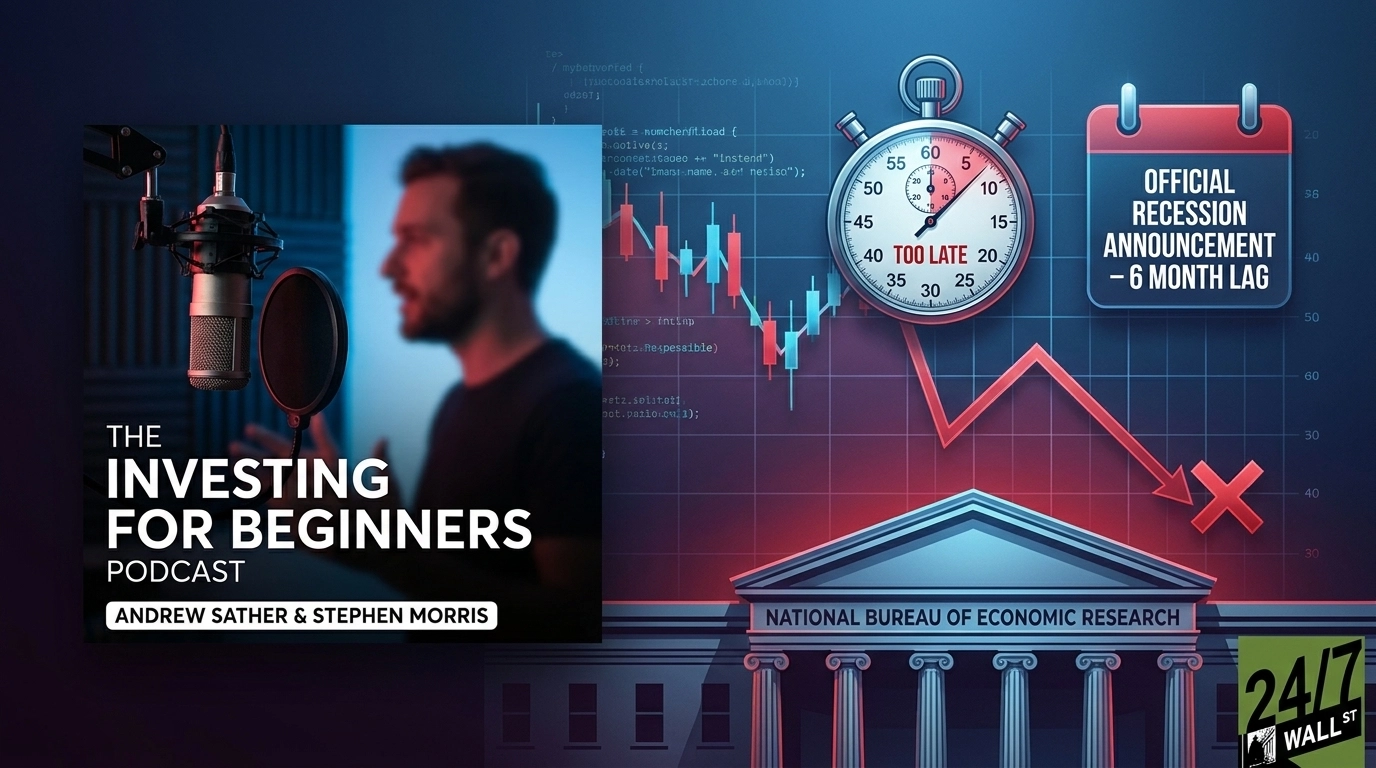
Recession announcements are based on data that becomes available only after time has passed, so official dating typically comes months after economic conditions have already changed. Because the National Bureau of Economic Research determines U.S. recessions retrospectively, investors who wait for an official label are responding to information that is already stale. Real GDP growth shows a deceleration pattern that can drive recession concerns before any formal call. Labor indicators also move in advance, with unemployment rising and jobless claims spiking before later cooling. Consumer sentiment can weaken during the same period. Some widely watched yield-curve measures may remain quiet even while other indicators deteriorate, meaning headline-driven decisions can miss the real timing of risk.
"“When people say there's a recession, they're saying it 6 months after it happens. Like, that's the literal definition of it. You have to wait 6 months,” he said on the episode Back to the Basics: How to Manage Your Portfolio Without Overthinking It."
"“you got to have the data to actually back it up. And to your point, it takes a significant amount of time to get that data. And by the time we have that data, we've already been suffering through the recession as it is.”"
"“The National Bureau of Economic Research, the official arbiter of U.S. recessions, dates downturns retrospectively. Investors waiting for the all-clear or the official call are reacting to information that is already stale.”"
"“Real GDP growth ran at 4.4% in the third quarter of 2025, then collapsed to 0.5% in the fourth quarter, before recovering to 2.0% in the first quarter of 2026. That kind of deceleration is exactly the pattern that fuels recession chatter, yet the headlines lag the data and the data lags the actual experience.”"
Read at 24/7 Wall St.
Unable to calculate read time
Collection
[
|
...
]