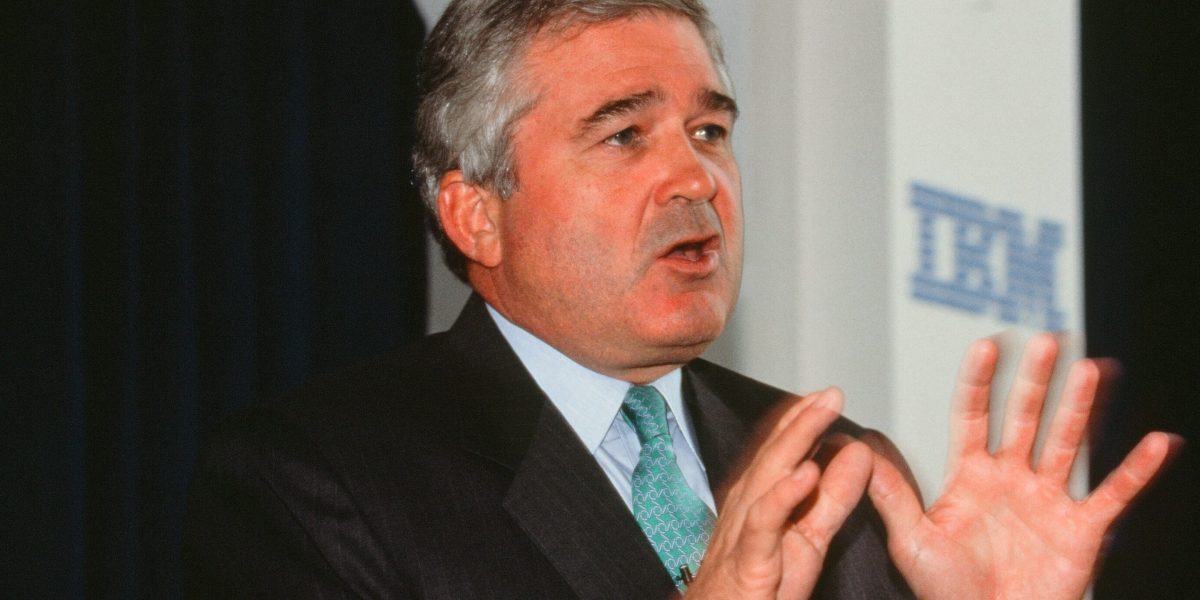
"On April Fool's Day, 1993, he became the first outsider to run IBM, which was facing a choice of bankruptcy or dismemberment after a period when it had been the undisputed leader in personal computers and mainframes. He pivoted the Armonk, New York-based company toward business services and away from hardware production, reversing a move to break up the company into a dozen or more semi-autonomous units - "Baby Blues" - in pursuit of greater profits."
"Gerstner slashed costs and sold off unproductive assets, including real estate and IBM's collection of fine art. He fired 35,000 of the 300,000 employees, who had become accustomed to a culture of lifetime tenure based on principles established by former CEO Thomas Watson Sr. in the early 20th century. He stressed company-wide teamwork to replace the tradition of loyalty to various divisions, and he pegged compensation to corporate performance rather than individual results."
"To meet performance goals, he emphasized regular accountability rather than waiting for yearly performance reviews. "People do what you inspect, not what you expect," he said. Gerstner's key change was to scrap IBM's culture of selling bundled products that only worked with other IBM goods, from PCs to operating systems to software. Products he considered losers were jettisoned. He pulled the plug on OS/2, an operating system intended to challenge Microsoft's Windows that hadn't proved popular with customers."
Louis Gerstner died Saturday at 83. Arvind Krishna announced Gerstner's death in an email to employees and did not provide a cause of death. Gerstner served nine years as IBM chairman and CEO, becoming the first outsider on April 1, 1993, when IBM faced bankruptcy or dismemberment after dominance in PCs and mainframes. He pivoted IBM toward business services and away from hardware, reversed a breakup plan, cut costs, sold unproductive assets including real estate and art, and fired 35,000 employees. He replaced divisional loyalties with company-wide teamwork, tied compensation to corporate performance, emphasized regular accountability, scrapped bundled-product culture, and ended OS/2.
Read at Fortune
Unable to calculate read time
Collection
[
|
...
]