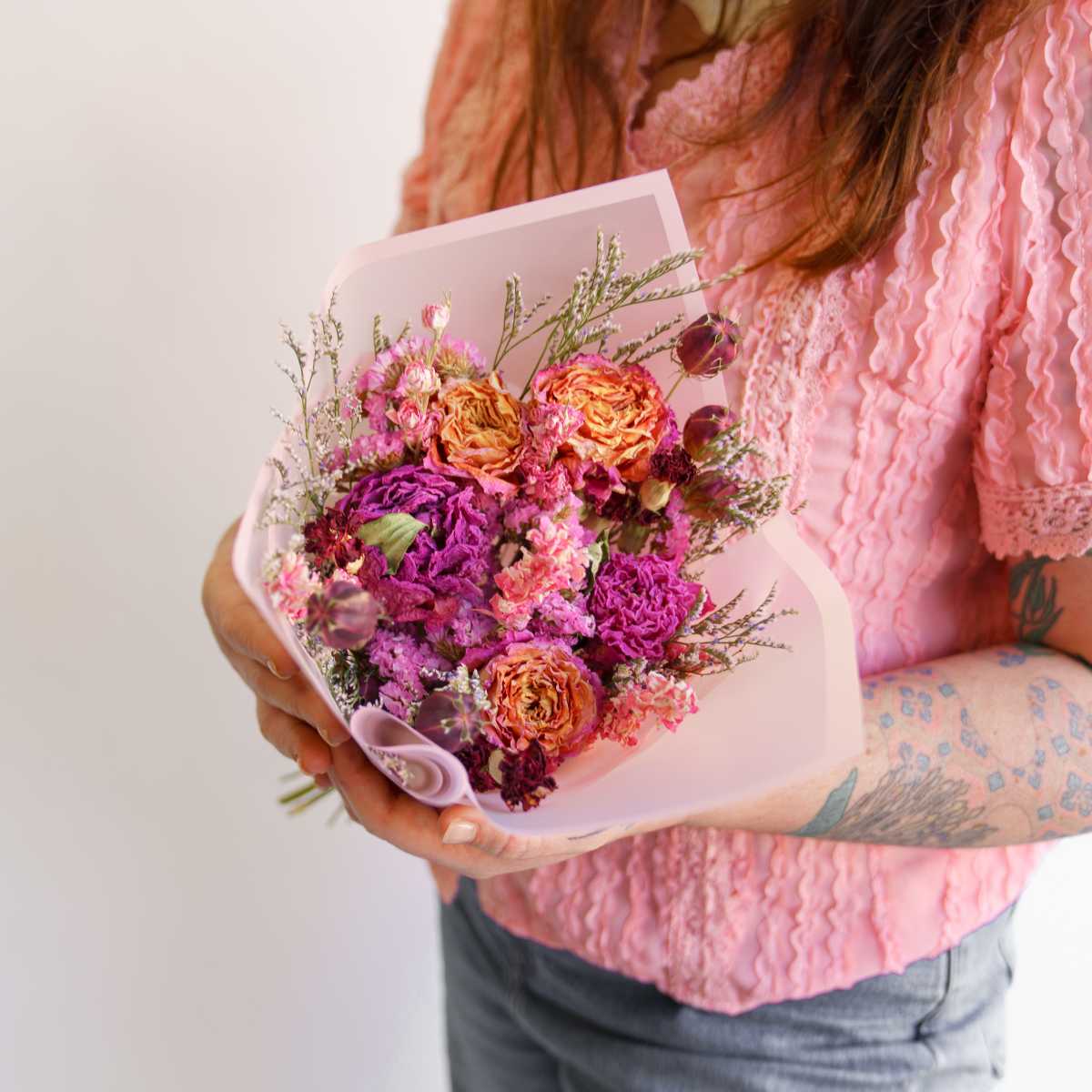
"Hundreds of millions of roses will be exchanged on Feb. 14. Yet Valentine's Day's most coveted gift carries an ugly legacy: an industry built on low costs and a high environmental footprint. A handful of Brooklyn florists, however, are offering alternatives to the classic commercial rose. They believe seasonal flowers can make an even more meaningful Valentine's Day gift by doing less harm to the planet while supporting local farms."
""I think about where things come from a lot," said Suzanna Cameron, founder of Stems Brooklyn in Bushwick. Cameron pays attention to the journey any given flower makes from farm to vase and uses that information to decide which blooms to source for her customers. "I think about the people that were growing them, who cut these flowers, who packed them, who put them in the truck, who put them in the airplane," she said."
"From there, they embark on a fuel-intensive journey on refrigerated cargo planes before being put on display in flower shops across the country. South America has a low cost of production due to large-scale operations, low labor costs, and minimal heating and cooling needs thanks to its favorable climate, explains John Dole, who teaches horticultural science at North Carolina State University. While roses bloom in parts of the U.S. from late spring to early fall, "Valentine's Day is in February, which favors the lower cost imported flowers, especially the long-stemmed roses we all love so much," Dole said."
Hundreds of millions of roses are exchanged every Valentine’s Day, yet the market relies heavily on imported stems with a large environmental footprint. Many roses sold in the U.S. come from Colombia and travel on refrigerated cargo planes, increasing fuel use. South America's climate and low labor costs keep production cheap, while U.S. roses mainly bloom from late spring to early fall, making February imports practical. Demand for imported cut flowers is growing, with inspections expected to set records. A number of Brooklyn florists are turning to seasonal, local blooms to reduce harm and support nearby growers.
Read at Brooklyn Paper
Unable to calculate read time
Collection
[
|
...
]