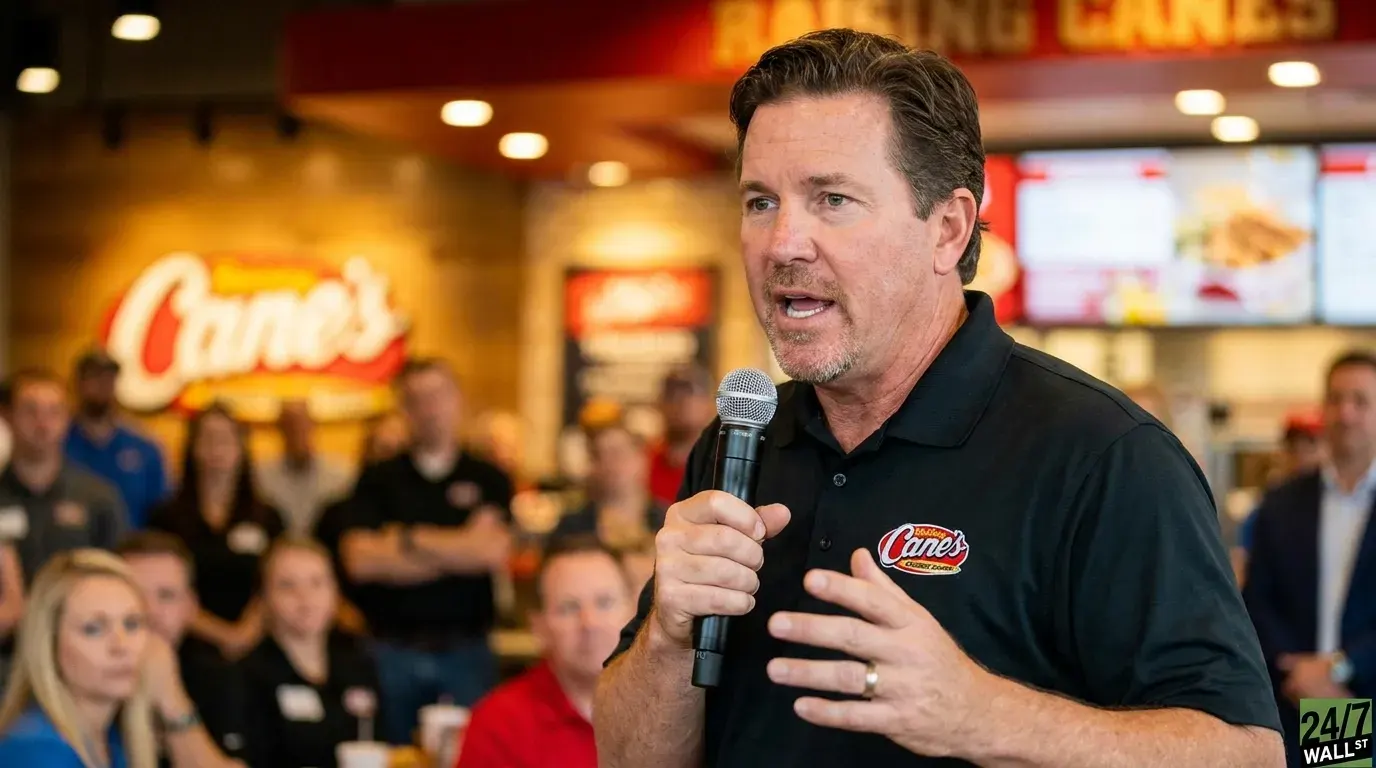
"“The professor said, the plan's exceptional. I mean, I knew details. I knew exactly what our aprons would cost to get washed,” Graves recalled. The strategic flaw, in the professor's eyes: while McDonald's ( NYSE: MCD | MCD Price Prediction) and other quick service chains were adding salads and wraps to avoid “veto votes,” Graves proposed the opposite. One menu, built around chicken fingers. “Being able to execute on one thing and do it better than anybody else is gonna be a recipe for success,” he said."
"“Graves' advice is right for founders and dangerously incomplete for passive investors. Concentration built Raising Cane's because Graves controlled execution. He set prices, hired staff, ran the supply chain, and could pivot if needed. A 401(k) saver who concentrates in one stock has none of that control and inherits full downside without the upside lever that Graves had.”"
"“The math most savers never see: research from Arizona State's Hendrik Bessembinder found that roughly 4% of U.S. stocks have produced all the net wealth created in public markets since 1926. The other 96%, taken together, returned about what one-month Treasury bills did, or worse. Pick a single stock at random, and you are statistically more likely to underperform cash than to beat the index.”"
A detailed business plan received a poor grade despite strong specificity. The strategic issue was the menu approach: instead of adding salads and wraps to avoid customer veto votes, the plan focused on chicken fingers. Concentration succeeded because the operator controlled pricing, hiring, supply chain, and pivots, enabling execution on one thing. Passive investors who concentrate in a single stock lack that control and absorb full downside without the upside lever. Research indicates only about 4% of U.S. stocks generated all net wealth in public markets since 1926, while the remaining 96% returned roughly what one-month Treasury bills did or worse. A random single-stock bet is more likely to underperform cash than to beat the index.
#business-strategy #operational-focus #investment-concentration #risk-management #stock-market-returns
Read at 24/7 Wall St.
Unable to calculate read time
Collection
[
|
...
]