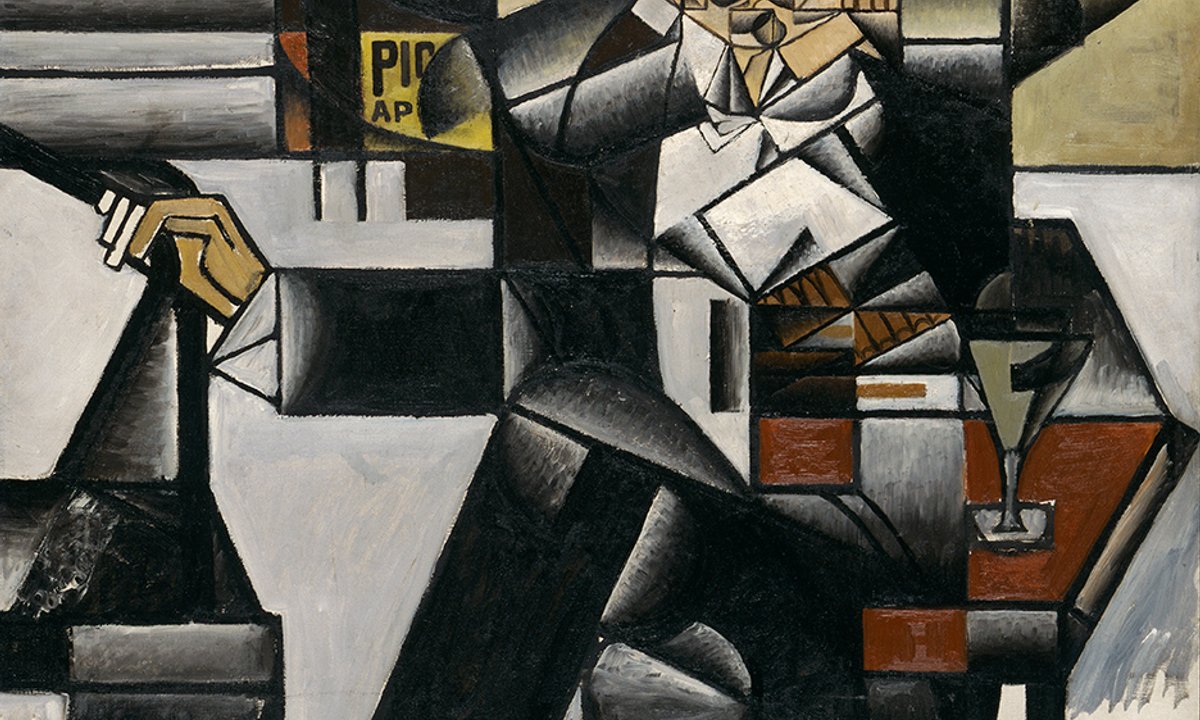
"Cubism and Reality is his return to the works by Georges Braque, Pablo Picasso and Juan Gris that define early Cubism. The book has many strands but turns around a highly informed reconstruction of the processes by which their interactions with reality resulted in physical works of art, what Green terms "material things to be looked at". The revolutionary works discussed remain visually difficult; as he acknowledges, they are "most often only slowly penetrated by looking, imagining, reflecting and looking again"."
"Elsewhere, Green has cast his art historical net across generations, but here the focus is concentrated on the three chosen artists' work in the years immediately preceding the First World War. It was the period in which Braque and Picasso jokingly compared themselves to the pioneer aviators Orville and Wilbur Wright. Braque later described their partnership as being "roped together like mountaineers". This fond memory rather heroised the tentativeness and uncertainty that Green discerns in their paintings and drawings."
A detailed reconstruction shows how Georges Braque, Pablo Picasso and Juan Gris translated interactions with reality into material art objects. Those objects function as "material things to be looked at" and frequently resist immediate comprehension, demanding slow looking, imagination and reflection. The focus lies on works produced immediately before the First World War, revealing tentative, uncertain collaborative practices likened to pioneer aviators and described as "roped together like mountaineers." Close visual analysis and archival evidence illuminate the artists' strategies for negotiating three-dimensional reality, pictorial invention and the materiality of painting and drawing.
Read at The Art Newspaper - International art news and events
Unable to calculate read time
Collection
[
|
...
]