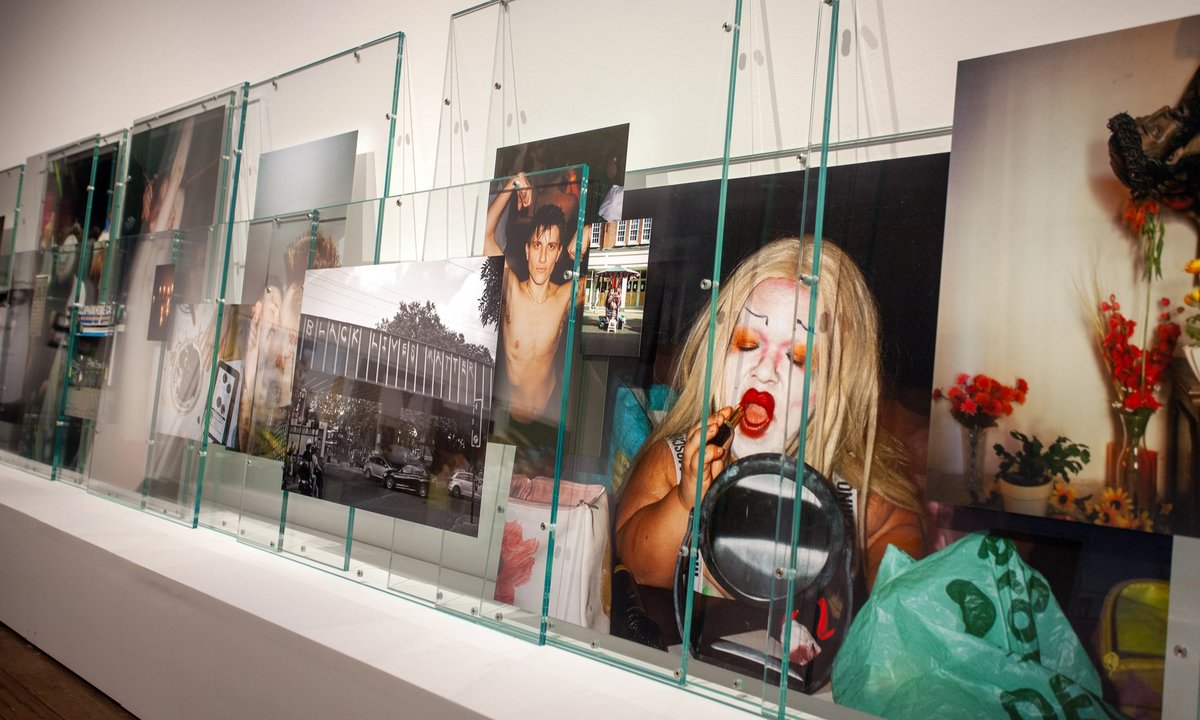
"Conversation about representation politics comes up so much in photography and in image-making, but we never move past that. We don't talk about what we want to be represented as doing. I want to be represented as being cared for. There are a lot of images of us having violence put on us out there. I want to show a counter-image."
"Rene Matić has been announced as the first British winner of the Deutsche Börse Photography Foundation Prize in more than a decade, collecting £30,000 for AS OPPOSED TO THE TRUTH, an exhibition utilising photography, installation and sound to explore notions of identity and belonging in contemporary society."
"The London-based artist works across photography, film, sculpture, sound and writing, brought together in what they describe as "rude(ness)"-a reference to rudeboy culture as well as a space "to interrupt and be in between". Their practice often addresses issues of race, gender and class."
"Matić was nominated for their exhibition at the Center for Contemporary Arts Berlin (CCA Berlin), which ran from November 2024 to February 2025, and was also shortlisted for last year's Turner Prize. They created a new version of the installation for the Prize exhibition at The Photographers' Gallery, which runs until 7 June alongside work by the three other shortlisted artists."
Rene Matić became the first British winner of the Deutsche Börse Photography Foundation Prize in more than a decade, receiving £30,000 for AS OPPOSED TO THE TRUTH. The work uses photography, installation, and sound to explore identity and belonging in contemporary society. The prize announcement took place at The Photographers’ Gallery, where a new version of the installation is shown until 7 June alongside other shortlisted artists. Matić’s practice spans photography, film, sculpture, sound, and writing, and often addresses race, gender, and class. The work emphasizes “rude(ness)” as a space to interrupt and be in between, and it aims to counter dominant images by presenting care rather than violence.
#photography #contemporary-art #identity-and-belonging #representation-politics #race-gender-and-class
Read at The Art Newspaper - International art news and events
Unable to calculate read time
Collection
[
|
...
]